Showing posts with label #Clinical Research. Show all posts

Thursday, November 23, 2023

Most of today’s gene therapies rely on viruses
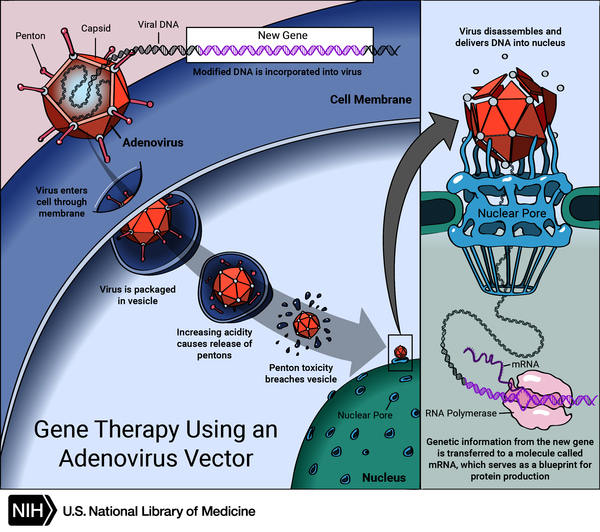
 Most of today’s gene therapies rely on viruses

    This article details the case of 10-year-old Will Ungerer, who has Duchenne muscular dystrophy and received an experimental gene therapy at age 5 where functional gene copies are introduced in the patient’s cells to replace or supplement defective or absent genes. Due to this therapy, he had significant improvements in his physical abilities such as climbing stairs. Although gene therapy is effective there are many challenges such as safety concerns, delivery methods, and the high costs of treatment. “The FDA has approved seven other gene therapies for rare genetic diseases, all since 2017,” showing that ongoing clinical trials and regulatory processes make it hard for gene therapy to get approved. The second article discusses some potential benefits of gene therapy such as treating inherited disorders like cystic fibrosis and certain cancers, with some therapies already FDA-approved for conditions like Leber congenital amaurosis and blood cancers. However, they can also carry risks such as cancer and allergic reactions, leading to FDA approval for some gene transfer therapies and ongoing research into genome editing.

    Gene therapy represents a significant breakthrough in medical science, offering hope for patients with genetic disorders like Duchenne muscular dystrophy. The ability of gene therapy to introduce functional gene copies directly addresses the root cause of many genetic diseases, leading to great improvements in patients suffering from physical disabilities. However, the challenges related to safety, delivery methods, and especially the high costs pose significant barriers to its widespread adoption and accessibility. The FDA's cautious approach in approving gene therapies, while ensuring patient safety, may slow the availability of these potentially life-altering treatments; however, those measures are necessary for the future of personalized medicine. I believe that more money should be invested in research aimed at improving gene therapy since every patient is different and the best treatment is one that is targeted to a patient’s specific genes.

https://www.sciencenews.org/article/gene-therapy-virus-crispr-editing-disease

https://www.nhlbi.nih.gov/health/genetic-therapies/benefits-risks


Monday, July 27, 2020

Gene related to brain damage in pre-term infants identified

See the source image

     Premature labor can be caused by inflammation in the mother or baby that causes infection. This infection can cause damage to the brain that leads to lifelong conditions which include cerebral palsy, autism, and learning or behavioral disorders.
     A study in Nature Communications investigated the role of microglial cells which control immune response in brain responding to inflammation. The gene DLG4 was found and is thought to be involved in controlling the inflammatory process. DLG4 was thought to only play a role in the nervous system. This new finding suggests that it's involved in the process of brain damage in some pre-term babies. This can help researchers discover future treatments for these diseases.
     In one study, mouse models of inflammation and genomic analysis of over 500 brain scans were used. It identified differences in the way DLG4 was expressed in microglia in models and brain scans. This finding requires further study to confirm the role of microglia and the DLG4 gene, but links the gene with both the immune response and neuropsychiatric diseases. Once the function is known, these diseases may be able to be treated.

https://www.sciencedaily.com/releases/2017/09/170905104401.htm
https://medicalxpress.com/news/2017-09-gene-brain-pre-term-infants.html

Wednesday, October 23, 2019

The NSPR1 Gene relating to sleep

https://www.the-scientist.com/news-opinion/npsr1-variant-linked-to-less-sleep-in-people--study-66581
https://www.frontlinegenomics.com/news/27962/second-gene-mutation-that-lets-people-survive-on-less-sleep/

All college students should have the NSPR1 gene, it would help many of the late night study sessions to be quite easier the next day. The NSPR1 gene was recently related to people who have shorter sleep duration periods, with no negative consequences. This study is being researched in humans and mice right now from the University of California. In humans this gene reduces the time duration of the sleep cycle, where in mice they reduce the need for sleep. The NSPR1 gene codes for a receptor that binds to neuropeptide which is found in the brain and related to sleep. When the team bred this variation of gene in mice, they found that the wild type slept more and the mice with this gene didn't need to sleep as often. The tests that were done to see the results of having this gene did not alter the results in a negative way at all. Memory test were done and they both had similar results, as well as their eye movements being at the same level of awareness.These short sleepers can function in just the little amount of four to six hours a day.

I wish you can buy this gene and just have it. This would help so many people make more out of each day. Some people are just so busy that this would help them out in great ways. A lot of other people who have time consuming jobs like doctors, emergency surgeons, and police would really benefit from having his gene as well so no faults would happen due to lack of sleep. I mean I have to say, I do love my sleep.
Image result for SLEEPINGImage result for SLEEPING