Showing posts with label "Social Behavior". Show all posts

Monday, October 23, 2023

Honey bees may inherit altruistic behavior from their mothers
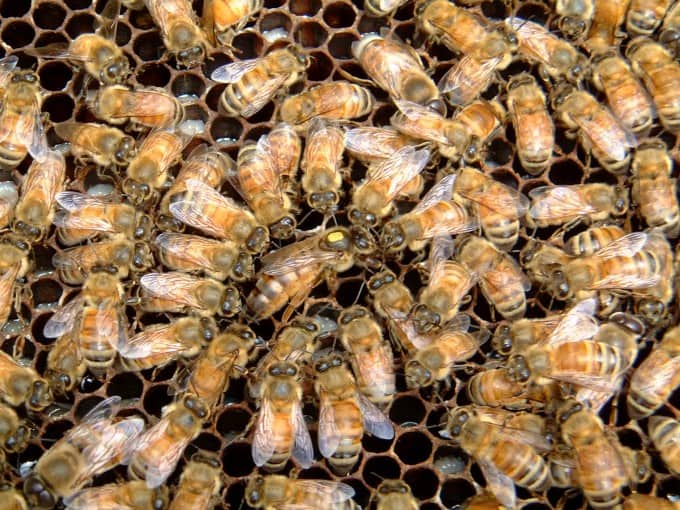
 Honey bees may inherit altruistic behavior from their mothers

Penn State researchers have discovered that honey bees exhibit true altruistic behavior, which is influenced by an evolutionary battle of genetics. The study, published in Molecular Ecology, focused on "retinue" behavior, where worker bees, after exposure to the queen bee's pheromone, disable their own reproductive abilities to support the queen's reproduction. This altruistic behavior benefits the queen's ability to produce offspring, with the worker bees remaining sterile. The genes causing this behavior can be inherited from both parent bees; however, altruism only manifests when passed from the mother. The findings not only offer insights into bee behavior but also highlight the significant influence of parental gene inheritance on gene expression, supporting the Kinship Theory of Intragenomic Conflict.

The Penn State study on honey bees and their altruistic behavior is a fascinating exploration of how genetics and behavior can go hand in hand in nature. It's remarkable to see how the complex interplay of genes, inherited specifically from the mother, can shape such selfless behavior in the offspring. By highlighting the significance of the maternal lineage in altruistic behaviors, the study offers a fresh perspective on the Kinship Theory of Intragenomic Conflict. The second research article supports this conclusion as well. It states that sexual reproduction merges genes from two parents, leading to potential conflict due to differing familial presence. However, according to this article, worker reproduction traits in worker honey bees are more influenced by paternal genes rather than maternal ones. Despite this point of conflict, both articles suggest gene conflicts might be common in social insects.


Links: 

https://www.sciencedaily.com/releases/2023/10/231012161659.htm

https://www.pnas.org/doi/10.1073/pnas.1516636113


Thursday, September 13, 2018

Ants Prove To Be Crucial In Tracing the Evolution of Social Insects


        One may often wonder what has led specific organisms to give up a solitary existence and instead opt to a communal lifestyle, for a colonial way of life often comes with a system of division between reproducers and laborers. Evolutionary Biologist, Dr. Romain Libbrecht, and his team of researchers from Rockefeller University in New York City have decided to investigate the essential question as to what dictates one's role within society and where there are distinct differences between a queen or laborer in eusocial species.

       To their surprise, the research team soon discovered that a single gene called insulin-like peptide 2 (ILP2) was responsible for this differentiation after studying seven different ant species. This gene is most likely activated by increased nutrient levels and once activated it is responsible for "stimulat[ing] the ovaries and trigger[ing] reproduction" (1). In order to further explore what mechanisms fuel the division of labor in these types of societies, the researchers took a closer look at the ant species, Ooceraea biroi. This species was chosen for two main reasons. First off, no queens exist simply female workers. However, the female workers are allowed to reproduce and do so through parthenogenesis, which is the process of making an exact copy of one's self.  Secondly, this species has a very specific cycle when it comes to balancing work and reproduction. An eighteen-day period is allotted to laying eggs followed by a sixteen-day period which is used for collecting food and feeding the newborn larva.

      The researchers purposely broke the cycle by injecting synthesized ILP2 into the ants causing them to lay eggs during the period in which they were supposed to be caring for the young. In doing so, the researchers are able to witness a change in the ant's behavior and physiology. The organism attempts to accommodate for larva during the egg-laying period and will ultimately end the reproduction faster in order to move onto caring for the newborns.

After reading this article, I have gained a newfound knowledge in what determines an insect's role within their colony. Since ILP2 is more active in highly nourished individuals it supports the logic as to why the queen or reproducers of the colony are often larger and get the first priority when it comes maintaining a sufficient nutrients supply for their role is crucial to the survival of the entire colony. To extend this research further I certainly feel as if the effect of this gene in humans should be investigated for it may prove useful at fertility doctors.

Resource:
https://www.sciencedaily.com/releases/2018/09/180907110434.htm

Thursday, May 3, 2018

A Link Bewteen Genetics and Social Behavior in Chickens

A recent study in Sweden linked five chicken genes to the animal's social behavior. To perform the experiment the team used chickens which were a cross of domesticated chicken and red jungle fowl (the ancestor of modern day chickens). This gave the birds a wider range of behaviors.
The study placed a group of birds in a new habitat and observed their tendency to either explore the new area or seek out other chickens. Gene expression in the hypothalamus was also measured. Five genes were identified to influence the sociality and gene expression observed. The genes had already been associated with influencing behavior or the nervous system. Social behaviors are very complex, and although we can assume that they are influenced by genetics to be able to pinpoint what specific genes have influence is fascinating.
Link to Article- https://www.sciencedaily.com/releases/2018/05/180503101714.htm

Original Paper-http://www.genetics.org/content/209/1/209

Saturday, April 22, 2017

Animal Behavior: How to Build a Better Dad

The main question behind this study is how the genome is translated into variation in complex traits. Of these complex traits, the most interesting is social behavior and it will be examined to show differences between parental care in species of the Peromyscus genus. Sharing of parental behavior and social monogamy have been seen in this genus and it has been noted that these traits have evolved twice by comparing two different species of the mice which are the oldfield mice and the deer mice. The oldfield mice live in close, sandy habitats and both parents provide equal parental care to their children, This is compared to deer mice that have a very different mating system with much less parental care with the father being particularly pronounced. These mice are not so different, so they are still able to produce fertile offspring which makes them excellent candidates for genetic crossing. The scientists in this study focused on the area of the genome that controls nest-making. The hormone, vasopressin, which is involved in male social behavior appeared to have the most significant difference when comparing the deer and oldfield mice with the deer mice having more vasopressin. This is the beginning toward more exciting discoveries in neuroscience comparing effects the genome and environment have on expressed genes and why certain differences between species exist.
Animal Behavior 
Oldfield and Deer Mice