Showing posts with label organic. Show all posts

Monday, March 27, 2017

Spinach to Heart?


I saw this this story on the news this morning and it seemed very interesting. Who would think using something as simple as spinach leaves would help patch up a heart. Although they are not completely sure it would work in a host, they have made it beat and have liquid running through the new veins. This also opens up more ideas for other natural foods and human cells.


Friday, November 11, 2016

GMO Crops and the Atmosphere

Many individuals favor to eat organic products, ones that are not genetically altered, over the GMO products. There is a great push for the decrease in GMO crops around the world. Individuals feel that GMO crops are unhealthy and have negative long term effects. The decrease in GMO crops would result in more land needed to plant crops to produce a sufficient amount of organic crops. This is needed to support the high demand of crops, such as corn, soybeans, and cotton. However, the issue will arise when more trees will be needed to be cut down in order to plant the new crops. Decreasing the amount of GMO crops will be healthier for individuals eating the crops. However, the amount of greenhouse gases released into the atmosphere will increase. This poses another issue with decreasing the amount of GMO crops. Furthermore, the price of the non GMO goods will increase. The farmers will not be able to keep up with the demand with the same amount of land currently used. GMO crops allow for the crops to grow quicker than organic crops. I feel that more organic crop production will be the optimal option for this situation, but we will be sacrificing the atmosphere with this decision. There should be a compromise where the increase in the organic crop production is initiated, but with less trees being cut down. We should not stop producing GMO crops entirely.  


Thursday, April 14, 2016

Acreage for Genetically Modified Crops Declined in 2015

Ever since 1996, the market for genetically modified crops has steadily increased. But, with the increase in the publics knowledge on the effects of GMO's, in 2015, the acreage of crops used declined 1 percent.

When GMO's first became commercially grown, their numbers in global acreage grew by double digits in each year. But, within the past 3 years the numbers only slowly grew. Eventually in the last year the numbers actually decreased. To increase the numbers again, the report says that China and Africa would have to adopt GMO corn.

To me, there are many pros and cons when it comes to GMO's. A positive thing is that it can provide cheap, easy to grow, pesticide resistant food for developing countries. On the other hand, even though the food survives being heavily treated with pesticides, consuming that food is harmful to our bodies. This decline in global acreage of crops to me, is not surprising. Everyone talks about going organic and pesticide and antibiotic free. This may be the beginning of the end of genetically modified crops.


http://www.nytimes.com/2016/04/13/business/acreage-for-genetically-modified-crops-declined-in-2015.html?_r=0

https://www.healthwaysfit.com/article/are-genetically-modified-foods-safe

Wednesday, December 3, 2014

Genetic Food Labels

Some of the best chefs in the country are opposed to not having labels on food that are genetically modified. This coming Tuesday, chef Tom Colicchio who is a judge on "Top Chef" and other big named chefs are going to Capital Hill to demand food labels on genetically modified foods. More than 700 respected chefs are going to be signing a petition to change our food market. The reasons why The Food and Drug Administration does not require a label because they feel that it is not that different from organic food and will not have an affect on people and that people won't buy it because they'll think it is unsafe for them to eat.The most common types of modified produce in the U.S. are corn, soybeans and sugar beets, these ingredients are mostly used as ingredients in processed foods. Most of the fresh items in the grocery store are not genetically modified, except the FDA got approved for new experiments. These experiments include; modifying a potato that does not bruise and offers potential health benefits to consumers, also apples that does not brown when it is open.
Cliché says that in his restaurants there will be no longer any genetically modified foods, even though it will be more expensive to get organic.
I agree with what these chefs are doing with the FDA. Even though the FDA does not think these genetically modified food will harm us, I feel it is our right to know what we are consuming harmful or not.

link:http://blogs.wsj.com/washwire/2014/12/01/chefs-push-lawmakers-on-labeling-genetically-modified-food/

Friday, November 21, 2014

Genetics Might Help Grow the Perfect Cup of Coffee

           Coffee is the second most traded commodity on the planet, only being trumped by oil. There are myriad strains of coffee from different parts of the world. African coffees are renowned for being bright and vibrant, whereas Latin American strains are known for their delicate and intricate flavor. The science behind these strains is the science of genetics and how different breeding methods and crosses yield certain coffee types. Recent research has shown that these coffee attributes are significantly affected by gene expression between coffee grown at different altitudes.


         The modern coffee plant is under siege across the world. A fungus colloquially known as "rust" is killing coffee trees in droves in Central America, and coffee crops in Brazil are suffering from intense drought conditions. Therefore, the genetic understanding of coffee crops are essential to take steps forward in solving this unprecedented global problem.
         Farmers at Good Land Organics situated in Santa Barbara, California, are working in conjunction with researchers at the University of California to figured out a genetic solution to maximize immunity and crop yield simultaneously. Juan Medrano, at UC Davis, is specifically studying the effects of altitude on gene expression as a potential solution to the coffee epidemic.
         Regardless of possible solutions, what is agreed upon amongst scientists that the sakes are extremely high. London's Royal Botanical Gardens estimates that two thirds of coffee growing regions in Africa could be destroyed by 2080, and wild Arabica, the best selling coffee species, could be extinct by 2020. The future of coffee hinges on the genetic analysis of the beloved crops.

Main Article: http://www.geneticliteracyproject.org/2014/11/18/genetics-might-help-grow-the-perfect-cup-of-coffee/

Related Information: http://en.wikipedia.org/wiki/Coffea_arabica

Friday, November 22, 2013

Should Biotechnology Embrace GMO Labels?


Many were surprised when California, a state that has become known for having some of the most liberal policy, voted no on a ballot initiative regarding the labeling of GMO food. This had done little to quell the anti-GMO movement as more and more potential legislation is being brought to the table (no pun intended) that would require genetically modified food to be labeled as such. Those in favor of the labeling fear the potential effects of GMO food on human health and the planet. Those against argue that mankind has been modifying the genes of plants and animals through selective breeding since the dawn of agriculture and in vitro genetic modification is no different than selective breeding.


A group within the anti-labeling believes that no hearts will be won through perceived obfuscation. The distrust of GMOs is understandable. Many people do not understand it and when multimillion dollar corporations like Monsanto and DuPont can spend $46 million lobbying against disclosure it is easy to see how the public can presume guilt. The GMO advocates in favor of labeling suggest voluntarily labeling products to regain the trust of consumers. There is no doubt that companies like Monsanto have a huge public relations problem when they have a section of their website dedicated to invalidating rumors and conspiracies about their company. A step towards full disclosure and client education would go a long way in repairing their perception.

Saturday, March 9, 2013

The Irony of GMO Labels at Whole Foods

 This week the popular grocery chain, Whole Foods Market, announced a five-year initiative requiring labeling of any genetically modified (GMO) products sold in their stores by 2018. This bold move would make Whole Foods Market the first retailer in the United States to exclusively label all GMO ingredients. A. C. Gallo, president of Whole Foods, believes that this initiative will ultimately increase consumer sales. However, many analysts disagree and believe this action to be detrimental, as customers may surmise the products to be "potentially risky" or unappealing.

[The] proponents of labeling insist that consumers have a right to know about the ingredients in the food they eat, and they contend that some studies in rats show that bioengineered food can be harmful."

Genetically modified organisms have surged since their introduction in the 1990's, due to their crop efficiency and yield production. In today's health-crazed society, some people have adopted a strictly organic lifestyle after research has indicated that some GMO's may be linked to potential health hazards. This is why it is such a shocking decision by Whole Foods Market, a staple of organic eating, to publically include blatant labels of each and every GMO sold in stores. Why are they even selling these products in the first place? Although their decisions favors the health of their customers, it is odd for a business to put themselves in risky peril. 

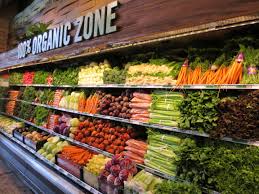
[caption id="" align="aligncenter" width="259" caption="Whole Foods Market Organic Section"]Whole Foods Market Organic Section[/caption]

In a study conducted by the Mellman Group last 2012 election, "more than 90% of respondents" were in favor of food labeling as a way of protecting themselves. Other major grocery chains, like Wal-Mart, have also been rumored to begin a labeling initiative. State legislatives and governmental regulatory agencies that oppose such an action have been feeling the heat from customers on social media outlets. Some consumers are planning a staged "eat-in" at FDA offices within the next few months in order to combat the use of GMO's in general. Either way, it is important to understand what your body is ingesting, but at what lengths will businesses jeopardize themselves to give the public the information they deserve?

[For more on this topic, please visit the following: http://www.nytimes.com/2013/03/09/business/grocery-chain-to-require-labels-for-genetically-modified-food.html?_r=0 & http://www.huffingtonpost.com/2013/03/08/whole-foods-gmo-labeling-2018_n_2837754.html]