Showing posts with label human gut. Show all posts

Sunday, April 10, 2022

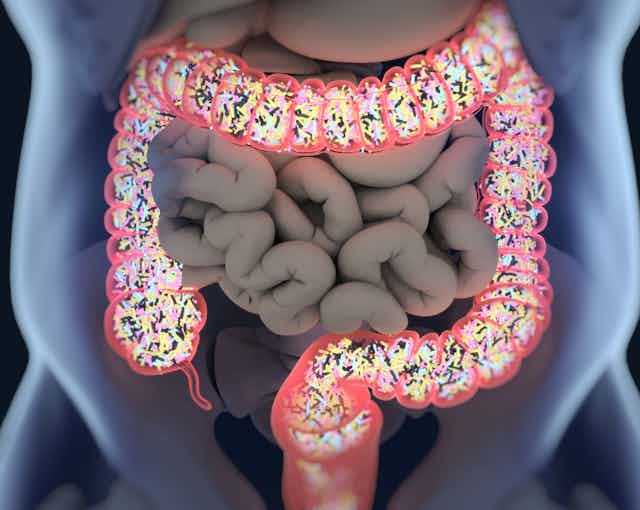
Progress of Analytical Tools and Techniques for Human Gut Microbiome Research

Gut reaction: How the gut microbiome may influence the severity of COVID-19

    'Progress of Analytical Tools and Techniques for Human Gut Microbiome Research' is an article published in the Journal of Microbiology in 2018. This deals with DNA sequencing among humans with their gut and cancer. In the title and abstract it has said the article will be about DNA sequencing amongst human genomes. 

      This article has stated, "The process of DNA extraction is one of the key steps in microbiome studies and thus, errors arising during DNA extraction should be kept at a minimum so that the diversity of microbial communities can be accurately estimated. Owing to the differences among the each bacterial cell, in terms of cell membranes and cell wall structures, in the diverse population of microorganisms (Bag et al., 2016), differences in the method of DNA extraction can affect the outputs from cell lysis, thus producing erroneous profiles of the microbial community (Salonen et al., 2010; Smith et al., 2011; Mau- konen et al., 2012). Recent studies have demonstrated that the use of bead beating during DNA extraction improves the extraction efficiency by effectively disruping the cell walls of Gram-positive bacteria (Yuan et al., 2012; Guo and Zhang, 2013; Bag et al., 2016; Lim et al., 2018)." Isolating DNA by itself is a vital step thus contamination must be prevented at all costs. There are techniques being used as a way to have the percent of contamination lowered(Son, Lee,Nam 2018).  

For more articles like this, please click here.

Saturday, November 23, 2013

Butyric Acid Increases Amount of Treg Cells in the Gut

A recent  research conducted by RIKEN Center for Integrative Medical Sciences found that butyric acid, a by-product of fiber digesting bacteria which lives in the gut of humans, can actually boost the immune system. According to an article published on Science Daily, the butyric acid - a fatty acid- accomplishes this by epigenetically causing immature T- cells in our gut to mature into Treg cells.
Moreover, scientists have found that people who have a deficiency of butyric acid in their gut are more susceptible to and often do suffer from inflammatory bowel diseases.
Clearly this is a great discovery for not only the science community, but also for those who suffer from this disease. Because of the knowledge gained as a result of this research, we can understand the causes of inflammatory bowel diseases and also work towards treating them.

Thursday, October 31, 2013

New Bacteria from the Bowels

  
    This Melaninabacteria phylum is a new branch of bacteria that was discovered in human guts and in groundwater.  Jillian Banfield from University of California and Ruth Ley of Cornell University were characterizing microbial communities in human feces and environment samples.  They discovered that some DNA sequences were distantly related.  Which led to the discovery that they were distantly related to cyanobacteria which is photosynthetic.  They performed more sequencing and discovered 3 complete and 3 partial genomes for this bacteria. 

    However, the melaninabacteria lack genes that are needed for photosynthesis and for coping with oxygen.  It is believed that they therefore generate energy by fermenting different molecules that contain carbon.  This also may provide the bacterias human hosts with B and K vitamins.  I found this article very interesting to find that a phylum of bacteria is not only found in our guts but also in groundwater.  Besides those two vitamins, I wonder if too much of this bacteria is produced of consumed is harmful and how. 

http://www.news.cornell.edu/stories/2013/10/new-bacteria-found-human-gut
http://elife.elifesciences.org/content/2/e01102.abstract