Showing posts with label heterochromatin. Show all posts

Tuesday, March 16, 2021

A key to the mystery of fast-evolving genes was found in ‘junk DNA’


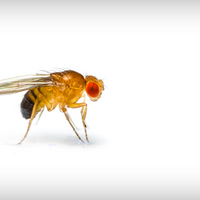
A study done with fruit flies showed that new genes are important because they help regulate heterochromatin, which is a type of DNA. Heterochromatin is known as "junk DNA", but recently the DNA has been found to actually perform many jobs like locking up bad genes to prevent them from doing damage. In the article , Harmit Malik, a evolutionary biologist mentioned how fast Heterochromatin changes and how this causes genes to quickly adapt to keep up.

In the fruit flies, they found that 30% of new genes are essential. In the study, the fruit flies regulate other genes by turning off and on for various tasks. Malik and his team named one of the new essential genes they discovered Nicknack. This gene gives out instructions for a protein that binds to the heterochromatin. The study then looked at how essential Nicknack is and replaced the gene with its closest relative. The results showed that D melanogaster evolved into its own version of Nicknack. The team hopes to do more studies to understands how exactly Nicknack functions and learn more about heterochromatins role in evolution.

I think that this is a great evolutionary find and I hope to learn more about the DNA. I also think its funny how Heterochromatin is referred to as "junk Dna" but it actually it pretty important. I think more studies should be done on different species or even on humans to see exactly how heterochromatin works. I have listed another article that looks in heterochromatin and genomes.

Links:

Wednesday, November 18, 2020

A Genetic Mystery

 Subject: HIV and Elite Controllers 

Article: ¨In a first, a person's immune system fought HIV-- and won¨ 


Summary: The immune system is vital to our existence when it comes to the ability to fend diseases and illness. It's a defense system that consists of cells and tissues that form proteins and organs that detect any harmful foreign bodies. HIV, a degenerative condition attacks the immune system that can turn critical and in some cases rather lethal. HIV is a human immunological deficiency virus that infiltrates the blood system and spreads the infection at a rapid pace. In most cases if untreated can become much more serious and can develop into AIDS. In the article ¨In a first, a person's immune system fought HIV-- and won¨ a study has shown that there is a rare group of people known as the ¨elite controllers¨ whose immune system had been able to attack or isolate the disease to a point where it is nearly undetectable. While treatment had consisted of drugs to manage the disease as well as other alternatives like marrow cell transplants. HIV is a disease that takes over the immune system depleting the defense mechanism of white blood cells and antibodies.  As the disease latches onto the RNA and DNA of its host, allowing replication of the virus to occur. After studying millions of blood cells from two patients known as EC2 and EC1 what seemed to have occured is that there were whole intact viruses that had been isolated into heterochromatin. Which leaves many questions for scientists, how does the immune system know how to do this? 


Article Link: https://www.sciencenews.org/article/hiv-immune-system-elite-controllers 

Supporting Link(s): https://www.medicalnewstoday.com/articles/320101 

https://www.cdc.gov/hiv/basics/whatishiv.html 


Tuesday, November 3, 2020

Does a Flies' Y Chromosome Contribute to a Shorter Life Span?


    In a study recently done by Doris Bachtrog, it was confirmed that the male Y chromosome in flies contributes to a shorter life span. She and her team compared the amount of heterochromatin in young and old male and female flies, and discovered that in males, the amount of heterochromatin (densely packed DNA), was far less than it was in females. The amount of heterochromatin was especially lower in the male's Y chromosome. To further test their hypothesis, they looked at the amount of heterochromatin in XXY females, XYY males, and XO males. They discovered that in the females with a Y chromosome and the males with an extra Y chromosome, the amount of heterochromatin was less, and consequently, life span was reduced. To further confirm the hypothesis that heterochromatin loss shortens life span, the XO males in the experiment lived longer than XY males. After reading this article, it makes sense that a loss of heterochromatin would contribute to aging and early death because a change or loss of heterochromatin is ultimately damaging DNA. A question I would ask would be, does this also take place in humans? Does the loss of heterochromatin, especially in the Y chromosome, shorten the lifespan of human males, like it does in male Drosophila? Women do tend to live longer than men... is this because of the men's Y chromosome? Overall, I thought the article was very informative and I especially appreciated how Bachtrog and her team did multiple studies to test their hypothesis, especially on flies with abnormal numbers of Y chromosomes. 

https://www.the-scientist.com/the-literature/male-flies-y-chromosome-may-contribute-to-earlier-deaths-67683
https://www.nature.com/articles/s12276-020-00497-4
https://www.sciencedirect.com/topics/neuroscience/heterochromatin


Tuesday, November 22, 2011

The Effects of Stress Can Be Inherited

Stress can affect every aspect of life and can even influence future generations. Even if stress does not change the DNA sequence, the stress effect can be passed to the next generation. This seems impossible since there is no physical change in the nucleotide base sequence of the DNA. The effects are seen in the tightly wound portion of the DNA, known as heterochromatin. Heterochromatin does not usually contain active genes and is passed from generation to generation. ATF-2 is a gene that is vital to the formation of heterochromatin. When the body is exposed to environmental stress, inflammatory cytokines, and reactive oxygen species, stress-activated protein kinases are released. These kinases alter the ATF-2 which in turn affects the structure of the  heterochromatin. The changes in genomic structure are inherited by the next generation, which means it is possible to pass changes in gene expression without changing the DNA sequence.

The majority of the research involving ATF-2 has been done with fruit flies. Since the ATF-2 gene is identical to the gene found in humans, scientists expect that similar effects would happen in human DNA. The changes to the structure of heterochromatin could affect basic cellular functions, metabolism, behavior and disease. There are drugs that have been developed to counteract the enzymes that modify ATF-2, but it is important to understand how stress not only affects us psychologically and physiologically, but also future generations.

 This is a summary of an article from Science Daily titled, "Effects of Stress Can Be Inherited, and Here's How."