Showing posts with label bunnies. Show all posts
Showing posts with label bunnies. Show all posts
Tuesday, November 23, 2021
Handstanding Rabbits From the RORB Gene

Thursday, August 5, 2021
Bunnies Do Handstands Instead of Hops: Genetic Defects
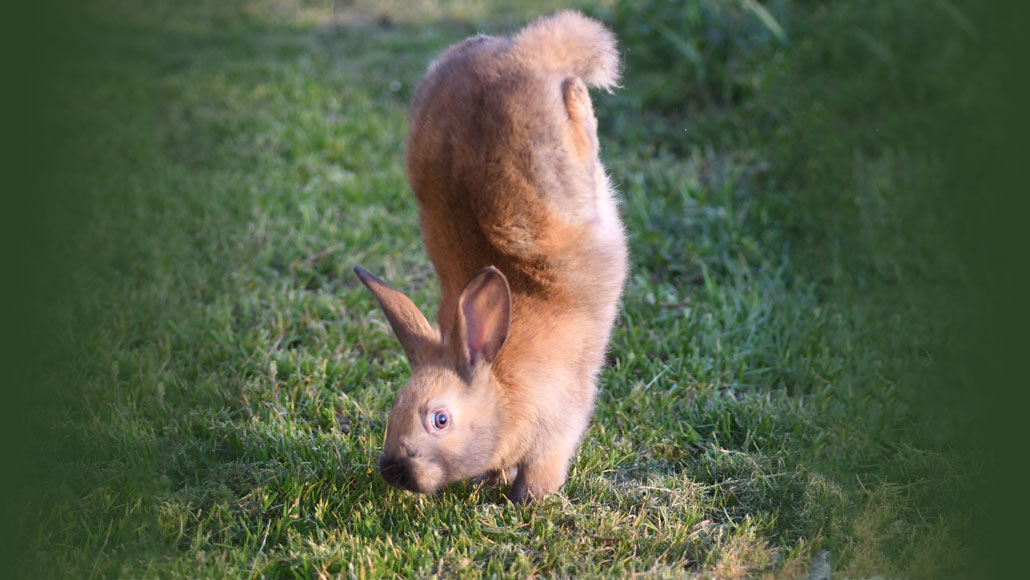
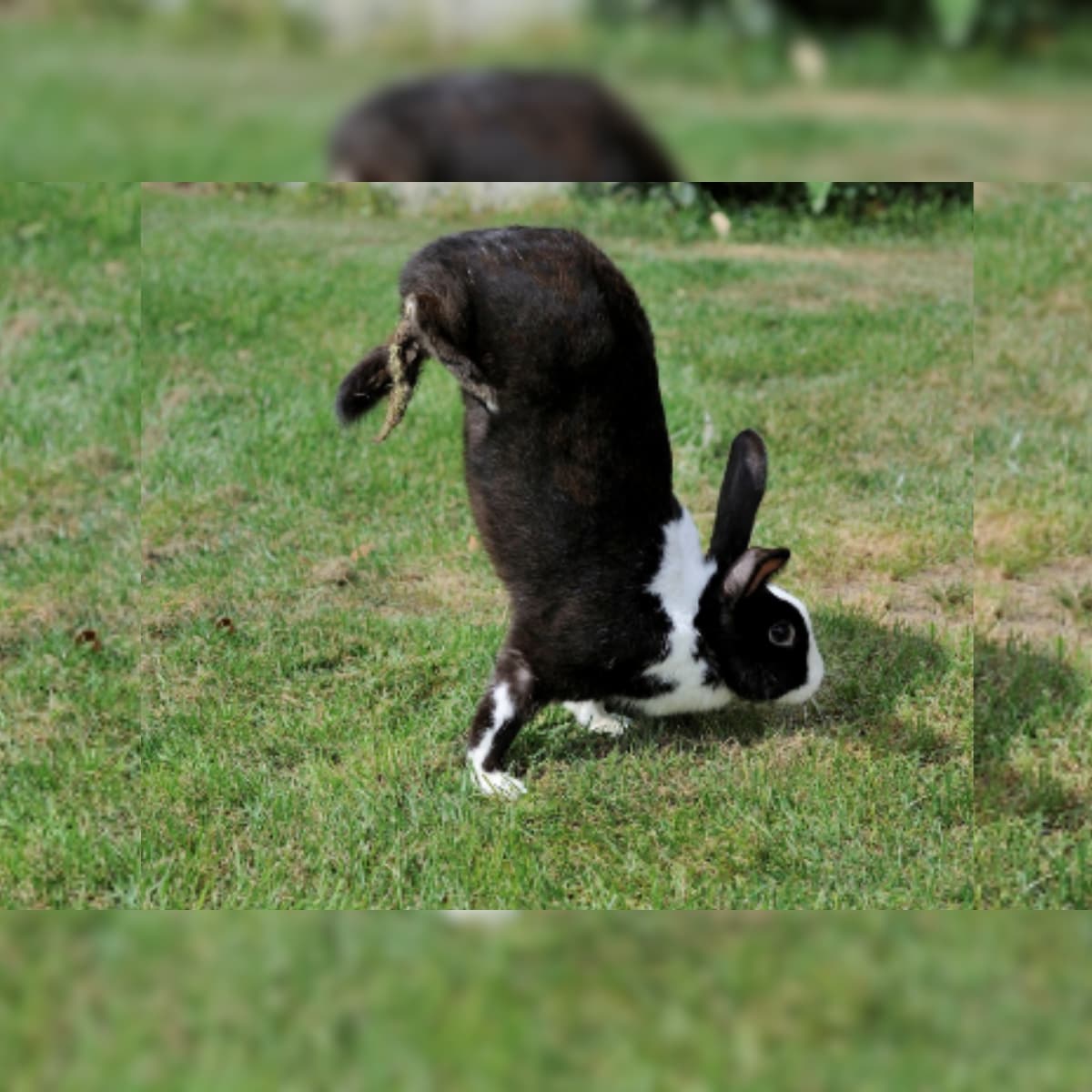
In this article, Erin Garcia de Jesus discusses how a genetic defect may cause bunnies to do handstands instead of hopping as a way to move fast. A rabbit called sauteur d’Alfort sends its back legs sky high and walks on its front paws. That strange form may be the result of a gene tied to limb movement, researchers report March 25 in PLOS Genetics. Mice have also shown this similar trait and walked on their front limbs to run.
Understanding this genetic defect and how they move, can help improve our knowledge on the spinal cord. A mutation in the RORB gene is a likely candidate for the rabbits’ handstands. That mutation causes faulty versions of the genetic instructions that cells use to make proteins, which means there is less of the RORB protein in specialized nerve cells in rabbits that have the mutation compared with rabbits that don’t. Without the RORB protein in spinal cord nerve cells (interneurons) , the rabbits may lack the ability to coordinate what their hind limbs are doing, which affects their ability to hop regularly. Understanding this, and how one possible mutation affects how animals move, and ultimately help develop ways to repair the body when defects in RORB cause diseases/immobility.
Links:
https://www.sciencenews.org/article/rabbit-handstand-front-paws-gene-defect-video
https://www.nature.com/articles/d41586-021-00775-9#:~:text=An%20unusual%20rabbit%20that%20walks,hind%20legs%20in%20the%20air.
Wednesday, April 21, 2021
A Gene Defect That Allow Bunnies To Do Handstands Instead of Hops
The article from Science News written by Erin Garcia de Jesus discusses the new study that suggests that a defective gene may turn some bunnies' hops into handstands. A type of rabbit called sauteur d'Alfort moves its legs back in the air and walks on its paws to move faster. This type of bunny isn't the only species to have adopted this trait if they inherit the mutation gene known as the RORB. Mice is the other type of species known to have the mutation in their genes to move while doing a handstand when they start to run.
To further determine how this is possible, Miguel Carneiro from the University of Porto in Portugal and Leif Andersson at Uppsala University in Sweden and their colleagues bred a sauteur d'Alfort with a regular rabbit that can jump and they sequenced the genomes of the pair's 52 grandchildren. During their, they found that the baby rabbits that couldn't hop had a single mutation in both copies of a gene called RORB and also found that there were fewer neurons that expressed the RORB protein in their spinal cord which most likely interfered with the movement in their hind limbs.
I didn't know there was such a gene that could allow certain species to do handstands instead of normal walking. I always find it interesting to read articles that provide knowledge about these genetic differences occurring in animals.
Subscribe to:
Posts (Atom)