Showing posts with label movement. Show all posts

Sunday, November 26, 2023

Genes Play a Key Role in Exercise Outcomes

        The Cambridge Centre for Sport & Exercise Science at Anglia Ruskin University in England published a study in the journal PLOS ONE that found that genetic differences account for up to 72% of the difference between performance outcomes among individuals for specific exercises. Researchers focused on understanding how one’s genes can affect muscle strength, cardiovascular fitness, and anaerobic power, by analyzing 3,012 adults, between the ages of 18 to 55. All of the participants expressed improvements after their training program but to varying degrees. Researchers combined data from 24 different studies and discovered that genetic differences are responsible for the variation of outcomes and results of a particular exercise that was designed to improve muscle strength. They also found that genetic variation played a significant role in 44% of the outcomes of cardiovascular fitness exercises, measured through VO2 max testing, maximal oxygen consumption testing. 10% of the differences in outcomes for anaerobic exercises, which focus on movement and agility, are due to genetic variations. The remaining variations are due to other factors like nutrition and injuries. Researchers believe that alleles are what cause the body to react to exercise and they have identified 13 genes and associated alleles that can be held responsible for the body’s reaction to muscle strength, cardiovascular fitness, and anaerobic power exercise.
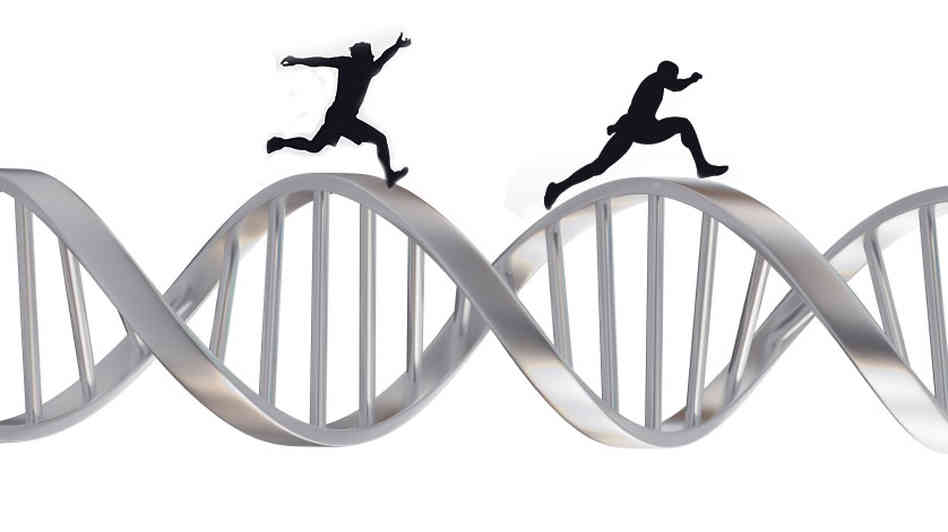
        In response to the findings, researchers propose that gene testing could be done to personalize exercise programs in an effort to create the most beneficial and rewarding plan. Rather than assigning generic exercise for all, a more tailored exercise plan could be more effective for each individual depending on their needs as it could benefit diverse groups. This could even be more helpful to, for example, hospital patients who are in the process of rehabilitation and top athletes who depend on marginal and rapid improvements.
        Given the validity of this study, exercise programs should be tailored to the individual's needs. This is especially important for rehabilitation centers where patients require more focused and quick results. In the era of social media with the rise of fitness influencers and pricey exercise programs, it is important that people are aware that those exercises that promise immediate and identical results are not necessarily true and that their results may differ. This study may not only improve the future of exercise rehabilitation in a professional setting but it could also help people’s mental health as it should be known that there will be differences in outcomes following identical exercises.


Links:
https://www.sciencedaily.com/releases/2021/10/211014142032.htm
https://journals.plos.org/plosone/article?id=10.1371/journal.pone.0249501


Thursday, August 5, 2021

Bunnies Do Handstands Instead of Hops: Genetic Defects

 rabbit standing on front paws

In this article, Erin Garcia de Jesus discusses how a genetic defect may cause bunnies to do handstands instead of hopping as a way to move fast. A rabbit called sauteur d’Alfort sends its back legs sky high and walks on its front paws. That strange form may be the result of a gene tied to limb movement, researchers report March 25 in PLOS Genetics. Mice have also shown this similar trait and walked on their front limbs to run. 

Understanding this genetic defect and how they move, can help improve our knowledge on the spinal cord. A mutation in the RORB gene is a likely candidate for the rabbits’ handstands. That mutation causes faulty versions of the genetic instructions that cells use to make proteins, which means there is less of the RORB protein in specialized nerve cells in rabbits that have the mutation compared with rabbits that don’t. Without the RORB protein in spinal cord nerve cells (interneurons) , the rabbits may lack the ability to coordinate what their hind limbs are doing, which affects their ability to hop regularly. Understanding this, and how one possible mutation affects how animals move, and ultimately help develop ways to repair the body when defects in RORB cause diseases/immobility. 

Links:

https://www.sciencenews.org/article/rabbit-handstand-front-paws-gene-defect-video

https://www.nature.com/articles/d41586-021-00775-9#:~:text=An%20unusual%20rabbit%20that%20walks,hind%20legs%20in%20the%20air.

Wednesday, December 11, 2019

Artificial Cells Are Now Able to Mimic Natural Cell Movement

Synthetic cells are used in laboratory settings but don't have all the characteristics of living cells, limiting research. Cell motility was hard to research due to surface enzyme activity, but a new method was discovered that allowed the synthetic cell to actively move. They investigated how ATPase can propel the protocells. ATPase is an enzyme that converts ATP into ADP. In this experiment, the protocells had artificial membranes composed of phosphatidylcholine and the ATPase enzymes were incorporated directly into the membrane. This discovery allows for the first step to be made for other researchers to make artificial cells with enzymatic activity. Research showed that movement for the cells was low for low amounts of ATP but movement also dropped for too much ATP, which was surprising. The researchers concluded that a high ATP concentration would bind to the ATPase and suppress ATP activity and lowering motility. This research allows for new opportunities to understand more about the mechanisms of movements for cells. This will have a huge role on new medical research.

Image result for cell membrane

I feel like we always think that science as come so far and that there isn't much else to discover, but this just shows how much we still don't understand. Just trying to replicate a living cell is so complicated and we're finally one step closer to making them act more like natural cells. It's amazing how new discoveries like this are able to open up even more doors. Hopefully this research will help with new medical breakthroughs in the future.

Link: https://www.sciencedaily.com/releases/2019/12/191205155318.htm

Related Link: https://news.psu.edu/story/600705/2019/12/05/research/artificial-cells-act-more-real-thing