Showing posts with label Saccharomyces cerevisiae. Show all posts

Tuesday, May 8, 2018

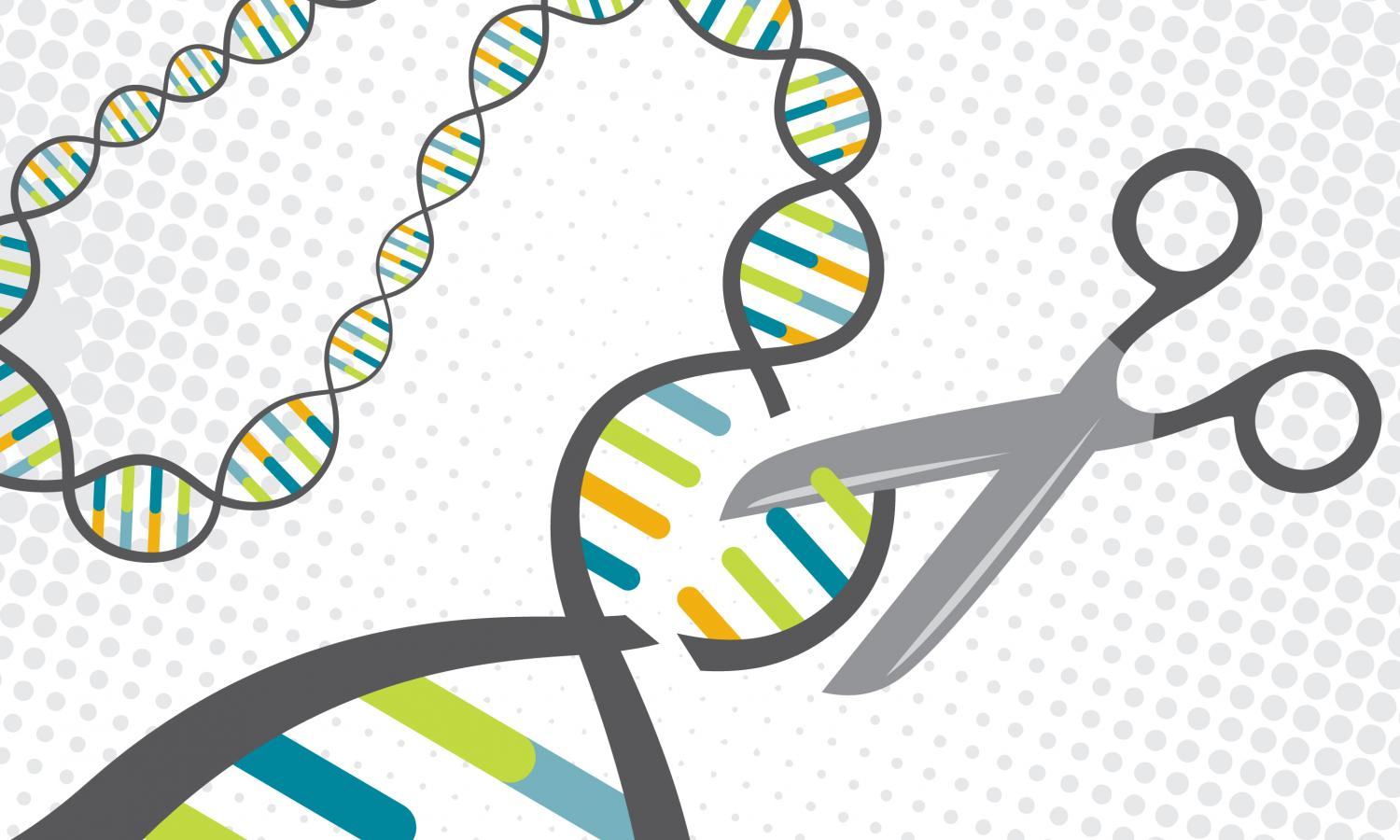
New CRISPR technology 'knocks out' yeast genes with single-point precision


CRISPR-Cas9, Clustered Regularly Interspaced Short Palindromic Repeats, is a gene editing technology that has been thriving in the scientific community because of it’s multipurpose usages, efficiency and accuracy, as it can cut, alter or delete a base of a targeted gene in a DNA sequence. Researchers are using this tool to delete genes in yeast, Saccharomyces cerevisiae, to see how it affects the compound. Saccharomyces cerevisiae has about 6,000 genes and researchers want to study each gene, as an individual and combination, and are working to develop libraries of these yeast genes. Also, this could be useful to produce industrial applications like ethanol, biofuel, chemicals, lubricants, etc.

CRISPR technology is used for medical research, diagnostics and food products, and it’s an important technology, as it has been widely popular now and will be used for the future. A recent article I read that used CRISPR-Cas9 is being used to produce fruit and vegetables, to enhance with more nutrient, produce more product in a smaller area with drought stressed conditions. As a science major, it amazes me how we are always improving our limited resources on earth and to make sure that the future resources will be there for new generations. I am curious to see how researchers will use this tool to further progress it’s science usages.

https://www.sciencedaily.com/releases/2018/05/180507174020.htm https://onlinelibrary.wiley.com/doi/epdf/10.1111/pbi.12603

Tuesday, April 18, 2017

First Synthetic Genome

          Researchers are coming very close to finishing the first fully synthetic genome. Nearly 3 years after the team revealed the first "designer chromosome" they now have 6 of the 16 chromosomes they need to complete the genome of baker's yeast. Theses chromosomes are not an exact copy but a cut-up and stitched together assembly of the coding portions of the known Saccharomyces cerevisiae genome. According to the Discover article the resulting genome "has roughly 1 million nucleotide-level differences from the natural version."


          The project will hopefully yield a single functioning yeast cell containing a fully synthetic set of chromosomes. If this end result is achieved it will give us insight into aspects of the genome of Baker's yeast and even our own. We may be able to identify the role of non-coding regions since for the most part they are being removed in this project. If nothing else, as the author stated, this is an important step in the field of synthetic biology.


Monday, April 20, 2015

Millions of Liters of Expensive Juice from One Fruit


Nootkatone is an expensive substance that costs more than $4,000 per kilo and can only be found as an aromatic in small quantities within grapefruits. Nootkatone is used in many different industries for a variety of different things. It can work as an insecticide, actively works against cancer cell lines in medicines, it has a nice smell for beauty products, and is even used in soft drinks for a subtle taste.  

"We have installed new genetic information in the yeast Pichia pastoris, so that our cells are able to produce Nootkatone from sugar," says Austrian Centre of Industrial Biotechnology lab reasearcher Tamara Wrlessnegger. The yeast cells had their genomes altered with the addition of four foreign genes from the cress Arabidopsis thaliana, the Egyptian henbane Hyoscyamus muticus, the Nootka cypress Xanthocyparis nootkatensis and yeast Saccharomyces cerevisiae. The aroma from a single grapefruit is then used to create millions of liters of this functional juice. 

I think the use of synthetic biology to solve the problem of acquiring this expensive substance is brilliant. Not only is the industrial and monetary value from an experiment like this great but it give these researchers a chance to perform a practical application of using cells to produce compounds for everyday use. This reminded me of a recent genetics video where scientists used E. coli to produce synthetic spider silk which is just another example of how synthetic biology is being used today. I hope that these types of experiments continue to provide the world with an even greater quality of life from the different substances that can be synthesized. 


Orginal Article : http://www.sciencedaily.com/releases/2015/04/150415092837.htm

Wednesday, September 28, 2011

Synthetic biology: A yeast for all reasons

This article reports on work done by Dymond et al. to reengineer the genetic sequence of Saccharomyces cerevisiae, a baker’s yeast.  Previous work in the area of synthetic biology included the genetic reengineering of bacteria such as Escherichia coli and Mycoplasm.  In S. cerevisiae, Dymond and his team have been able to replace sections of two chromosomes with synthetic DNA: twenty regions from the naturally occurring yeast chromosome were removed and genes with bases longer than 500 were recoded to contain “watermarks”, sequences that are used for the easy differentiation between synthetic DNA and natural sequences.  The findings for this experiment indicate that synthetic DNA can be used with minimal risks: yeast cells did not suffer serious defects and the synthetic sequence was reproduced in living cells.  In addition to this, Dymond and his team introduced loxPsym sites into their synthetic DNA.  They found that, in the presence of an enzyme called Cre recombinase, loxPsym sites combine with each other to make new random structures.  These findings indicate that there is great potential to synthesize numerous yeast genomes with differing structures. The major setback to this research is that a lot amount of time, money, and labor is needed to continue it.  I think the work Dymond and his team are doing is very important to genetics and biology.  Using synthetic DNA to recode the genomes of different bacteria will accelerate experiments involving these organisms: their genome will be easier to understand and work with if it is recoded to be simpler.