Showing posts with label Alzheimers. Show all posts

Thursday, December 7, 2023

Brain Cell Genetics Illuminate Alzheimer’s Disease Pathways

Alzheimer's disease is the most common type of dementia, it is a progressive disease beginning with mild memory loss, and possibly leading to loss of the ability to carry on a conversation and respond to the environment. Alzheimer's disease involves parts of the brain that controls thought, memory and your language. This article that I chose specifically talk about how to understand Alzheimer's as well as pinpointing how specific the brain cells contribute to different stages of the diseases. In the article they talk about three major components which are cell-type specific genetic risk, Advanced sequencing techniques and implication for targeted treatment. Many diseases are severe and I think that Alzheimer's is importantly to understand that the autopsy data spanning all stages of disease severely. Many Alzheimer's diseases can risk the genes are specifically expressed in a microglia and astrocytes. in another article I discovered something interesting that newly identified genetic variant protects against Alzheimer's. The researchers who was led by Harvard Medical school investigators at Massachusetts general hospital stated that a newly identified variant which occurred in a different gene than the genetic variant in the same family.   
I believe that Alzheimer's and many other diseases should be focused on, because diseases are important to learn about because with health people should realize that you should be educated in health to know what is going on in life. 
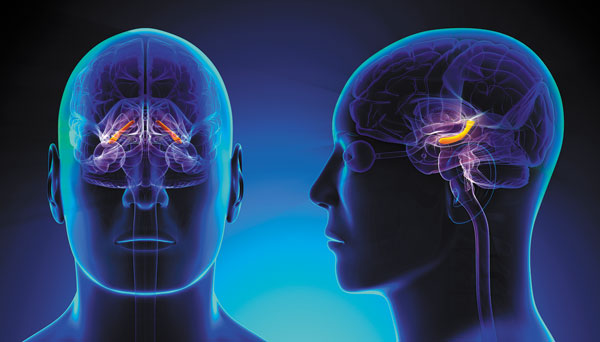
In this Photo above shows that Alzheimer's affects many things such as memory, mood behavior and many more. so, I feel like a autopsy specifically a genetic risk contributed to earlier stages of the disease progress would help indicate the disease. even though this diseases mainly focuses on the brain cells it's could to know the symptoms of the disease.  


References 

HALEY BRIDGER | Mass General Brigham Communications. (2023, May 15). Newly identified genetic variant protects against alzheimer’s. Harvard Medical School. https://hms.harvard.edu/news/newly-identified-genetic-variant-protects-against-alzheimers

Neuroscience News. (2023, December 5). Brain Cell Genetics Illuminate Alzheimer’s disease pathways. https://neurosciencenews.com/brain-cell-genetics-alzheimers-25319/ 


Wednesday, December 6, 2023

Every Brain Needs Music

 One of the most fundamental aspects of the human condition is the creation, consumption, and subsequent adoration of music. Think of your favorite song right now, this is called "audiation", as you do this synapses in your brain fire in a pattern similar to brains that are actively listening to music. In fact music is so fundamental to our brains, that there are specific cell clusters in the auditory cortex of the human brain that only activate in response to music and sounds with musical qualities (i.e. ringtones, jingles, etc.). 

An fMRI of a brain listening to music

Not only does music feel good emotionally, it also may help prevent and lessen the effects of degenerative cognitive conditions such as Alzheimer's. For a long time it was assumed that humans stopped producing new neurons after they were born. This assumption was based on a simple fact, neurons themselves do not go through mitosis. Therefore, the rationale was, no mitosis, no new neuron cells. It is now known that while neurons themselves cannot divide, the stem cells that produce neurons can divide well into adulthood, this is called neurogenesis. Neurogenesis is well documented in the pharmaceutical industry as many medications for the treatment of depression and anxiety such as SSRIs and SNRIs actively stimulate neurogenesis. It is well documented now too that listening to music can stimulate a bit of neurogenesis. Playing music can stimulate even greater neurogenesis creating meshes of new neurons and synaptic pathways in the brain. These additional and strengthened neural pathways give the brain a surplus of neurons that can help resist and soften the effects of diseases like Alzheimer's without the use of medication. 

Pianist and OHSU Neuroscientist Dr. Larry Sherman playing piano

This is a very interesting field of research because it is clear that the act of music has lasting effects on our brain's chemistry. Future questions could potentially investigate if there is any epigenetic effects that correlate with long term music use. Given the fact that no other primates make music in the way humans do, it would be interesting to see if there is/are a "music gene(s)". It also goes to show that learning music is not only good for the soul, it is objectively good for your body. So make sure to eat your vegetables, get plenty of sleep, and enjoy your favorite musical artists, your body will thank you!


Link to article here

Thursday, April 29, 2021

Scientists reveal how brain cells in Alzheimer's go awry, lose their identity

 Can you grow new brain cells? - Harvard Health

This article discusses how brain cells in Alzheimer's are weighed heavily with stress and changes. These changes result in the cells becoming less specialized. It has been observed that these changes in the brain cells look like that of cancer cells. With this research, 13 patients' skin cells were collected with sporadic, age-related Alzheimer's, 3 people with the more rare, inherited disease form, and 19 people who were the control, didn't have Alzheimer's. They then used fibroblasts to generate induced neurons and compared the differences molecularly in the cells between those who did and didn't have Alzheimer's. Observed was that the induced neurons made from those with Alzheimer's had characteristics distinctly different from those who had healthy cells. 

It was interesting reading about how brain cells in Alzheimer's is similar to that of cancer cells. This article was very insightful. Alzheimer's is such a sad condition to see someone go through, but one that is interesting to read up on.

Saturday, November 28, 2020

A genetic link to predict Alzheimers disease


Scientists at Tufts University School of Medicine came across a pattern while researching Alzheimers disease. Their initial goal was to find mechanisms that result in Alzheimers over time but are undetectable because of their lack of symptoms in the beginning. They scientists found a mechanism in the brain that causes a traffic jam of enzymes. This mechanism is found to be a product of a genetic mutation. Which increases the amount of amyloid beta. Which is a big cause of Alzheimers disease. This is a very big find for the medical community because it has been very hard to predict Alzheimers up until recently. This is mainly due to the lack of symptoms until it is too late or untreatable. However with this new discovery it may be possibly to detect the onset of Alzheimers years in advance due to the discovery of this mechanism in the neurons of the brain. Treating this mechanism early has show in experiments to prove some help to delaying or protecting against the disease. However In the late stages of this mechanism treatment has offered no help. This is still all in trials and still being researched however, so there is still hope from this trial to have an even more massive breakthrough. (staff)


Source: staff, Science X. “Found: A Genetic Link to Molecular Events That Precede Symptoms in Alzheimer's Disease.” Medical Xpress - Medical Research Advances and Health News, Medical Xpress, 18 Nov. 2020, medicalxpress.com/news/2020-11-genetic-link-molecular-events-symptoms.html. 

Links used: 

https://medicalxpress.com/news/2020-11-genetic-link-molecular-events-symptoms.html

https://stm.sciencemag.org/content/12/570/eaba1871


Friday, November 27, 2020

A deletion of a specific gene triggers response linked to Alzheimers disease


    An article published by Science Magazine, talks about a deletion or a rare variant of a gene referred to as GGA3 and how it affects neurological pathways that are interrupted during late onset Alzheimers. In this study, when mice were subjected to a deletion of this gene, it disrupted axon movement of the BACE1 (β-site APP-cleaving enzyme 1). This resulted in a buildup of axons. This buildup of axons leads to damage in the brain. This damage is directly linked to damage that is observed and expressed with Alzheimers disease.  This is specifically important because this process works independently of β-amyloid. β-amyloid has specifically been linked to Alzheimers because it makes up the plaque buildup in the brain. While this study was unable to identify the specific mechanisms that are triggered between the deletion of GGA and BACE1, they were still able to identify that the deletion or mutation has a direct affect. 

    This study is important to trying to find out the specific trigger for Alzheimers. Science is still unsure what exactly causes Alzheimers disease. Understanding neurological diseases can be very challenging because there are many pathways and complex protein cascades. Alzheimers is specifically difficult because it does not show signs in early stages of life and typically shows symptoms in older age. This is important in genetics because it makes it difficult to track through families. However, if we are able to detect this deletion or alteration in GGA3 gene it may allow us to see the risk of developing Alzheimers in later years. We may be able to have the opportunity to alter or manipulate this gene with CRISPR eventually.


Articles used: Science Mag and PubMed article about β-amyloid with BACE1