Showing posts with label #illness. Show all posts

Friday, December 12, 2025

New Study Aims to Detect Illness in Babies Early

New Study Aims to Detect Illness in Babies Early 

 A new study is providing doctors with a promising way to identify rare but treatable illnesses in newborns long before any symptoms appear. They are using cutting-edge genomic sequencing on umbilical cord blood, in which researchers hope to identify up to 200 inherited conditions (Dias, 2025). Doctors working on the project say that catching these conditions early could change families’ lives who are preparing for a baby, allowing babies access to treatments months or even years earlier than would normally be possible (Dias, 2025).

   There are some concerns involving how they determine who has the illness. Because everyone carries genetic mutations that may never lead to illness, experts worry that screening newborns so early could lead to false positive results that would suggest a problem when there isn’t one. This could cause unnecessary stress, extra testing, and fear for new parents. Some have also raised concerns about how securely the babies’ genetic information will be stored and who will be trusted with access to it (Dias, 2025).

   Although this study has some downsides, it’s still an important step forward in caring for babies. If it works the way doctors hope, it could help stop serious health problems before they even begin.
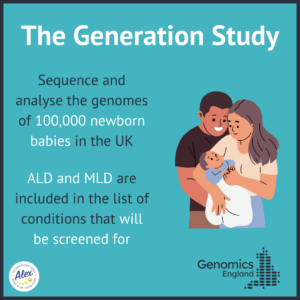


Although the study has some downsides, I think it could really make a difference for babies’ health. If it works the way doctors hope, it might be able to prevent serious illnesses before they happen. At the same time, I can understand why some parents might feel nervous about their baby’s genetic information being used because it's such a recent study. 


If you want to learn more about the study and see the full research details, you can visit the study’s official website here: https://www.genomicsengland.co.uk/initiatives/newborns 


References:

Dias, A. (2025, November 26). Genomic study of Gloucestershire newborns “could be life-changing.” https://www.bbc.com/news/articles/c0l7lx119nzo

Genomics England. (2024). Newborn Genomes Programme. Genomics England. https://www.genomicsengland.co.uk/initiatives/newborns



Wednesday, December 4, 2019

The study of human heredity got its start in insane asylums


Article: https://www.sciencenews.org/article/study-human-heredity-got-its-start-insane-asylums
Relating Article: https://www.nature.com/articles/d41586-018-05313-8


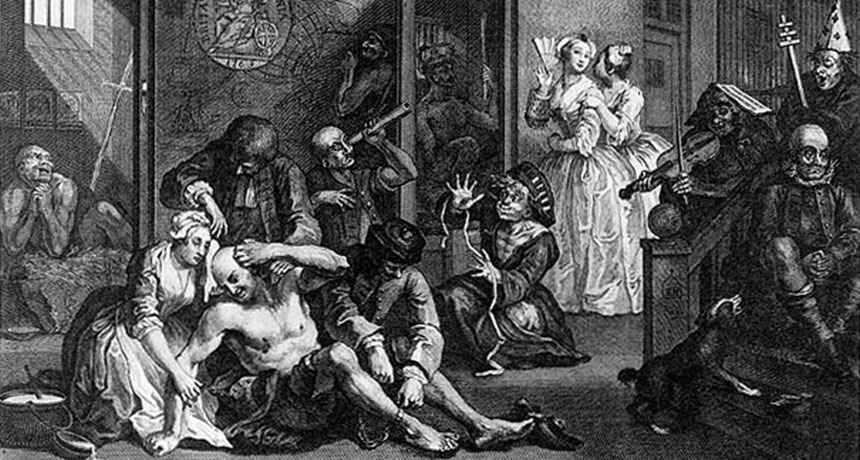
King George III's descent into madness sparked efforts to untangle the inheritance of mental illness by analyzing patient records at insane asylums as depicted in the above photo representing London's Bethiem Hospital in 1735.
The study of heredity emerged as an international endevour to mine data for associations to explain mental illness. It started with good intentions. Many asylum founders of the late 18th and early 19th centuries hoped to cure people of mental illness through a humane, psychosocial "moral therapy". At first, asylums claimed absurdly high 'cure' rates. Reports of 50% were routine. However by the mid-nineteenth century, asylum directors realized that they could simply say that although a cure seems distant, statistical patterns discovered in ever-larger study populations will one day reveal a cause, and a cure will follow. People bought it and asylum science grew. Eventually, having eliminating previous known causes for mental illness, scientist fixed on the patients' pedigrees. They promised to find more data and genes for diseases. After the 1927 Supreme Court decision Buck v. bell, the US programs forced sterilization on tens of thousands of people deemed mentally deficient. They launched their wider programs by gathering more than 10,000 people from asylums all over southern Germany.


This was a very interesting article to have read. These connections made so early on in history paved the way for future research. These connections are roots to today's genomics industry the tree. In the article it states that some will reject this idea, however the author of this article suspects that there is well-documented evidence to prove this making it difficult to dismiss.