Showing posts with label #fungus. Show all posts

Wednesday, November 26, 2025

Metarhizium: The Natural Mosquito repellent

 The New York Times published an article this month highlighting a new and natural mosquito repellent called Metarhizium.Metarhizium is a fungus that is already used in pest control, but scientists have found a way to improve its function. Basically, they genetically engineer it to produce copious amounts of an irresistible-smelling substance that attracts mosquitos, and lace it in traps to attract and kill said mosquitos. When this experiment was performed in a lab, over half of the mosquitos were killed, providing a natural and cheap way to get rid of one of Earth's most annoying and dangerous bugs.

 As someone who has always been plagued by mosquitos, this study is very interesting to me. I've tried many different bug sprays over the years, with varying amounts of effectiveness, but a natural mosquito trap that is actually more enticing to mosquitos than humans are is something that I had never heard of before now. Over time, everything evolves, and mosquitos have been evolving to become resistant to some bug sprays and other methods that are used. However, scientists see mosquitos as unlikely to evolve to become resistant to the Metarhizium because it's a natural way to kill them and can evolve with any resistance and not some man-made chemical bug spray. The article says that they have developed a new trap design and plan to test it outdoors soon, meaning that we might start to see these traps being able to be purchased in the future, assuming everything works out. Either way, I've been affected with mosquito bites my whole life, so I will definitely be keeping an eye on any development involved in getting rid of them, or at least deterring them for biting me.
 

 Metarhizium - Wikipedia 

Sunday, November 2, 2025

This Genetically Engineered Fungus Could Help Fix Your Mosquito Problem


    Researchers announced a week ago that Metarhizium, a fungus used to control pests, can be genetically engineered to emit a sweet smell that lures mosquitoes and kills them. Mosquitoes are among the deadliest animals in the world. They can spread malaria and other diseases, which kill one million people each year.  
    
    During a lab experiment, the majority of the mosquitoes were killed due to the fungi. Scientists have said this can be an affordable and eco-friendly way to get rid of mosquitoes. Nnimmo Bassey, who is a part of the Health of Mother Earth Foundation, which is an advocacy group in Nigeria, says "...fighting malaria through genetic engineering is dangerous". He worries that the fungus might also kill other organisms in the environment. Dana Perls, who is a part of an environmental group called Friends of the Earth, also voices her concern about the use of genetic engineering of fungi. Perls states, "Genetic engineering of fungus could have problematic negative public health impacts and unpredictable ripple effects on the ecosystems, affecting pollinators, bats, and bees. Like with all genetic engineering, this needs to be addressed with great caution". 
    
    Raymond St. Leger, a professor at the University of Maryland and who was also a part of the study, states that much more research is going to be needed before letting fungi in the wild mix with other organisms. According to Leger,  based on the lab experiments done so far, the fungus is non-toxic to the other insects. 

References: 
https://www.npr.org/sections/goatsandsoda/2019/05/30/727884309/scientists-genetically-modify-fungus-to-kill-mosquitoes-that-spread-malaria
https://www.nytimes.com/2025/11/01/science/fungus-mosquitoes-genetic-engineering.html


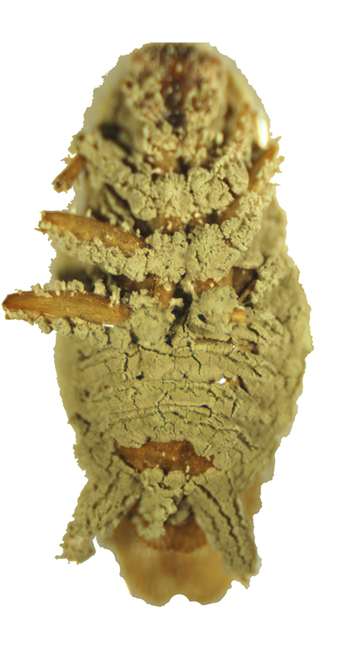
    In the picture, this mosquito was infected by two types of Metarhizium fungi. One glows green, while the other glows red. 

Sunday, December 8, 2019

Genetically Modified Fungus Kills Parasites

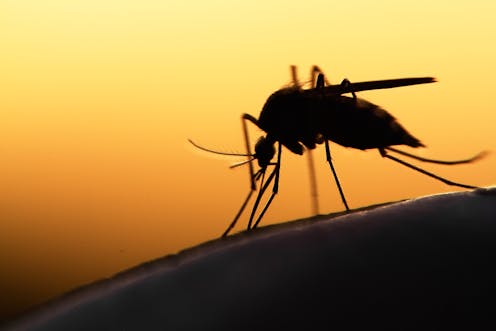
Image result for malaria mosquito


Metarhizium phinghaense is a green fungus that has the ability to kill insects when they come in contact with it.  This fungus is now undergoing studies to see if it can be used to kill insecticide-resistant mosquitoes that carry the Malaria pathogen and prevent the spread of disease.
Researchers have genetically modified the Metarhizium phinghaense fungus to carry a toxin responsible for killing off the mosquitoes, including those carrying Malaria pathogen, called the spider bite toxin.  It is a hybrid toxin that enters the blood of mosquitoes, called hemolymph.  This toxin not only kills the mosquito and stops the transfer of Malaria, but it kills the pathogen themselves so it can't be picked up within the environment.

Image result for burkina faso malaria
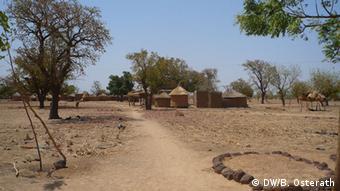
Brkina Faso, West Africa
In Burkina Faso, a country in West Africa, a study was done to assay the effectiveness of the Metarhizium phinghaense hybrid fungus.  I was performed here because in 2017, 219 million cases of malaria were reported and 92% of those cases originated in Africa, and 93% of the deaths originated in Africa as well.  To perform the study they secured the area with mosquito nets preventing new mosquitos to enter or case study mosquitos to exit.  In their findings that introduced the hybrid fungus to the mosquitos, the fungus killed off 2 generations of mosquitos.
This genetic modification could be the start of bringing down Malaria cases more than 50% percent if everyone would plant them outside of there homes, villages, etc.  The mortality rate would significantly decrease as well.  Although this discovery has great benefits, what would be the consequence to genetically modifying the Metarhizium phinghaense fungus?

Original Article: Science News

Monday, November 6, 2017

Genes in fungi produced a deadly forest pathogen


From time to time, you will see a mushroom in your yard and not really think about it that much besides wondering when it got there. It would be small, and you could probably smash it with your foot, but that does not compare to the other types of fungi that exist on the planet. For instance, the Armillaria ostoyae is the largest, and most deadly fungus on the planet. According to the article, this fungus creates rhizomorphs, which are responsible for taking in nutrients from dead organic matter such as from dead plants and animals. After analyzing the genomes and rhizomorphs of this species of fungi as well as comparing it with other species called fruiting bodies, it was determined that the genomes of the Armillaria ostoyae were expanded because certain sections were copied multiple times, which led to different changes in the behavior of the fungi. For example, the Armillaria ostoyae fungi had more proteins that were responsible for ingesting cells and parts of plants. The differencces in the genome was also responsible for making the Armillaria ostoyae undetectable, because it was able to ingest nutrients around trees that were found in the soil around them that would normally "alert" the tree that the fungi was nearby, and this would allow for the Armillaria ostoyae to be undetected, allowing for it to begin to take nutrients from the tree, and eventually kill it. It was also found that the fungi's rhizomorphs had photoreceptors and pheromeres that are used to detect the plants and animals it will consume, unlike the fruiting bodies. This shows how deadly this fungi can be, as it has a genome that allows for it to completely wipe out entire forests. However, what was also found was that despite this difference between the Armillaria ostoyae and the fruiting bodies, they actually have most of the same genes, which suggests that the Armillaria ostoyae might have had a mutation millions of years ago that caused for this behavior to occur. 
I find for this article to be really interesting. I think it is fascinating that the genomes of organisms can change over time as they adapt to their environments. I think that this is very important in a changing environment, because without the concept of "survival of the fittest," then there would probably be no life on earth or very little. Populations of different organisms and plants would be completely wiped out because of predators or other causes. However, genomes change not only for survival in that way, but they can also change in order to benefit themselves as well as the environment. The Armillaria ostoyae is not just seen as a deadly forest pathogen, it is actually helping out forests by promoting healthy growth and allowing for the healthy trees to thrive more. So in a way, this "deadly forest pathogen" is actually the reason for why forests are able to grow more, and I think that it's really awesome because it was caused by this change in the genome of a the Armillaria ostoyae.