
Showing posts with label toxin. Show all posts
Showing posts with label toxin. Show all posts
Monday, November 22, 2021
The Stolen Gene Between the Whitefly and Plants

Sunday, December 8, 2019
Genetically Modified Fungus Kills Parasites
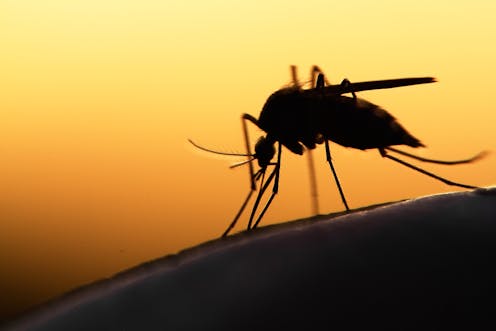
Metarhizium phinghaense is a green fungus that has the ability to kill insects when they come in contact with it. This fungus is now undergoing studies to see if it can be used to kill insecticide-resistant mosquitoes that carry the Malaria pathogen and prevent the spread of disease.
Researchers have genetically modified the Metarhizium phinghaense fungus to carry a toxin responsible for killing off the mosquitoes, including those carrying Malaria pathogen, called the spider bite toxin. It is a hybrid toxin that enters the blood of mosquitoes, called hemolymph. This toxin not only kills the mosquito and stops the transfer of Malaria, but it kills the pathogen themselves so it can't be picked up within the environment.
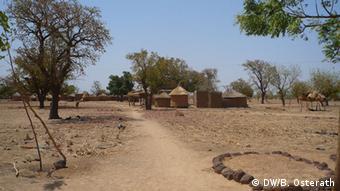 |
Brkina Faso, West Africa
|
This genetic modification could be the start of bringing down Malaria cases more than 50% percent if everyone would plant them outside of there homes, villages, etc. The mortality rate would significantly decrease as well. Although this discovery has great benefits, what would be the consequence to genetically modifying the Metarhizium phinghaense fungus?
Original Article: Science News
Tuesday, December 13, 2016
Oxygen - The New Antibiotic
Along with being antibiotic resistant, bacteria have also adopted sleep as a form of survival. By using toxin antitoxin systems, bacteria can become dormant to resist antibiotic attacks and awaken as soon as their environment permits. These systems, also referred to as biofilm, are responsible for 80% of infections and are often the reason bacteria are referred to as antibiotic resistant.

The research also reveals that only 10% oxygen is enough to awaken the bacteria, and using the oxygen passageways, an entire colony of bacteria can be manipulated into breaking up and dispersing biofilm so an actual antibiotic may be able to attack the active bacteria.
Although interesting, I did not entirely understand how this information can be applied into a human bacterial infection. Normal blood oxygen levels can be anywhere from 95-100%, so how would this knowledge be applied when prescribing an antibiotic treatment? It probably is more useful as prophylactic, to prevent biofilms from forming in the body all together to prevent bacteria from going dormant in order to cure an infection faster.
Image taken from http://news.psu.edu/photo/441070/2016/12/08/toxin-antitoxin-002
Wednesday, November 23, 2016
Grass Species Removes Toxin
The cost of having an army or military is not just money wise but also environmental. The artillery shells that are fire for practice to better train our soldiers leave a trace of a toxic organic compound known as RDX. If enough of the compound is ingested, it can lead to organ damage, and seizures. The problem is not in the air a person breaths near the contamination but what is happening underground. When the shells are fired they drop to the ground where the soil absorbs the RDX. When it rains the compound is pushed further down into the earth where there are natural water reserves which get contaminated. The water then gets pump up for drinking purposes and people get ill.

Science have been able to modify a transgenic grass species to be able to absorb the RDX into its roots. The is just the begin. The plant is actually able to cover the RDX into nitrogen which makes the plant grow bigger but also gets rid of the complete trace of the RDX. "UW engineers introduced two genes from bacteria that learned to eat RDX and break it down into harmless components in two perennial grass species: switchgrass (Panicum virgatum) and creeping bentgrass (Agrostis stolonifera)"(Sciencedaily). Normal grass is able to absorb the toxin too but when it dies the toxin gets release back into the environment, it is not able to get rid of it. The grass species have not been approved by the USDA yet, since they need to make sure it will not start to take over or be harmful to the environment. If this grass species does get approved, does what it is supposed to, it can be planted and maintained with little cost which would help contaminated areas get cleaned up in a couple of weeks. One of the study done took a contaminated area less than two weeks to clean up. The speed this species is able to do it is amazing.
https://www.sciencedaily.com/releases/2016/11/161122182355.htm
Subscribe to:
Posts (Atom)