Sources
1. https://www.hsph.harvard.edu/obesity-prevention-source/obesity-causes/genes-and-obesity/
Sources
1. https://www.hsph.harvard.edu/obesity-prevention-source/obesity-causes/genes-and-obesity/
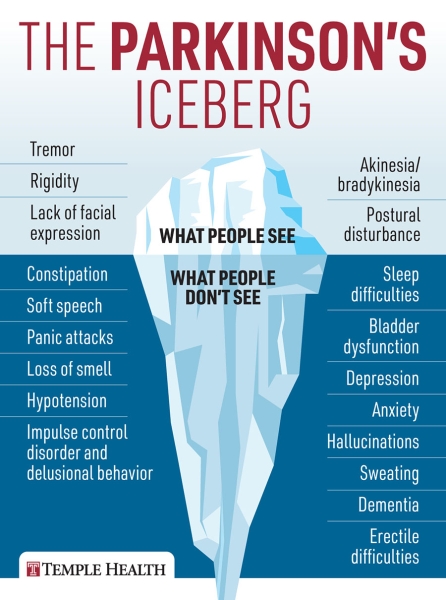
In the article written by U.S. News & World Report researchers at the University of Southern California have discovered a genetic mutation that might decrease the odds of having Parkinson's disease by half. This mutation is found in only 1% of people of European descent, but if findings are more thoroughly tested they can possibly create prevention or therapies for the disease.
The mutation is found in the mitochondria, affecting a microprotein called SHLP2. The genetic variant only changes the genetic code of SHLP2 by one singular letter. Dr. Pinchas Cohen discovered the gene mutation in 2016. Other research Cohen had conducted with this gene variant seemed to lessen the chance of cancer. In their research, they compared people of European descent who have been diagnosed with Parkinson's and those without. Those with this gene had half the chance of developing it compared to those who do not. This small mutation prevented the dysfunction of cellular mitochondria, a possible link to what causes Parkinson's disease. The research team even sampled human and mice tissue to test possible cellular connections.
I truly believe that research on diseases such as Parkinson's is extremely important to the genetic field. Not only has the advancement in genetics saved lives, but it will completely change the lives of those who are not born yet. If we can genetically advance ourselves to prevent horrible diseases such as cancer and Parkinson's we will have proven that science and technology advancement has changed our world forever. The more we study and understand these diseases, the more we come closer to curing them.
Sources:
(News Article) https://www.usnews.com/news/health-news/articles/2024-01-05/gene-mutation-protects-against-parkinsons-disease
(Published Study) https://www.nature.com/articles/s41380-023-02344-0
(Alternative Link) https://www.parkinson.org/understanding-parkinsons/what-is-parkinsons
In the 2022 Article by University College Dublin on Phys Org, it states that artificial selection is the identification by humans of desirable traits in plants and animals. It appeals to humans as it is fast, allowing them to mold organisms to fit their needs. In recent years, a critical set of genes linked to successful racehorses has been identified by an international research team.
In their testing, the scientists compared the genomes of multiple different breeds of horses bred for sports. What they found was that they were able to pinpoint the set of genes that played a major role in the muscle, metabolism, and neurobiology of successful race horses. The researchers used gene expression data from skeletal muscle from thoroughbred horses to investigate if the genes they had identified were involved in the muscle response to exercise and training. By integrating the two data sets of the different breeds of horses. They are now able to fine-tune the list of racing genes to those that were most biologically relevant to racing. One of these genes is NTM which functions the brain development and influences learning and memory, which is a key role in determining whether the horse ever races.
It is very interesting to see how science has progressed over the years and how it has allowed humans to shape the genes of animals for our own benefit. Although I believe that one should use their knowledge and resources to shape the best result, I am wondering how the use of artificial selection will shape the racing industry. How is the industry going to look in the future when everyone is producing winners?

Sources
https://phys.org/news/2022-12-sport-kings-key-genes-linked.html
https://www.sciencedirect.com/topics/agricultural-and-biological-sciences/artificial-selection
