Showing posts with label species interbreeding. Show all posts

Saturday, November 12, 2016

Interbreeding Between Cousins Calls for a New Study


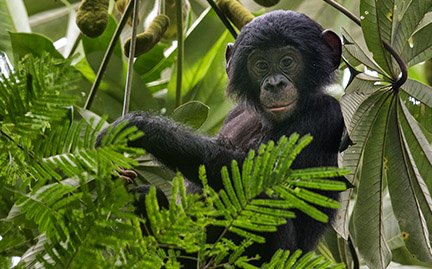
Two different species of apes interbred to create a new study. Researchers found that chimpanzees and bonobos became different species about two million years, but DNA found in chimpanzees proves that the two species have mated and produced offspring together. This did not only happen once but two times in the past 500,000 years. Around 350,000-500,000 years ago chimps and bonobos were suggested to come together and again about 150,000 years ago. According to another journal, these researchers were not the first to find these results in DNA research with the chimpanzees. The researchers compared this interbreeding to humans mating with Neanderthals and other possible species that could have existed thousands of years ago. Neanderthals DNA is found in humans just like the apes.

I find this so interesting because I feel as if both species do not see a large difference between each other. I believe that animals are very intelligent, especially apes. They are distant cousins, but it is odd that they have only seemed to mate at two different times. It makes me wonder why it occurred when it did and why did it not happen again. The researchers mentioned that the bonobo DNA in a chimp was actually more negative rather than a positive, for a biological standpoint I would not know much about it, but for research I find it quite awesome. Hopefully more studies are conducted to find if more species did interbreed and to also find out why mixing these two species is so negative.
Tuesday, April 12, 2016

Lack of Neanderthal Y Chromosome Genes in Humans

Figure 1. Neanderthal woman (left) and modern human (right)

It is not widely known, but modern humans carry up to 4% of Neanderthal DNA. This occurred because of interbreeding between the two species about 50,000 years ago when Homo sapiens were expanding to Eurasia. Of this 4% of DNA, there is none coming from the Neanderthal Y chromosome. Some scientists believe this merely due to chance that it was lost in the human gene pool, but new research presents a more likely option. Several of the Y chromosome genes of Neanderthals are a part of the immune system, so a woman's immune system would attack these genes because they see it as a threat because of the incompatibility. This would have also led to miscarriages between the two species. So far this is only a hypothesis, but the mother's immune system has been known to perform similar acts.

Before reading this article, I had no knowledge that a part of our DNA was that of the Neanderthal's. Though it is insignificant it is still fascinating to see that it is even present. It makes one wonder if there is other Homo DNA in our genomes. I also believe that the 4% will surely disappear completely within a few hundred years. If their hypothesis is correct, then mother immune systems will continue to eradicate any remaining Neanderthal Y chromosomes due to its incompatibilities.

Tuesday, December 8, 2015

Oh, the Gall! The Beer of a Better Tomorrow

Five hundred years ago, Saccharomyces cerevisiae was domesticated for use by humans in ale, wine, and bread. One of its cousins gave rise to lager beer. Hybridization of Saccharomyces would prove to be better for the industry, and researchers are attempting to do so.
Image credit:
Diego Libkind, Institute for Biodiversity
and Environment Research, Bariloche, Argentina

Creating a hybrid in the wild between two yeast species is one in a billion, but when it did occur, it created a huge industry in lager. This was the hybridization between Saccharomyces cerevisiae Saccharomyces eubayanus, which lives inside tree galls and can conduct fermentation at low temperatures.
and

Repeating the process would make advancements in alcohol fermentation, biofuel, and more. More yeast variants accomplish many things: reduction of monoculture, more variations to experiment with with regards to flavor, enhancing production, and even making new products. The plasmids then came be removed, essentially locking the new yeast's DNA in, unchanged.

Plasmids are vital to making new variations. Inserted into the two species, they exhibit a protein that makes two distinct yeast species to mate. This also can help overcome a creative bottleneck, as industrial yeasts cannot make spores.

Original Article: Link
Original Paper