Showing posts with label genetic edits. Show all posts

Monday, September 30, 2024

Unveiling Genetic Pathways to Stop Toxoplasma gondii

Associate professor of biology at MIT and a member of the Whitehead Institute for Biomedical Research, Sebastian Lourido, is studying a parasite called Toxoplasma gondii. This parasite causes the disease known as Toxoplasmosis, which infects about one-third of the world’s population. While most carriers do not show any symptoms, the parasite can stay dormant in the body for years, only becoming active when the carrier’s immune system weakens. Toxoplasma is part of a group of parasites called apicomplexans, which are challenging to study because their genetics are different from other organisms commonly used in research like yeast, mammals, and bacteria. Current drugs to treat Toxoplasmosis help with the initial symptoms of the disease, but they do not affect the parasite when it is dormant. Lourido’s motivation in researching Toxoplasma gondii stems from the fact that he was diagnosed with Toxoplasmosis at age 17, and his goal with his research is to find a treatment to keep the parasite in its dormant stage.

Lourido’s lab currently uses a technique called CRISPR, which allows scientists to edit genes in the Toxoplasma genome to study how each one affects the parasite’s function and survival. Lourido’s team has discovered important information about drug resistance and the processes that keep the parasite alive by systematically examining each gene. A key discovery was a gene called BFD1, which helps Toxoplasma survive for a long time. Currently, his team is researching the mechanism in which the parasite transitions between dormant and active, and how the parasite prefers to remain dormant in specific cellular environments. 

Lourido and his team’s work is exciting as their work can not only be used to help treat the third of the world that is infected with the Toxoplasma gondii parasite, but will likely be used to understand how similar parasites reside within the bodies of various organisms. Although Lourido’s research is in its early stages, the most important thing his research is doing is shedding light on the underfunded research in the field of biomedical research, despite its impact on global health.


https://news.mit.edu/2024/sebastian-lourido-pursues-stealthy-parasite-secrets-0825

https://www.genome.gov/genetics-glossary/CRISPR#:~:text=Definition,editing%20systems%20found%20in%20bacteria.

https://www.cdc.gov/toxoplasmosis/about/index.html

https://www.ncbi.nlm.nih.gov/pmc/articles/PMC6978799/


Wednesday, November 15, 2023

How Octopi Can Edit Their Own RNA to Rapidly Respond to Environmental Changes

How octopi can edit their own RNA to rapidly respond to environmental changes

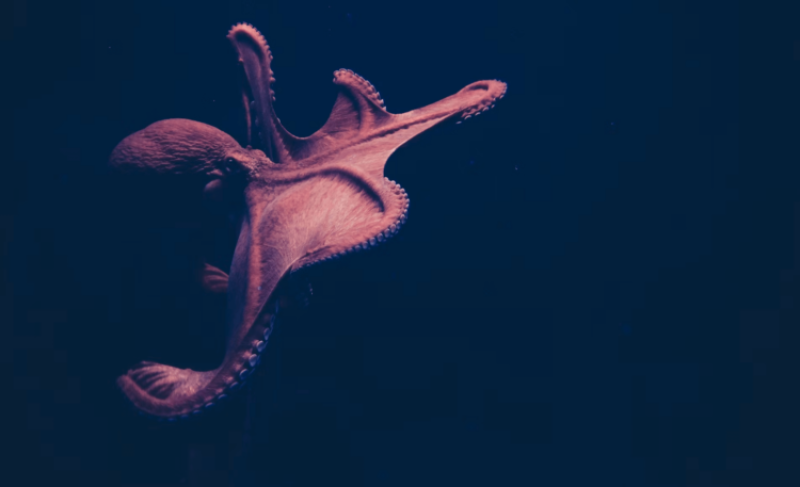
 Organisms have multiple ways that they change their gene expression in response to stimuli. For example, an octopus thats suddenly put into frigid water can slow their enzyme activity. Some organisms can control their genetic responses to stimuli in another way, RNA editing. RNA editing involves the insertion and deletion of nucleotides in the RNA and has been visualized in mRNAs, tRNAs, rRNAs. It has not been yet visualized in prokaryotes. RNA editing is divided into two categories. One categories being insertion and deletion of nucleotides that changes the length of the target DNA. The second category is editing by base modification that changes a nucleotide into a different nucleotide, without changing the length of the RNA. The article describes how cephalapods, octopi, squid, and cuttlefish can change their mRNA in ways that can alter enzymes. Since the edits are in RNA and not DNA, they can go away quickly. The nucleotide adenine in the mRNA is replaced with inosine, a nucleoside that acts similar to guanine. This RNA edit can be known as "A-to-I RNA editing" and if it occurs in a protein, it alters its function. Finding out what the cephalopods use this RNA editing for was the big question. Researchers tested this by using the California two-spot octopus, which cannot generate its own body temperature, and placed both captive and wild octopi in tanks of 13 degress celcius. In these tanks, the researchers observed an increase in 13,285 mRNAs where the edited genes altered the proteins functions. When placing the animals back into warmer water of 22 degrees celcius, the amount of mRNAs decreased to 550. These RNA edits affected their nervous system and the scientists could hypothesize that the octopi were using these gene edits to cope with the change in temperature. 

Monday, March 15, 2021

How Squids are able to change their Genetic Material

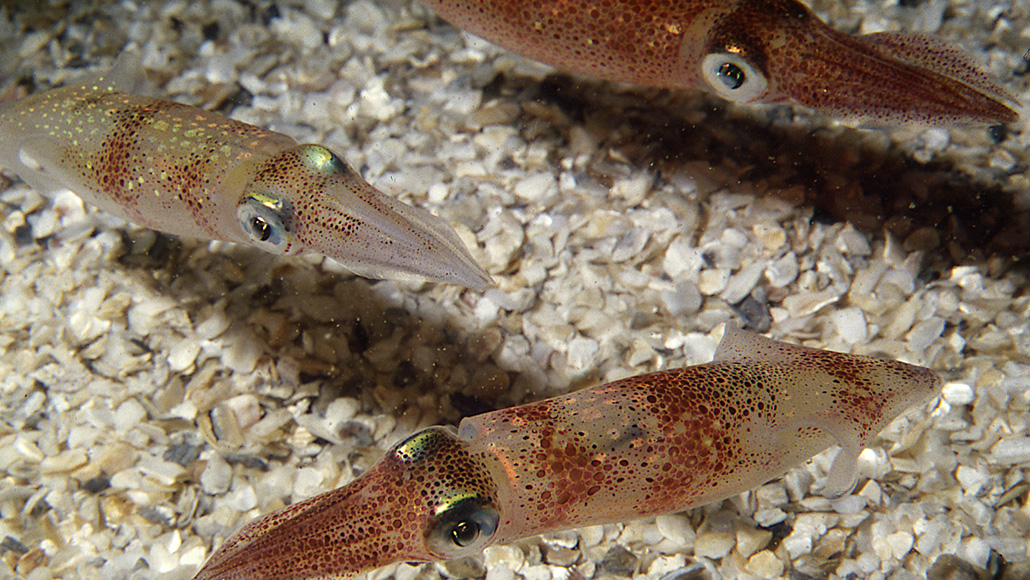
In an article from Science News, it has been discovered that longfin inshore squids, scientifically known as Doryteuthis pealeii can change their genetic material. This newfound ability of theirs can help them create specialized proteins much more quickly. The squid is able to do this from the outside boundaries of a cell within their nucleus which is where any modifications take place. The changing of the genetic material is by changing the strings of RNA outside the nerve cell's nucleus. 

The ability of the squid to make these changes occurs within the cytoplasm is what makes it possible for them to make any adjustments to the mRNA. In doing so, they are able to produce proteins that "are tailored to meet a cell's needs and hone crucial cell processes". Joshua Rosenthal a biologist at the Marine Biological Laboratory in Woods Hole, Massachusettes, stated that if it is possible for researchers to learn and discover more about these genetic edits, they would be able to develop therapeutics for health conditions such as chronic pain by genetically editing cells that create these pain signals. An article from Science Friday also goes into detail as how to researchers are going about in studying these changes and how the squid is able to make the genetic edits.

It is very interesting to know that there are organisms that are able to change their genetic makeup. All these new findings, I believe will be great because they can further help researchers not only to understand how these organisms are able to do what they do but to also help people in the process.