Showing posts with label dystrophin. Show all posts

Tuesday, October 10, 2023

Gene therapy for muscular dystrophy stirs hopes and controversy

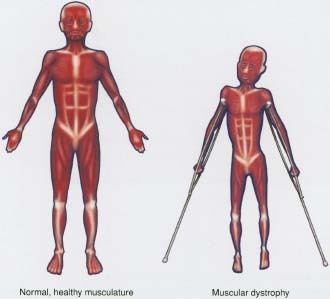
Muscular dystrophy is the most common inherited neuromuscular disorder among children affecting 10,000-12,000 children in the U.S., mostly males. Most children end up in wheelchairs prior to their teenage years due to muscle destruction. The next phase of the disease is the muscles in the heart and lungs also giving out and no longer working properly, leading to people dying before their 40s. There is an experimental gene therapy for Duchenne muscular dystrophy now, which works by infusing trillions of harmless viruses that have been genetically modified to a gene in patients' muscles. The gene would then produce a miniature version of the dystrophin protein (which is the protein missing or the limit in people with muscular dystrophy), and the hope is that this micro dosage of the protein would help to slow the progression of the disease. The treatment is in the process of getting FDA approval, and the other concern is cost since this type of gene therapy would cost around $3 million to treat each patient, which may not always be covered by insurance.

Inheritance - Parent Project Muscular Dystrophy

This gene therapy could be a great idea if it is able to successfully slow the progression. Many children are wheelchair-bound at such a young age from this disease and people are unable to live the majority of their lives due to a shorter lifespan, so having this gene therapy as a possible progression slower would be a huge advancement in the treatment of patients with muscular dystrophy. The only negative side of this treatment would be the price, but the price is a small price to pay when you save people's quality and length of life.

Friday, August 4, 2023

Gene Therapy for Duchenne Muscular Dystrophy

On June 22, 2023, it was announced that the U.S. Food and Drug Administration approved the first gene therapy for children ages 4 and 5 years old with Duchenne muscular dystrophy (DMD). In Duchenne muscular dystrophy, there are errors in the genes used to make the protein dystrophin. Dystrophin is needed in muscles to protect them as they contract and relax. Children without this protein have very weak muscles, and they continue to worsen over time. DMD is a common disease as 6 in every 100,000 people in Europe and North America have it; it is most commonly seen in males. The gene therapy is a microdystrophin gene that is packed into harmless viruses for delivery to all cells which produces one-third the size of the original protein. 


Thursday, October 25, 2018

CRISPR Gene Editing Fixes Muscular Dystrophy in Beagles


        The article CRISPR Gene Editing Fixes Muscular Dystrophy in Dogs. Are Humans Next?, discusses scientific research led by Eric Olson (chair of molecular biology and professor at UT Southwestern Medical Center). Him and his team were able to successfully use the gene editing technology CRISPR to correct the genetic defect that is responsible for muscular dystrophy in four beagles. The beagles were bred with the disease-causing gene. Previous technology had been tested on rodents only, so this is the first time CRISPR was used to treat muscular dystrophy in a large animal. This is exciting news for anyone who has been affected by muscular dystrophy as it is one step closer to a cure for humans.  The Duchenne disease is caused by mutations in the dystrophin gene. The dystrophin gene codes for a protein needed for correct muscle function. The muscles of people with this disease get weaker and weaker with time. As the age, they need to use wheelchairs to get around and often need ventilators to breathe in the final stages of the disease. People with the Duchenne disease have short live spans and usually only live to teenage years.  
        Olson and his team were able to correct this gene mutation in the beagles by splicing out offending sections on the gene with the use of CRISPR.  The gene editing technology has the capability of cutting out sections of DNA at specific locations. In the Duchenne research, Olson said when him and his team snipped out the sections of the mutated dystrophin gene, it allowed for the gene to make enough of the correct protein for the muscles to function normally. Olson injected the CRISPR molecular scissors using two different methods. With two of the beagles, he directly injected the CRISPR into the muscle and with the other two beagles he injected the CRISPR into the bloodstream. Injecting it into the bloodstream allowed it to have a more widespread affect and travel to muscles throughout the body. Olson also loaded CRISPR onto a cold virus that was modified to seek out and splice DNA, particularly in the diaphragm and heart. The results 8 weeks after the injection were fascinating. The beagles that received systematic injections were producing healthy dystrophin protein at a rate from 3% to 90% of the normal levels. It is believed that if healthy dystrophin levels in humans with the disease is raised by 15%, their ability to function and their lives will be significantly better. In the beagles where CRISPR was injected directly into the muscles, there was an increase of healthy dystrophin protein, but only in those specific muscles it had been injected. 
        This study is encouraging and continuous to further develop the use of CRISPR to fight disease in humans. There are several other disease-causing gene mutations that have been spliced out of rodents using CRISPR. While there are still several questions about how safe the use of CRISPR really is, so far studies have shown greater than expected results. I believe advancements in the use of CRISPR is a huge success in the use of gene editing to cure disease. The successful results from several lab studies gives even more hope that the use of CRISPR will lead to disease treatment in the future. Knowing a family who just lost a son to the Duchenne muscular dystrophy makes this research even more relevant and exciting. It is exciting to see the advancements being made in science that will contribute hugely to the medical field in the future. 

Thursday, November 5, 2015

Gene Therapy in Dogs Shows Promise for Muscular Dystrophy

     In this article it was discussed how gene therapy was used to treat Muscular Dystrophy in dogs. The success shown in dogs shows promise  but not certain with humans because often times these experiments with animals often fail when tested among humans. Gene therapy is when you take a good copy of a gene and insert it into the cells of an organism to help treat or prevent a variety of different diseases. The gene that affects the production of dystrophin is large in size which makes it impossible to impose this gene in terms of gene therapy. What the researchers attempted was creating a smaller version of the gene known as a micro-gene so that they could use it for gene therapy. This procedure was done on the dogs when they were young and showed signs of developing muscular dystrophy. The results were a success and the dogs were proven healthy several months later.

http://health.usnews.com/health-news/articles/2015/11/02/gene-therapy-in-dogs-shows-promise-for-muscular-dystrophy

http://munews.missouri.edu/news-releases/2015/1022-gene-therapy-treats-all-muscles-in-the-body-in-muscular-dystrophy-dogs-human-clinical-trials-are-next-step/

Tuesday, October 27, 2015

Gene Therapy Treatment for Muscular Dystrophy Effective in Dogs


Duchenne muscular dystrophy (DMD) is a muscular disorder caused by a recessive mutation in dystrophin gene on the X chromosome that disrupts the production of the dystrophin protein. The disorder begins in the lower extremities and causes damaged muscle to be replaced with fibrous, fatty, or bony tissue. This leads to loss of muscle function and weakening of the muscles, while eventually causing a premature death. While being very prominent, as it affect 1 in 3500 males worldwide, scientists have searched for a way to successfully treat the dreadful disorder. 

The problem researchers have had with using gene therapy to repair the mutated dystrophin gene is that the gene is one of the largest in the human genome. However, after more then ten years of research, researchers at the University of Missouri (MU) School of Medicine have finally found a method of gene therapy that has successfully cured dogs with DMD and is now ready for human clinical trials.  Through previous research, the researchers at the MU School of Medicine have developed a miniature version of the dystrophin gene, called a microgene, which they can inject into an organism via a adeno-associated virus. In their testing, dogs were injected with the virus and the virus allowed for microgene to be delivered to all the muscles in the body of the diseased dog, effectively curing the dog of the disease. The dogs were injected with the virus when they were two to three months old and began showing signs of DMD, and are now six to seven months old and are developing normally. Since dogs inherit DMD naturally in a similar manner as humans this finding can be used to possibly cure the disease in human's. Based on how the dogs continue to develop the use of this gene therapy may be ready for human trial in a few years and can effectively lead to curing this disease. 

Overall, I find this article to be fascinating. It highlights the idea that genetics studies can be used for gene therapy and curing diseases. I think its amazing how we can combine so many aspects of genetics and biology and use it to cure diseases that have killed millions of people. 

For a link to the original article click here
For more information on muscular dystrophy click here
For another article on the study directly from the MU website click here

Tuesday, October 28, 2014

Dogs and Duchenne muscular dystrophy


Duchenne Muscular Dystrophy, or DMD, is a genetic disorder which causes the progressive increase of weakness in the muscles of an individual.  Eventually the cell tissues die, which leads to the atrophy of the muscles.  The disorder is caused by mutation in the DMD gene which codes for the production of the protein dystrophin.  Dystrophin is one of the proteins that strengthens and protects muscle fibers as the muscle is contracted and relaxed.  
Above: Golden Retriever with DMD 3 months old
Below: Golden Retriever with DMD 6 months old
In San Diego, California a little golden retriever pup named Ringo would change what scientists previously thought about the disease.  Ringo and the rest of his siblings were bred to inherit the gene for Duchene Muscular Dystrophy.  All of the litter tested positive for the disorder except for Ringo.  Unlike his litter mates, who "could barely suckle at birth", Ringo was completely healthy.

As DMD is an x-linked recessive trait, more males than females are affected.  Studies by geneticist Natassia Vieira, from Boston Children's Hospital and Harvard University, revealed that Ringo had a second mutation that worked to counteract the effects of DMD.  The second mutation causes an overabundance of the protein Jagged 1.  Even though Ringo genetically has the gene for DMD it is not phenotypically expressed because extra Jagged 1 allows the muscles to repair themselves.


Original article: http://dogtime.com/dogs-genetics-and-muscular-dystrophy.html#


Sunday, December 9, 2012

Muscular Dystrophy Mystery Solved

According to Science Daily 250,000 people in the United States suffer from muscular dystrophy.  This is a condition which occurs when damaged muscle tissue is replaced with fibrous, bony or fatty tissue causing the muscle to loses function. Three years ago, scientists found a molecular compound that is essential  to curing the disease.  However, they didn't know how to make the compound bind to the muscle cells.  In a new study, published in the Proceedings of the National Academies of Science, MU School of Medicine scientists Yi Lai and Dongsheng Duan have discovered that dystrophin has a special 'claw' that is used to grab nNOS bringing it closer to the muscle cell.


Duchenne muscular dystrophy (DMD)  is a type of muscular dystrophy. These patients, which are mostly male, have a gene mutation that disrupts the production of dystrophin.  This is an important protein allowing muscle cell survival and function. Lack of dystrophin starts a chain reaction that eventually leads to complete muscle cell degeneration.  This protein also needs  "helpers" to maintain the muscle tissue.  One of the "helper" molecular compounds is nNOS, which produces nitric oxide that can keep muscle cells healthy after exercise.  Now that scientists  know that distrophin is a key factor in attracting the nNOS they can begin to develop  a therapy and hopefully a longer lifespan for patients suffering from the disease.