Showing posts with label blood clots. Show all posts

Thursday, April 29, 2021

People with rare blood clots after a COVID-19 jab share an uncommon immune response

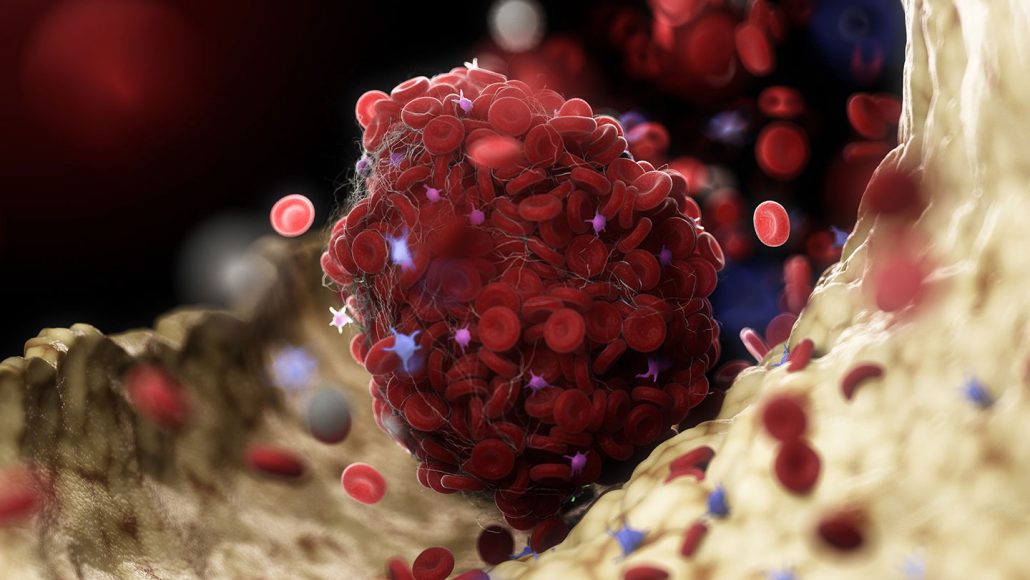
 blood clot

People who got vaccinated by AstraZeneca’s or Johnson & Johnson’s Covid-19 shots make antibodies that spark clots. The figure above is about antibodies that bind to proteins called platelet factor 4 may be behind rare, but dangerous blood clots. On the positive side, there is a test doctors can use to identify it and get patients the right care. Of the millions vaccinated with the  AstraZeneca’s or Johnson & Johnson’s Covid-19 vaccines a small number of people have developed severe blood clots, such as ones in the sinuses that drain blood from the brain and a few have died. Studies suggest that some inoculated people develop an immune response that attacks a protein called platelet factor 4 or PF4, which makes platelets form clots. Those platelets get used up before the body can make more. So these patients wind up with both the rare clots and low levels of blood platelets. Currently, health care workers can test for antibodies that recognize PF4. And if a patient tests positive, there are many other anticoagulants other than heparin that clinicians can use for treatment. I found this article interesting because of the different reactions that people having to specific vaccines.

Links:

1.https://www.sciencenews.org/article/covid-vaccine-blood-clot-immune-astrazeneca-johnson-johnson

2.https://www.nejm.org/doi/full/10.1056/NEJMoa2105385

Wednesday, April 9, 2014

Heart Attack Gene

The human heart is one of the most important organs in the body. The heart is the only way blood is being pumped throughout the body, and it is pretty much the life maintaining organ.With that said, about 600,000 people die of heart disease every year, and approximately 300,000 people die from heart attacks.  Scientists at Case Western Reserve School of Medicine and University Hospitals Case Medical Center did a study on MRP-14. This is better known as the heart attack gene. For years and years, the cause of heart attacks were a mystery, and although it is still a bit of unknown, the study of this gene was able to conclude that heart attacks and strokes are caused by MRP-14. MRP-14 clots in platelets, and these clots ultimately  trigger strokes and/or heart attacks. I think this discovery of this so called "heart attack gene" is remarkable and it will advance medicine and maybe even save some lives. Now that scientists know what may be a cause of heart attacks/ strokes, they can now look for ways to prevent them. In the future, this discovery may lead to more effective anti-thrombotic agents, ones that can target just the pathologic clots.