Showing posts with label arthropods. Show all posts

Monday, April 15, 2024

Convergent Evolution of Silks in Arthropods

This article details a study regarding the convergent evolution of silk production in a few different arthropods. In particular, the study selected a type of butterfly, three types of caddisfly, and a type of spider. They each had different uses for their types of silk. They found that the variation in silk gene alleles are relatively consistent when compared between organisms which have long since been independently evolving. They suggested that this means there are common mechanisms for the formation of those genes within organisms. The researchers stress that they would like to repeat this study with other organisms which share similar traits but evolved independently. 

    The topic of convergent evolution is one that has always intrigued me. I am particularly interested in the pathways that evolution takes to develop similar traits despite independent evolution of organisms… As well as the fact that the above study could be replicated and utilized to study other traits relative to convergent evolution. Not only am I interested in the replication of this study, but the evolution of silk producing glands and maintenance of them in arthropods is such a cool concept. Overall, I look forward to seeing what other types of evolutionary genetic comparisons these researchers go on to make.



Friday, February 9, 2024

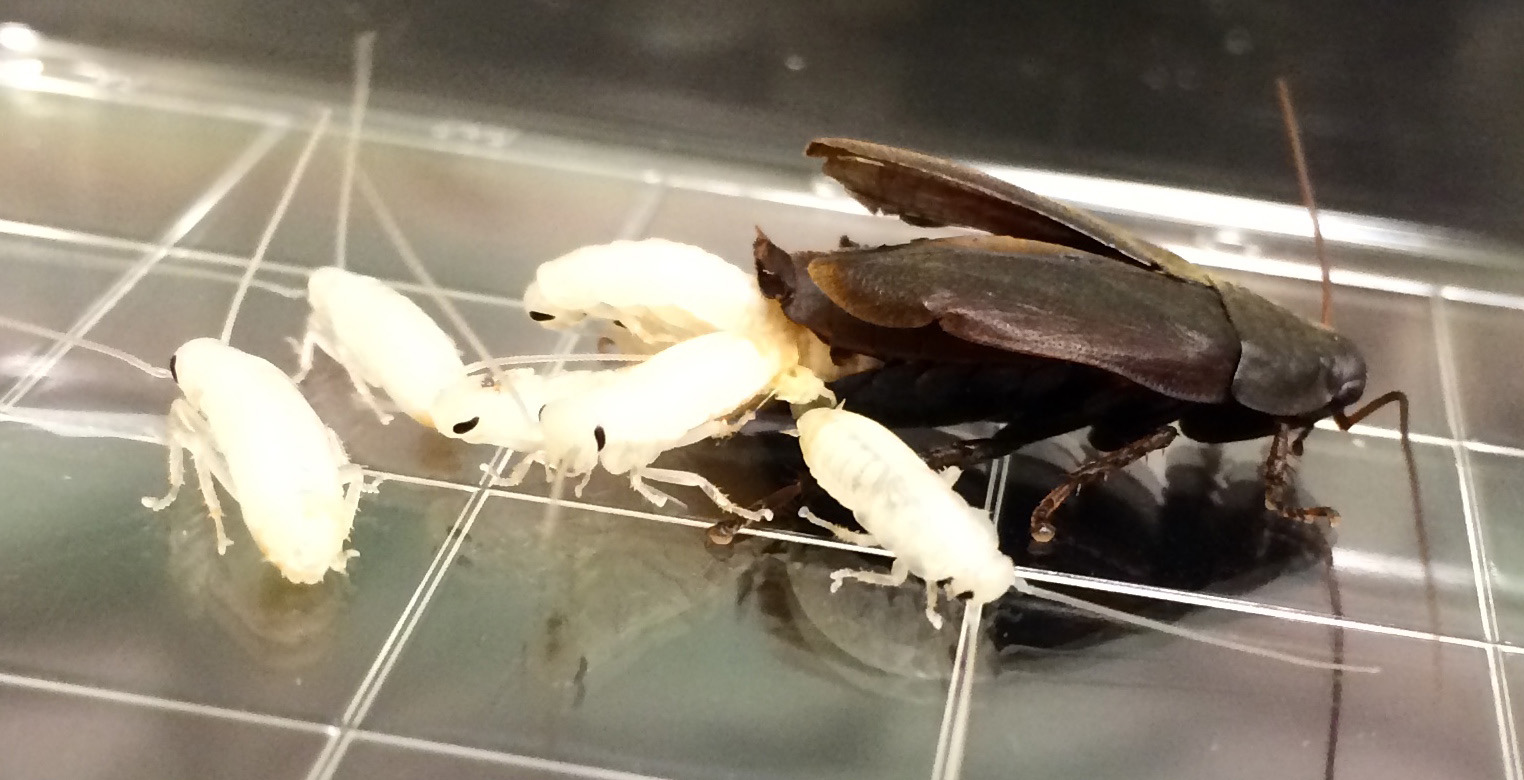
Convergent Evolution of Viviparity in Insects & Beyond

    This ScienceDirect article discusses the genome sequencing of D. Punctata, also known as the Pacific Beetle Cockroach. The study which the article discusses focused on several different orders of insects- including Blattodea (Cockroaches), Diptera (Flies), and Hemiptera (True Bugs), and how viviparity evolved independently in each of these orders. In each instance of viviparity, insects have their own specially evolved structures to support this function- such as placenta-like structures, brood sacks which act akin to a uterus... And even the ability to generate something like "milk", in  the instance of the Pacific Beetle Cockroach. These special adaptations to the urogenital system of insects are incredibly important, as otherwise the brood would not be able to receive proper care nor nutrients while within the mother. The development of these special structures rely heavily upon the rate of chitin metabolism- which is a polysaccharide insect exoskeletons are primarily made up of. The article also discusses how the bodies of viviparious insects have certain aspects of their immune system suppressed, so as to decrease the chances of their fetus being rejected. The results of their study suggest that developmental processes strengthen genes when under increasing selection pressure and positive selection.  Their study shows that in general, despite evolving independently several times, the genomic and transcriptional alterations are similar across all instances, be it within mammals, insects, or otherwise. 

    Personally, I find this topic incredibly fascinating. Usually people think of mammals when on the topic of live births, but the fact of the matter is that many other different creatures have the ability to do so. I think that it is interesting that small arthropods such as insects have evolved to be able to give live births, and even further, the adaptations that their bodies have, ie brood sacks and milk production, are even more incredible. Additionally, I find it almost endearing that creatures which may be seen as gross, such as cockroaches, can actually be considered good parents in the animal kingdom. 


Saturday, November 29, 2014

Centipedes genes sequenced

A collaborative study was conducted by over 100 scientist from 50 institutions looking at genes in the centipedes genome. It is the first time a centipede has been genetically sequenced. The scientist hoped that its DNA could provide insight into how life developed. The species of centipede sequenced was Strigamia maritima. 

Prof. Ariel Chipman is the co-author of the study and project leader at Jerusalem's Alexander Silbeman Institute of life science. The research wanted to look at the differences of arthropods and its early evolution of the species. They found genetic evidence of how creatures transitioned from sea to land. They also found that the use of different evolutionary solution to similar problems lead to myriapods and insects to adapt to dry air differently to each other. 

The comparison of the centipede and insect genome indicated that they evolved different solutions to the same problem of the transition of sea to land. Centipedes lack to olfactory gene family that insects use to smell the air. Centipedes instead developed their own air sniffing ability by expanding other gene families such as those involved with gustatory receptors.

The specific species of centipede sequenced lives underground and has lost their eyes. It is estimated that this centipede group lost 200 million years ago. Many of those genes for light receptors are missing. With the loss of those genes the centipede developed other enhanced sensory capabilities to recognize their environment. Chipman believes this study has provide answers to understanding biology and how it works over a long period of time. 

The study of the arthropods DNA is an interesting one because they have been around for over 500 million years. It provides good information on how life evolves over time and the genes can also provide other information as well. The centipede species that was sequenced was venomous so scientist may be able to find the venom gene. This gene might be useful to humans because drugs could be made to create medicine.

Article: http://www.sciencedaily.com/releases/2014/11/141125140807.htm
Related Article:  http://www2.bio.ku.dk/insect_genomics/project/

Sunday, November 27, 2011

The Genome of the Two-Spotted Spider Mite Has Been Decoded

An international group of scientists, including University of Utah biologist Richard M. Clark and researchers at a research institute called Ghent VIB in Belgium, has decoded the genome of the two-spotted spider mite (Tetranychus urticae). Interestingly, this is also the first genome of any arachnid that has been sequenced. It was revealed that this arthropod has 18,414 genes, 15,397 of which are expressed by being used to make proteins. In comparison with other arthropods, the spider mite uses a different molting hormone to shed its exoskeleton while it is growing, has only eight Hox genes (while most other arthropods are known to have 10), has only two main body segments instead of three because of its lack of Hox genes, and makes silk that is similar to spider silk except that it is 185-435 times stronger and spun from its head region rather than from its abdomen. Clark also mentioned that this silk may be useful for making biodegradable bandages and sutures because it is easy to obtain.

[caption id="attachment_2858" align="alignright" width="400" caption="The two-spotted spider mite, shown here, is less than one millimeter long."][/caption]

Having knowledge of the genome of two-spotted spider mites is important because they are related to house dust mites and other parasitic ticks that can transmit serious diseases to both humans and animals. They are also an invasive species and are a threat to global food production due to their need to suck plants such as tomatoes, peppers, cucumbers, strawberries, corn, soybeans, apples, grapes and citrus fruits dry, which often results in reduced harvests for farmers since they are able to consume over 1,100 different plant species, including the ones already mentioned. Alarmingly, scientists predict that due to global warming, spider mite plagues will increase because they reproduce faster at higher temperatures. The annual cost for pesticides used against these mites is about 0.5 to 1 billion dollars, and they are known to show resistance to different kinds of pesticides – the sequenced genome actually contains genes for detoxifying pesticides. The continuing study of their genome will be important in understanding how they are able to adapt to consuming new types of plants as well as resist pesticides, which will hopefully be the first step in reducing their numbers and understanding arthropods in general with more depth, which are fascinating enough simply due to the fact that they account for more than 83% of all described animal species.

The original research article is available here.