Showing posts with label arthritis. Show all posts

Saturday, February 15, 2025

Gout is in Your Genetics

    A February 13th article from Science Alert claims gout has less to do with lifestyle choices and more with genetics. The Mayo Clinic describes gout as a painful and complex form of arthritis that arises from high levels of uric acid in the bloodstream. Often, the symptoms arise overnight and suddenly. Intense joint pain, inflammation and redness, and limited range of motion are all symptoms of gout, and often something as light as a bedsheet on the affected area is unbearable. The Mayo Clinic lists one of the main causes of gout as diet especially increased intake of purine-rich seafoods, alcoholic beverages, and drinks sweetened with fruit sugar. However, the Science Alert article argues against the hypothesis that lifestyle choices are the main cause of gout. Instead, they present research that shows 120,295 people with gout had the same variations at 377 specific DNA regions which are now thought to have a large impact on developing gout. The 377 specific DNA regions identified in the new study include 149 regions that had not previously been linked to gout. The researchers maintain that there are still undiscovered genetic links to the disease that have yet to be discovered. The connection of genes to gout formation allows new research to be done regarding how gout can be treated with genetics as the basis for treatment. 
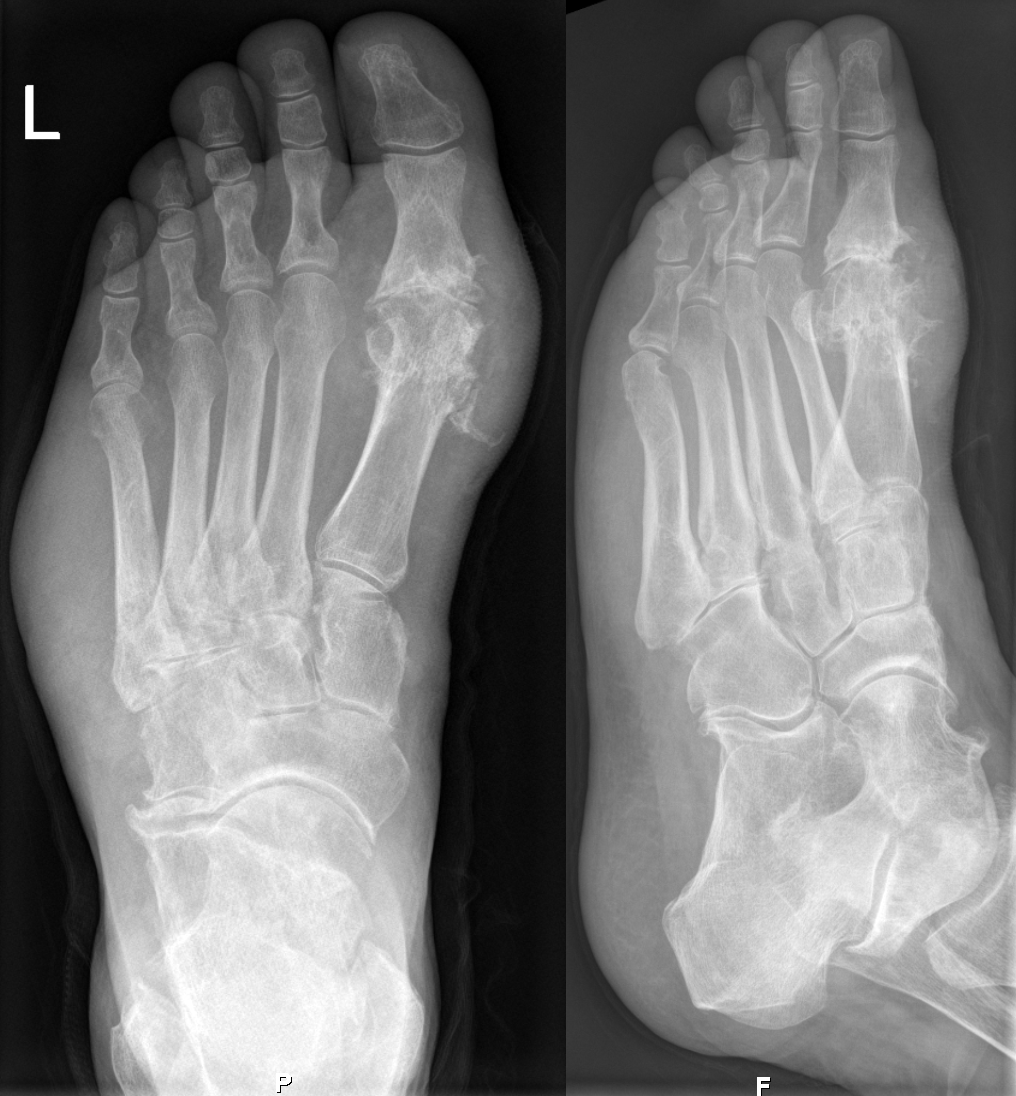
    Personally, I can’t wait to tell my dad about this research because he stopped eating shrimp about a decade ago after he developed gout “from the shrimp.” However, this new study demonstrates that he might have had an underlying condition that made him more susceptible to gout and his consumption of shrimp might not have been the reason for his gout flareup. I think this new explanation will hopefully allow more people to get treatment for their chronic gout. The article mentions that some people do not seek out medical help when they experience gout because they are ashamed of their lifestyle choices, but having a genetic explanation for the formation of gout would be out of the patient’s control, so they may be more willing to seek out a doctor’s help. As I mentioned earlier, my dad had a few cases of gout, so knowing that there is a genetic link, now I am curious if I have some of the alleles that increase the risk for gout development. 

Links
https://www.sciencealert.com/huge-study-shows-where-gout-comes-from-its-not-what-we-thought
https://www.mayoclinic.org/diseases-conditions/gout/symptoms-causes/syc-20372897

Thursday, July 27, 2023

The Evolution of the Human Skeleton from Great Apes

From years of research on the evolution of the human skeleton, scientists have noticed that our skeleton is similar to apes. Even our ancestors' physical features resembled apes like their jaw. Researchers now have more advanced instruments to dive deeper into understanding human genetics and compare it to great apes. At the UK Biobank scientists used artificial intelligence to access 30,000 human skeleton X-rays so they could research why some humans have degenerative joint diseases like arthritis, and its connection to apes. They measured different parts of the human skeleton and found different lengths of certain bones were linked to arthritis in the back, hips, and knees. In many cases, there was a linkage of bone lengths in families. Apes were less likely to have arthritis because they walked on all 4 limbs compared to humans who started waking bipedally. Our form changed, but the bones kept their shape, and some families are suffering the consequences.


Wednesday, March 26, 2014

Do Infections Trigger The Onset of Rheumatoid Arthritis?


Arthritis affects almost everyone at some point in their lives, usually later rather than earlier, but is there a new way to possibly prevent this disease from being misdiagnosed? Rheumatoid arthritis causes painful and swollen joints, and it affects about 1.5 million people in the US. A recent study performed by scientists at the Arthritis Research UK Centre for Genetics and Genomics at The University of Manchester believe that the development of rheumatoid arthritis has a strong relation to genetic and environmental components. There are two subtypes to rheumatoid arthritis: sero-positive and sero-negative. Patients who have sero-negative rheumatoid arthritis are more likely to be misdiagnosed, because this type of arthritis is not well understood. However, these scientists have found that different genetic variants of a protein that play an important role in the way the body fights infections are associated with these two types of rheumatoid arthritis. This shows that exposure to different types of viruses or bacteria can trigger the different types of arthritis. This will hopefully lead to a new way to diagnose this disease, as well as a new treatment that is more accurate for patients with rheumatoid arthritis.

I found this article interesting, especially because I know so many people experiencing different forms of arthritis in their old age. I hope that this leads to quicker and more effective diagnosis and treatment and mentioned, so hopefully not as many people in the younger generations will have to go through the pain that this disease causes.
 

Article: http://www.sciencedaily.com/releases/2014/03/140326092333.htm

Related Article: https://www.arthritis.org/conditions-treatments/disease-center/rheumatoid-arthritis/

Sunday, May 5, 2013

Genes and illness

http://www.nytimes.com/2013/01/21/health/study-pinpoints-what-activates-disease-causing-genes.html?_r=0

The article written by Gina Kolata from the NY Times explains new research that was done at John Hopkins Univerisity of Medicine and the Karolinska Institue in Sweden. They were looking at the mystery of how certain genes effect an illness on a persons body. It was a study of the epigenetics that looks for modifications of genes that can help determine disease risk. The study took patients with rheumatoid arthritis and healthy people who served as the control. The goal was to look at the white blood cells and their DNA for chemical tags that can attach themselves to genes and turn them on or off

This article also shows the study of epigenetics http://www.pbs.org/wgbh/nova/body/epigenetics.html

Monday, November 19, 2012

Women More Likely To Get Rheumatoid Arthritis

According to an article on ScienceDaily, scientists at the Arthritis Research UK Epidemiology Unit at the University of Manchester have found the reason that women are three times as likely as men to develop rheumatoid arthritis. Rheumatoid arthritis is a disease in which the immune systems attacks the body's own tissues resulting in fluid build up within joints. The fluid build up causes inflammation and pain, and it can occur anywhere in the body. The disease is also a chronic disease, so it cannot be cured (source: arthritis.org).

The scientists used advanced technology and a large collection of samples to identify 14 new genes that can lead to RA in addition to the 32 other genes that have already been identified. Furthermore, the researchers have identified genes that are specific to the X chromosome, giving women a much greater chance of contracting the disease. This is in addition to the other non-genetic factors that play into getting the condition, such as pregnancy, smoking, and diet.

According to Professor Alan Silman, the medical director of Arthritis Research UK, this discovery is the first time that there has been a genetic association between RA and the X chromosome. So, why is this information so valuable? This finding has a great impact on treatments of arthritis. Dr. Stephen Eyre states that they have already found three genes that are targets for drugs. The other 43 genes have a potential for drug development. This would help the third of patients who do not respond well to current treatments.

This finding is a crucial step towards finding genes that cause other diseases and learning how to treat them as well. I believe that over time a cure for RA may be created, helping the 1% of the world's population that suffers from this disease. This could help extend research for all other areas of degenerative diseases and further advance the medical technologies we have today.