Showing posts with label anti-aging. Show all posts

Thursday, August 1, 2024

Gene Transfer and Anti-Aging

 The article discusses experiments done on fruit flies and the results of transferring certain genes into them. In the experiment, scientists took genes from simple organisms that are able to regenerate their bodies into fruit flies. Fruit flies are more complex and on their own can not regenerate parts of their body. However, with the transferred genes, the fruit flies had an age-related intestinal issue gene become suppressed. This can be beneficial for discovering new mechanisms related to stem cell function and new anti-aging strategies. 

The genes focused on in the study are called highly regenerative species-specific JmjC domain encoding genes (HRJDs). HRJDs ended up increasing the fruit flies intestinal stem cell division while suppressing intestinal cells that were mis-differentiating. According to the article, fruit flies intestines are similar to human intestines on a cellular level so it would be interesting to see if this method has the same affect on humans' intestines.

It would be amazing if in the future, scientists could develop techniques like this to help promote anti-aging and self regeneration in humans. Seems like an absurd concept but with time and research it has potential. If flatworms and jellyfish can do it then maybe there is a possibility for humans too.


Monday, November 12, 2018

Reversing DNA Aging in Mice

A research team that was led by Dr. David Sinclair discovered a possible method to reverse or prevent the DNA damage that is caused by aging in mice. Sinclair put drops of NAD+ , which plays a critical role in DNA repair functions, into the water of a group of mice. Their NAD+ levels rose and within the first week, the mice had shown signs of age reversal in muscle and DNA repair improvements. They hypothesized that increasing NAD+ levels reverses aging due to its role in DNA repair and its relationship with a repair compound known as PARP1. When NAD+ levels are high, PARP1 activates. However, since NAD+ levels decrease with age, PARP1 cannot activate. This eventually leads to DNA damage because the DNA is not being repaired.

This topic was an interesting read because I have heard about the potential effects of increasing NAD+ levels before. It has a lot of potential because it could be used to target cancer cells and improve the responses of some patients. It could also treat DNA damage caused by external sources. The discovery can increase our understanding of how cancerous cells can be treated and how DNA damage can be prevented.

References

Wednesday, April 12, 2017

Peptide targeting senescent cells restores health of aging mice


Scientists have found that regular infusions of a peptide can selectively seek out and destroy broken-down cells that inhibit proper tissue renewal. These cells are called senescent cells. They showed evidence of improving healthspan in naturally-aged mice and mice genetically engineered to rapidly age. This peptide took over four years of trial and error to develop. It works by blocking the ability of a protein implicated in senescence, FOXO4, to tell another protein, p53, not to cause the cell to self-destruct. By interfering with the FOXO4-p53 crosstalk, the peptide causes senescent cells to go through apoptosis, or cell suicide. The Results occurred at different times over the period of treatment. Fast-aging mice that had patches of missing fur began to regrow their fur after 10 days. After about three weeks, fitness and endurance benefits began to show, the older mice were running double the distance of their counterparts who did not receive the peptide. A month after treatment, aged mice showed an increase in markers indicating healthy kidney function. 
Read more on this subject here
More information at this site

Thursday, April 14, 2016

Lithium brings anti-aging drugs a step closer

Lithium brings anti-aging drugs a step closer


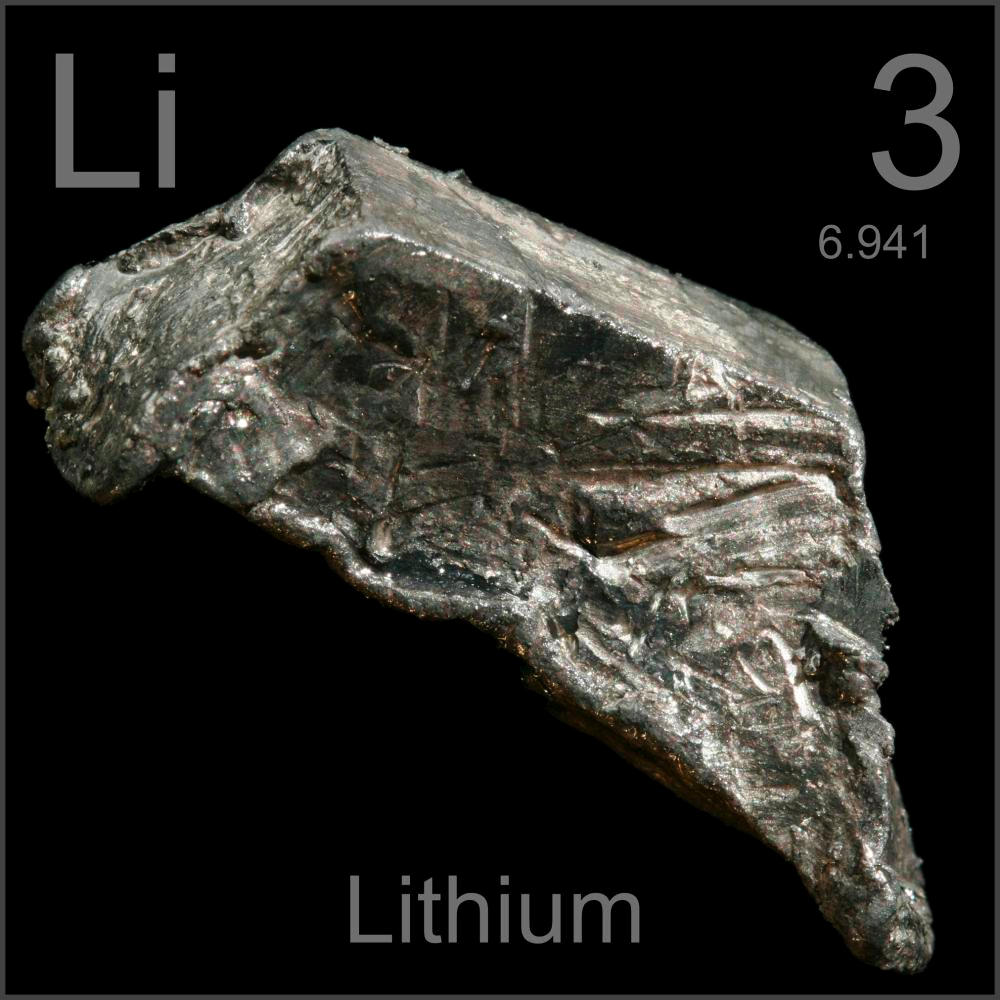
researchers have found that lithium has the ability to be used as an anti-aging drug, in addition to being used as anti-depressing agent. flies were used as test subjects for this expresemnt, and it showed that flies with were given doses of lithium had an approximation of 15% life span addition. this mean that flies that were given the solution had a longer life span. the lithium effects were due to its ability to block glycogen synthase kinase-3 (GSK-3), a molecule that was found to have a controlling hand on development of age-related diseases. in addition "researchers found that, at the same time as blocking GSK-3, lithium promotes activity of a molecule called nuclear factor (erythroid-derived 2)-like 2 (NRF-2), which is involved in protecting cells against oxidative stress - a key player in the aging process." (whiteman, 2016)

"To improve our quality and length of life we must delay the onset of age-related diseases by extending the healthiest period of our lives. Identifying a drug target for aging is a crucial step in achieving this and by targeting GSK-3, we could discover new ways of controlling the aging process in mammals, including humans."(Castillo-Quan)

Researchers are planning to target more complex animals to observe the effect it could have on them.


Opinion: 
fruit flies proved to be a model organism again. "Thank you Morgan". its a major advancement to push our life span even further, starting at a maximum age 30 at one point in our evolution, now to 80, and with this experiment showing promises of a potential extension to our life span by tackling age-related diseases.


References 

Whiteman, H. (2016, April 10). Lithium brings anti-aging drugs a step closer. Retrieved from Medical New Today: http://www.medicalnewstoday.com/articles/308830.php


Saturday, April 11, 2015

Can Fish Help Us Understand the Mystery of Aging

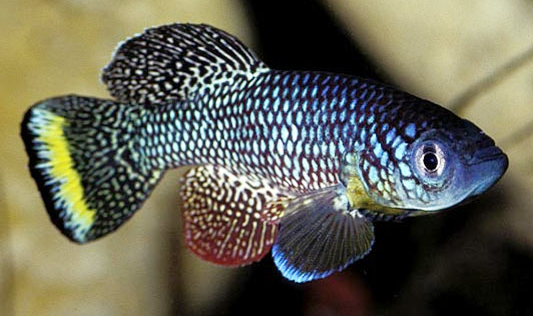
In the article, “In Short-Lived Fish, Secrets to Aging”, that was published in The New York Times researchers were looking into how the turquoise killifish could help understand the aging process and how to potentially find a way to increase life spans. The turquoise killifish have the shortest life span of any vertebrates, they grow to maturity in 40 days and mate and lay eggs and by the time they do that the pond dries up and the fish are dead. Even when they keep them in aquariums they still died within a couple of months. They do not have premature deaths, but just have compressed life spans. They are ideal for this experiment because they have short life spans and they are very similar to humans in the aging process. They have tested in mice and they found that SRT1720 extended the mice lives, on average, by 8.8%. But the mice still live too long, which slows down the research process, so they tiny nematodes, which were not a perfect organism because they did not have a skeleton.

Anne Brunet’s graduate student suggested she use turquoise killifish and that is how it all started. They found out that the fish loses muscle mass while aging, stop producing eggs, have a weaken immune system and even have memory problems. They did an entire genome sequence and located the genes that are known for aging processes. They used a technique called Crispr, which could replace DNA with a different one. With that technique they altered the gene TERT that protects telomeres. They think that as telomeres get shorter the aging processes increases and had a link to aging. After the TERT alteration they makes became infertile and females less eggs, atrophied, and had less blood cells, but never died any sooner than their expected life span. They plan on continuing the research in order to find out potential anti-aging treatments for the fish and then hopefully be able to convert it for humans.

This is not normally an article I would attract to, but I was surprisingly very interesting in this topic. If they could find a treatment to increase life span it can be very beneficial for the whole human race. Although they are not there yet, if they keep working, it has a lot of potential. Another thing that I like about the article was that it mentioned that the graduate student was the one to mention the turquoise killifish, although they did say their name, just the recognition that they had suggested it was nice. The world is very into living longer and looking younger, so this could potentially be the answer to that, but we will have to wait and see.

Sunday, April 5, 2015

Doubling Lifespan of Mice


In 2009, it was shown by the Spanish National Cancer Research Center under Óscar Fernández-Capetillo that mice age faster with low levels of ATR protein, an essential protein for the repair of damaged DNA, Stopping the premature ageing of these mice and doubling their life span has been achieved by introducing a mutation capable of increasing the body's capacity to produce nucleotides available in the cell.

This was originally tested in yeast, Saccharomyces cerevisiae, where it proved to be true and has since been tested on mice. The mice were given two genetic alterations with the first being the original ATR gene mutation that led to premature aging and the second which was the animals had multiple copies of Rrm2, the key gene for nucleotide synthesis. The results showed the aging process to be significantly slowed in these mice, taking their life span from 24 weeks to 50 weeks.

Every genome has weak or fragile sections which break spontaneously. These fragile sections have been shown to be involved in human diseases like cancer. The research paper showed that those mice with additional copies of Rrm2 suffered less DNA breaks in these fragile areas. "The question we are asking ourselves now is whether an increase in the capacity to produce nucleotides could also lengthen life expectancy in normal animals without premature ageing," says Fernández-Capetillo.

I found this article very interesting due to the research of prolonging and increasing the life span of animals. Although it is not said in the article I think it goes without saying that the obvious implications of a study like this is to eventually see if causing these same mutations in humans could lead to longer and healthier life spans.


Wednesday, April 11, 2012

Genes May Hold the Key to Aging Skin

In a recent article published by US News, discusses how DNA may play a factor in the way our skin changes as we age. A professor at the Duke School of Medicine says that smoking and sun exposure impact how our skin changes but more importantly our gene have an even greater influential factor.

A recent experiment showed that genes change with our diet. At Duke University, pregnant mice were fed diets that lacked folic acid, which changed their gene for hair color in the offspring and the generations to follow. Researchers concluded that genes can be turned on and off based on what we eat. Dermatologists are currently researching which types of diets are beneficial to our genes and for our skin to stay looking younger.


Thursday, December 1, 2011

Stem Cells: The Fountain of Youth

Researchers may now be capable of stopping, and furthermore reverse the aging process. A research group of the Buck Institute for Research on Aging and the Georgia Institute of Technology performed a study on stem cell cultures published in the journal Cell Cycle.


They began their research by comparing body cells, in which aging correlates to the shortening of telomeres, with adult stems cells which generally maintain its telomeric region.  Human adult stem cells from young individuals were obtained and subjected to an accelerated aging process and compared with the "fresh" unaltered adult stem cells. It was found that DNA damage and associated chromatin changes are due to genetic elements called retrotransposons which were once thought to be "junk DNA."  Young stem cells are able to cope with and repair the damaging effects of cell damage, however the older stem cells were not.  Older cells trigger a process known as cellular senescence which prevents unlimited cell proliferation.  By suppressing this signal from retrotransposons, scientists were able to correct and reverse the aging adult stem cells.  This discovery may hold the key to treatment of tissue damaging and or age related occurrences such as heart attacks and liver damage.

Monday, November 28, 2011

Fountain of Youth?

A new study using an old process called acetylation (in which an acetyl group is added to and significantly alters the function of an existing molecule, in this case, a protein) has been made that has unlocked a potential "fountain of youth." Collaborations between Johns Hopkins and National Taiwan University researchers have successfully yielded an increased replicative life span of yeast organisms by almost 50%. In order to do so, Dr Jef Boeke and his team manipulated a "life span clock" protein in yeast organisms, Sip2, that is found in abundance among younger organisms and decreases with age. They showed that the acetylation of this gene resulted in an increase in longevity of the yeast, and then mutated certain chemical residues to mimic the modified gene. Since this aging pathway appears to be related to that of human's, further research is being conducted in hopes of establishing an anti-aging therapy for us as well.

Scientists Turn On Fountain of Youth in Yeast


Collaborations between Johns Hopkins and National Taiwan University researchers have successfully manipulated the life span of common, single-celled yeast organisms by figuring out how to remove and restore protein functions related to yeast aging. A chemical variation of a "fuel-gauge" enzyme that senses energy in yeast acts like a life span clock: It is present in young organisms and progressively diminished as yeast cells age. The discovery reveals molecular components of an aging pathway that appears related to one that regulates longevity and lifespan in humans. Scientists believe they now have a biochemical route to youth that does not involve the diet.  The chemical variation, known as acetylation because it adds an acetyl group to an existing molecule, is a kind of "decoration" that goes on and off a protein. Acetylation can profoundly change protein function in order to help an organism or system adapt quickly to its environment. Until now, acetylation had not been directly implicated in the aging pathway, so this is an all-new role and potential target for prevention or treatment strategies. The normal replicative lifespan in natural yeast is 25. In the yeast genetically modified by researchers to restore the chemical modification, life span extended to 38, an increase of about 50 percent. With these new discoveries, further research will most likely be done to see how this "anti-aging" can apply to humans.

Wednesday, November 9, 2011

UCLA biologists have identified a gene that slows the aging process

The article is about UCLA biologists who doubled the life of the fruit fly by activating a gene which ultimately slows the aging process. The gene is called PGC-1. It increases the activity of mitochondria which controls cell growth and tells cells when to live and die. The biologists activated the gene in different cells and tissues of the fly and studied its effect on the aging process. They finally discovered that when the PGC-1 gene was boosted in the fly's digestive tract, the fly lived significantly longer. The gene was activated in the intestine which showed a slow aging of the intestine which had an effect on the whole animal.

David Walker, an assistant professor of integrative biology and physiology at UCLA and a senior author of the study, concluded that the "study shows that increasing PGC-1 gene activity in the intestine can slow aging, both at the cellular level and at the level of the whole animal".

The reasoning behind this is that the intestine is essential for the uptake of nutrients that are a vital source of energy. It is also an important barrier that protects us from toxins and pathogens in the environment. The PGC-1 gene activates the cells' mitochondria and regulates mitochondrial activity in mammals and flies. The gene is of potential use for pharmaceuticals to fight age-related diseases.