Showing posts with label Glioblastoma. Show all posts

Friday, April 14, 2017

Slowing Brain Cancer

Patients with glioblastoma often die within the first two years of diagnosis because of its aggressiveness. It's the most common form of brain cancer in adults. Studies showed that adults with glioblastoma also have an expression of the gene NAMPT and die more quickly than those who do not. NAMPT is a component for cellular metabolism and in aging. Researchers showed that those who had NAMPT inhibited also saw slower growth of tumors
Basically researchers are trying to figure out a way to inhibit the NAMPT by using NAM+ pathways. By targeting the NAD+ pathway, the cells become easier to kill by making them more active first, however it is a primitive study and definitely needs more research put into it.
Also, the gene has drawn attention because of the aging aspect of it. People claim to be able to make vitamins that will make people age less.
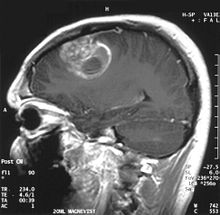
More About GlioblastomasPic of Glioblastoma

Few Genetic Variants Linked to an Increase Rate of Glioma


Gliomas are a particular category of malignant brain tumor that includes glioblastoma. With this type of tumor comes with a low survival rate. New research has uncovered a few genetic variants that are linked to an increase rate of glioma. 13 new genetic errors have been correlated with this increased risk. 
The National Brain Tumor Society estimate that 688,096 U.S. individuals have a brain tumor, and nearly 140,000 of these are malignant. only 34.4 percent of patients with brain tumors survive since brain tumors are quite aggressive. 

Of the different types of brain tumor, glioma is the most common since it grows form the brain's own glial cells which is found around the neurons. Gliomas account for approximately 27 percent  with 13,00- death a year. 
The team conducted two new genomic studies and found a meta-analysis of almost 12,500 people with glioma and more than 18,000 healthy, glioma-free controls. They also identified 13 new genetic variants that raised the risk of glioma with five new loci were identified for GBM, and eight for non-GBM tumors. The study shows that these genetic errors impact various cell functions, including the genesis and division of neurons, cell cycle regulation, DNA repair, and the production of some proteins.
http://braintumor.org/brain-tumor-information/understanding-brain-tumors/tumor-types/
http://www.medicalnewstoday.com/articles/316615.php

Tuesday, November 22, 2016

Deficiency of the QKI Gene and Cancer

The University of Texas MD Cancer Center has concluded that the survival of cancer cells is possibly linked to the deficiency of a tumor suppressor gene called quaking. Quaking is also known as the QKI gene. The QKI gene is a huge contributor to the regulation of cancer stem cells in glioblastoma. Glioblastoma are the deadliest kind of brain tumor that one can have. The cells that make up these tumors, called glioma stem cells, are able to self-renew inexhaustibly until tumors are produced in the brain. The glioma cells self-renew by creating identical daughter cells when dividing. To maintain the process of cell division the glioma cells have to be in environments providing the proper cellular signals. 

When glioma cells are in optimal conditions, they are said to be in niches and can continue to divide. This increases the amount of cancer stem cells. Previous studies conducted proved that the QKI gene is a tumor suppressor that regulates cancer stem cells. In addition, QKI affects cellular activity by regulating endocytosis. This process is responsible for the degradation of receptors on the cell that allow the continuation of stem cell self-renewal. The increase in cell receptors due to deficiency of the QKI gene causes the cancer stem cells to divide in areas outside of the niches.  A defective QKI gene will result in an increase of the cell receptors on cancer stem cells. Therefore, the amount of glioma, cancer cells, can divide very rapidly even if they are located in areas outside of the niches. 

According to Dr. Jian Hu, assistant professor of the Department of Cancer Biology, the discovery of the deficient QKI gene may lead to alternative methods for therapeutic treatments of cancer. This is a great discovery. I feel that scientists are making great progress and learning so much about the destructive disease that we call cancer. Cancer has taken, and is still taking, the lives of so many people. Cancer does not discriminate by age or the current great health one may have. Scientists can work on gene therapy techniques with the QKI in the future to learn more about cancer. Consequently, I hope to see the development of a technique to isolate a working QKI gene to administer to individuals with a deficient QKI gene as a cancer treatment. It is great that scientists have discovered so much about the worst kind of tumor that one can have. 


Monday, April 6, 2015

Stopping Cancer Gene Replication

           Glioblastoma is the most common cancer of the brain that as of now is incurable.  There are many kinds of treatments for Glioblastoma but they are temporary because the cancer is likely to come back.  Treatments being used today are primarily chemotherapy and radiation which damage DNA to stop replication of cancer cells.  Even with the current method of treatments, patients typically live about 14-16 months and treatments.  A new method, currently being tested on mice, focuses on stopping the source of the DNA that creates cancer.  This new found method introduces a small RNA molecule, named miR-182, which is found to be a tumor suppressor and reduces the expression of genes that promote cancer.  If this method could become a primary treatment option for glioblastoma, it would allow for actual cures of the cancer.  The RNA molecule miR-182 may also have opportunities to assist and cure other cancers, but more research is required.  

Figure 1: RNA molecule miR-182

Thursday, October 31, 2013

Scientists 'Silence' Aggressive Brain Cancer Gene in Mice

Test Mice 
Glioblastoma multiforme
 
                A new experimental drug has been found to turn off a gene that is connected to an aggressive and incurable type of brain cancer in mice. Glioblastoma multiforme is a brain cancer that is responsible for 13,000 American deaths a year. The new experimental is uses nanotechnology, which is small enough to advance through the blood-brain barrier to make contract with the brain tumors. This nanotechnology will target the cancer causing gene in the cells and shut them off; this means that the cancer causing genes were silenced.
Gene Silencing
  
               According to the study in, Science Translational Medicine, the mice that were used in these experiments were given the new drug intravenously. The results showed that the mice lived 20 percent longer and their tumors shrank three to four times in size. This had shown amazing progression towards ending this terrible disease. This opens up many doors to different therapy resistances. Many experimental drugs that are used against Glioblastoma fail in clinical trials. The next step is to test this experimental drug in clinical trials, though many results in animal studies are different when used in human studies. Hopefully, silencing these genes and eliminating them from the scenario will allow more treatments to be effective.  

                This disease is the source of thousands of people yearly. I find it amazing that we have come up with such technology that allows us to shut down cancer causing genes. By shutting down these genes, we give ourselves the time to do more research on the cancer itself to see if there are ways to eliminate it completely. This can also open up more research into silencing other genes for other diseases. Nanotechnology can be the beginning of a new era of disease control.