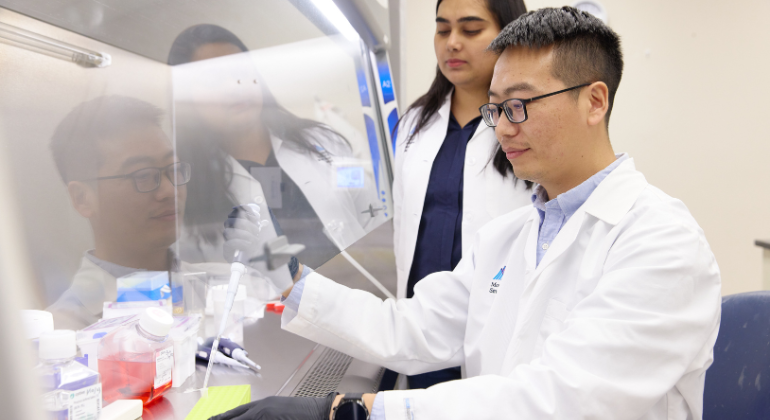
A recent article by the Mount Sinai Health System shows new promising research regarding childhood leukemia. A research team at theIcahnm School of Medicine used gene editing techniques on human blood cells at different stages of development in a child's life. They introduced a cancer-inducing gene and analyzed the stem cells collected before birth, after birthduringat childhood, and during adulthood. By doing this, the team was able to analyze an identical genetic mutation, but at different developmental stages in humans. Their research found that the time the mutation occurs does affect the aggression and treatment of the cancer that develops. In fetal stem cells, the cells rapidly transformed into leukemia, showing the most aggressive form in the entire study. In human cells that were in adulthood, the cells were less likely to transform into leukemia, making the process much harder. This study makes 2 very important findings for the field of cancer studies and genetics. Firstly, the time the mutation occurs in development matters greatly for the severity and treatment of the cancer. Secondly, it debunks the idea that the same mutation will create an identical cancer. Another study on childhood leukemia analyzed newborn blood samples between children who later developed leukemia and those who did not. By studying the different methylation patterns, they found that not just the DNA sequence mutations affect children who later develop leukemia. This study supports the idea that some childhood leukemia ensues in the prenatal fetus.
This research is important to society as leukemia is the most common cancer found in children. The implications of this study must be applied ot the future of cancer studies involving childhood leukemia. This finding challenges previous ideas, as it could have been thought that all identical DNA mutations create the same effect on the large idiucal. With the findings of the Ichan School of Medicine, it is now understood that the developmental stage this mutation occurs is just as important as the mutation itself.


This was super fascinating to read! It shows how the timing of the mutation is attached to how aggressive the leukemia can be. I feel like this could definitely help with treatment and predictions of the disease.
ReplyDeleteThis was amazing to see, especially since two of my friends I've known since elementary school were diagnosed with childhood leukemia at some point in their lives. Hopefully the advancements continue and we can eventually be rid of leukemia forever.
ReplyDelete