Showing posts with label therapy. Show all posts

Tuesday, April 29, 2025

Researchers identify DNA changes, biological pathways associated with inherited cancer risk

    A remarkable study headed by Stanford researchers and highlighted by Krista Conger identified over 400 inherited DNA variations that play an important role in cancer risk. Unlike mutations that directly change protein structures, these variations are found in the genome's regulatory regions and influence when and how genes are expressed. The researchers evaluated genetic data from millions of people with 13 prevalent cancer types, discovering around 1,100 genes that are likely implicated in cancer formation. Many of these genes are linked to essential biological mechanisms such as DNA repair, cell migration, and inflammation, providing fresh insights into how hereditary factors contribute to cancers of all sorts.
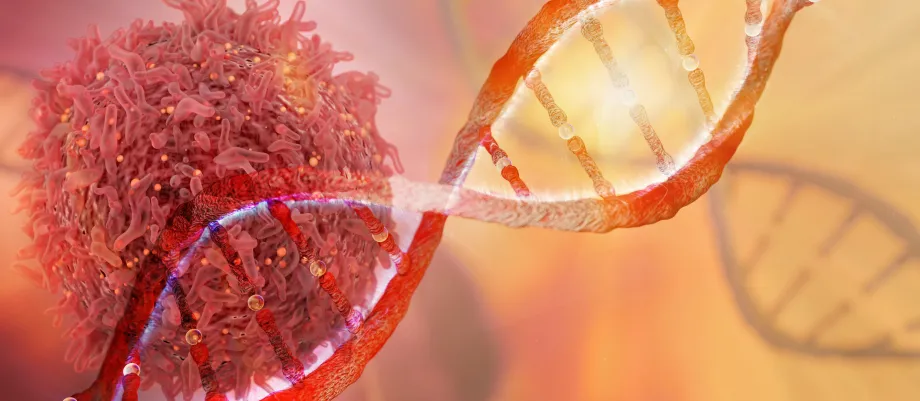
Researchers identify DNA changes, biological pathways associated with inherited  cancer risk | Welcome to Bio-X

    This breakthrough has the potential to fundamentally change how we approach cancer risk assessment and prevention. By identifying the genetic variations that govern gene activity, scientists may create more individualized screening tools and potential therapies based on an individual's genetic composition. The discovery also opens up new options for therapeutic research, particularly addressing the inflammatory mechanisms that contribute to cancer formation. As this knowledge becomes more widely used in clinical practice, it has the potential to improve early detection procedures and guide more accurate, preventative healthcare decisions for those with genetic cancer risk.

Sunday, April 27, 2025

Four-Gene Combo Might Predict Lethality Of Stomach Cancer

    Due to its fast progression and sometimes delayed discovery, stomach cancer continues to rank among the worst tumors worldwide. UTRN, MUC16, CCDC178, and HYDIN are the four genes that have been shown to work together to predict the lethality of stomach cancer, which gives researchers hope.

    Based on these gene changes, researchers created a risk score that allowed them to successfully categorize individuals into low, medium, and high-risk categories. The tumor mutation load was greater and survival rates were higher in the low-risk group. Crucially, this model demonstrated dependability irrespective of disease stage, age, or gender.

    Doctors' ability to evaluate patient prognoses and customize therapy regimens may be significantly enhanced by this genetic characteristic. It is an important step toward more focused and efficient cancer treatment, even though more confirmation is required.

Sunday, March 23, 2025

New CRISPR tool enables more seamless gene editing — and improved disease modeling

 Yale researchers have developed a new CRISPR tool that makes gene editing more smooth, accurate, and efficient. This development enhances the capability of CRISPR, a technique recognized for its ability to modify DNA with extraordinary precision. The new method decreases gene editing mistakes, increasing the reliability of genetic alterations, which is critical for both research and medicinal applications. Improving the accuracy of gene editing has the potential to open up new pathways for therapeutic development and personalized treatment.

The Dark Side of CRISPR | Scientific American

    One of the most intriguing uses for this new technology is illness modeling. The upgraded CRISPR technology enables scientists to generate more precise genetic models of illnesses, hence boosting genetic research and therapy development. This might lead to a better understanding and potential solutions for genetic abnormalities, since researchers can more accurately duplicate human diseases in the lab. The new CRISPR technology represents a tremendous advancement, paving the path for more tailored medicines and transforming our approach to genetic research and therapy.

Wednesday, March 12, 2025

CAR-T Cancer Treatment Could Help You Live Longer

In a recent article by Andrea Tamayo, she writes about a girl who got cancer treatment 18 years ago when she was four. This treatment is known as CAR-T cell therapy. Since receiving this treatment 18 years ago, she has been labeled "the longest-surviving patient with cancer." Typically, this treatment is used for blood cancers since solid cancers, like neuroblastoma, are usually more challenging to treat with this specific treatment. A clinical trial performed by Helen Heslop proved that CAR-T therapy does work on solid cancer since this is the exact trial that the 18-year-old survivor came from. However, the trial also resulted in only 7 survivors out of the 19 participants. 


In my opinion, I think that this treatment is a step in the right direction to finally find a cure for cancer. Although, there are clearly some adjustments that would need to be made since it currently doesn't help all forms of cancer fully. 


Saturday, November 11, 2023

In Mice, Gene Therapy Helps Restore Movement After Spinal Cord Injury

 In Mice, Gene Therapy Helps Restore Movement After Spinal Cord Injury        

Over time we as humans have used all types of animals and model organisms to test experiments for our use. One thing that has happened recently is they have discovered gene therapy can help restore movement from a spinal cord injury in mice. This is a very big discovery as there are many people around the world who suffer from devastating spinal cord injuries who were never able to walk again. After experiments it showed that through gene therapy it was able to help restore movement, but would this work on humans?

Past studies showed that nerve fibers can be restored through human anatomy over time if the spinal cord is damaged. Although this was possible, it would not be enough to restore motor function of the body as many of the fibers were not able to connect to the correct parts of the body. They say when someone has a complete spinal cord injury there will be no natural repair from the body. The problem was that to restore movement and the spinal cord, the fibers must not only regenerate but also connect to their natural targets to restore the motor function.

I believe that this is a step in the right direction for us as humans. A spinal cord injury is something that is devastating, not only to the person it happens to but for everyone around them. If we were able to come up with a therapy or medicine that can help regenerate the function of the spinal cord that was effective, it would help thousands of people around the world.


Links:

https://www.usnews.com/news/health-news/articles/2023-09-27/in-mice-gene-therapy-helps-restore-movement-after-spinal-cord-injury 

https://www.gjsentinel.com/lifestyle/health_and_wellness/in-mice-gene-therapy-helps-restore-movement-after-spinal-cord-injury/article_c50f4592-a081-5b91-8038-d91c4a6bd79f.html


Wednesday, December 16, 2020

Genetically Modified Pigs


          Untied therapeutics corp. has recently gained approval from the FDA for a type of genetically modified pig. However the companies initial intentions are not to use this big for meat although that may happen in the future. The purpose of this pigs genetic modification is to remove alpha-gal sugar from the animal. This is because a lot of medications are made out of these animals and alpha-gal can sometimes result in an allergic reaction. So by removing this from the pigs, they can produce medications for people that suffer from this allergy. This is a very big find in the medical world, and a very big deal in terms of the FDA approving this. This could mean they are more open to future genetically modified animals for food and medical use. This will no doubt lead to very beneficial therapeutics for people who have an allergy to alpha-gal sugar, and potentially one day even have meat for people with allergens. (Choi, 2020)


Source: Choi, C. (2020, December 16). US regulators OK genetically modified pig for food, drugs. Medical Xpress - medical research advances and health news. https://medicalxpress.com/news/2020-12-genetically-pig-food-drugs.html 


Links used: 

https://medicalxpress.com/news/2020-12-genetically-pig-food-drugs.html

https://www.fda.gov/news-events/press-announcements/fda-approves-first-its-kind-intentional-genomic-alteration-line-domestic-pigs-both-human-food

Thursday, September 15, 2016

Spherical RNA Therapy: The New Approach to Genetic Disease

DNA, RNA, tRNA, mRNA. All of these terms have been repeated multiple times in any Biology class taken. But what about SNA? Researchers have come up with a new type of RNA therapy that could essentially be effective in fighting multiple genetic diseases. Spherical nucleic acid, otherwise known as SNA, is the most recent breakthrough in RNA therapy with a very promising outlook.

New SNA drugs with RNA strands around a fatty lipid core could open a new front in combating psoriasis and other genetic diseases.
After DNA is coded for in a cell, it is translated into messenger RNA, or mRNA, which then sends the coded information to the ribosomes. From the coded information, amino acids are formed and from there, the proteins for the cell are synthesized. However, too much protein build up in a cell causes problems that lead to genetic disease. Researchers, in this case, have focused mainly on psoriasis. Psoriasis is a skin disorder in which red scaly skin develops mostly on the knees, elbows, and other spots on the body.

The American Chemical Society (ACS) hosted a conference in which they presented the findings on the effects of SNAs on psoriasis. SNAs are spherical and they're composed of identical RNA fragments attached to a central lipid. They go into a cell so they aren't broken up like other RNA fragments. Once the researchers code the SNA to a specific protein, the SNA blocks production of that protein. After doing a trial on the effect of SNAs on people with psoriasis, researchers found that they are considered to be safe. Eventually, researchers hope to find a way to use SNAs as a cure for psoriasis and other genetic diseases.
At the ACS meeting last week, SNA pioneer and Exicure Founder Chad Mirkin of Northwestern University, Evanston, in Illinois, told his audience that the initial trial results suggest that SNAs are safe. What’s more, there appears to be a dose-dependent response in knocking down TNF-α, which raises hopes that doctors will be able to find a curative dose.
I feel that this is a very important breakthrough in the journey to finding ways to fight or, hopefully, cure multiple genetic diseases. If SNAs can possibly help cure psoriasis at some point, this could lead to curing cancer or other diseases in which protein buildup is a problem. I find this article to be very interesting in the field of genetics and health. 

http://www.sciencemag.org/news/2016/08/spherical-rna-therapy-shows-promise-against-psoriasis-first-human-trial

http://www.webmd.com/skin-problems-and-treatments/psoriasis/understanding-psoriasis-basics#1