Showing posts with label rare disease. Show all posts

Saturday, November 15, 2025

Landmark Gene Therapy Study Shows Safety for Children

    A recent international study followed 62 children treated between 2012 and 2019 for the rare immune-deficiency condition ADA‑SCID, using ex-vivo stem cell lentiviral gene therapy. After a mean follow-up of 7.5 years, the treated children had a 100% survival rate, and over 95% were considered cured. This research was conducted by University College London.

    This is a remarkable outcome because many gene therapies for rare childhood conditions face challenges with durability, immune reactions, or long-term safety. From a genetics perspective, it highlights how delivering a corrected gene to hematopoietic stem cells can provide a durable therapeutic approach.

    The study also raises several questions and implications. How will these long-term safety data influence regulatory approval and access for other rare-disease gene therapies? What kind of genetic monitoring will be necessary as these children grow into adulthood? In our genetics course context, this research demonstrates how modern gene therapies can provide lasting, life-changing results for pediatric patients, bridging the gap between experimental science and clinical care.

    In summary, while gene therapy often feels like a futuristic and unrealistic promise, this study demonstrates concrete, long-lasting benefits for children. These results make the topic both timely and meaningful for genetics, medicine, and public communication.

Sources

University College London. (2025, October). Landmark gene therapy study shows safety in children. UCL News. https://www.ucl.ac.uk/news/2025/oct/landmark-gene-therapy-study-shows-safety-children

Poletti, M., & Mavilio, F. (2021). Designing lentiviral vectors for gene therapy of genetic diseases. PMC. https://pmc.ncbi.nlm.nih.gov/articles/PMC8402868/

Saturday, March 15, 2025

Decoding Beginnings: How Genetic Testing Transforms Care in Neonatal and Pediatric Intensive Settings

Genetic testing in neonatal and pediatric intensive care settings is a pivotal tool for diagnosing rare diseases, many of which have genetic underpinnings. Baylor Genetics discusses techniques such as Whole Genome Sequencing (WGS) and Whole Exome Sequencing (WES), which are utilized to uncover the genetic basis of diseases in infants and children. WGS is a method used to determine the complete DNA sequence of an organism's genome at a single time. This comprehensive approach allows scientists and clinicians to understand the entire genetic makeup of an individual, including all genes and the regions in between. WES focuses on sequencing only the exome, which consists of all the genome's exons—regions coding for proteins. This represents about 1% of the genome but contains the majority of known disease-related variants, making WES a cost-effective choice for targeting potential genetic disorders. These tests can detect a wide range of genetic disorders, facilitating early and accurate diagnoses crucial for determining the most effective treatments. Understanding a child's genetic makeup helps clinicians tailor interventions that are specific to the genetic abnormalities present, improving outcomes in these critical care scenarios. Diagnosing rare diseases in neonatal and pediatric settings is crucial because early detection can significantly improve outcomes. Many rare diseases can progress rapidly in young children, leading to severe complications or irreversible damage at a very early age. Early diagnosis allows for timely interventions, appropriate management strategies, and potential therapies that can halt or slow the progression of the disease, reduce symptoms, and improve quality of life. Additionally, understanding a child’s genetic condition early helps families make informed decisions about ongoing care and support.

Links:

https://www.baylorgenetics.com/news/what-parents-should-know-about-genetic-testing/

https://rareportal.org.au/importance-of-early-diagnosis-in-rare-disease/

Sunday, November 27, 2022

A Child was Treated for a Rare Genetic Disease While in the Womb


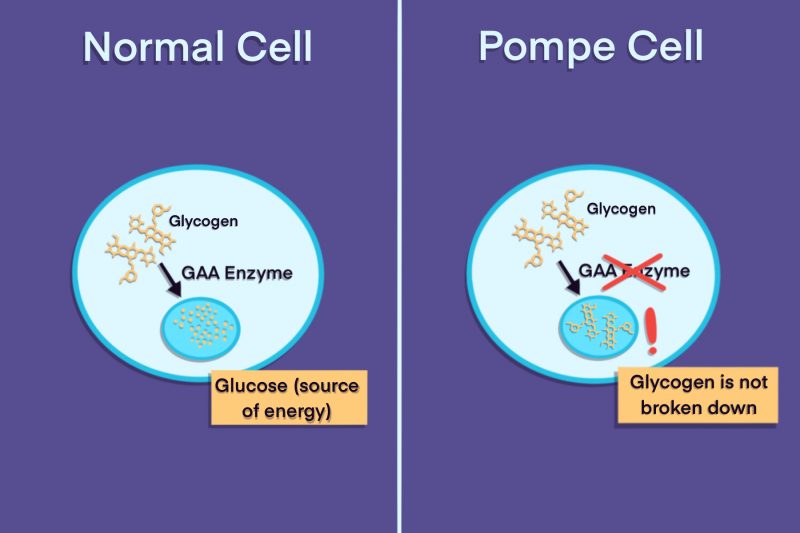
Researchers and doctors were able to fully treat a toddler girl from a rare genetic disease before she was even born. Ayla, a sixteen-month-old toddler, had infantile-onset Pompe disease, a genetic disorder that can cause organ damage that starts before birth. Whilst still an infant, many signs and symptoms of the disease can be present, such as progressive muscle weakness, diminished muscle tone, and respiratory deficiency. This can result in the infant not surviving past the age of 2. Treatment for the disease usually begins after birth, but the treatment does not prevent irreversible damage.

The disease affects less than 1 out of 138,000 babies born globally, and it is caused by genetic changes that either reduce or prevent the body from making acid alpha-glucosidase or GAA. This enzyme turns glycogen into glucose, and without the enzyme, glycogen accumulates to dangerous levels that can affect a baby's muscle tissues, such as the heart and muscles. After early studies with mice suggested that treatment for a Pompe-like disease could be controlled before birth, doctors and researchers launched an early-stage clinical trial. The trial team began treating Ayla by infusing GAA through the umbilical vein when her mother was 24 weeks pregnant. She was infused six times before birth, and the medical team has been infusing Ayla weekly after birth, though she will need to continue treatment throughout her life.

In my opinion, I wonder if other genetic conditions or diseases can be treated once detected in the womb. If this clinical trial showed me anything, it is that with new technology and techniques, we are getting closer to being able to treat and prevent many diseases from worsening.

Sunday, April 25, 2021

Experimental Gene Therapy might save toddler from death

Gene Therapy is starting to become more common in the United States but still are in trials.  This article talks about how Alissa a toddler that was born with a rare condition known as Sandhoff disease fights for her life with the help of Gene Therapy.  The gene therapy would work by helping trigger the cells in the brain to start to make the enzyme that Alissa is missing.  With gene therapy the family is hoping for more years with Alissa.  In this picture you can see one way gene therapy is done.  In my opinion I think Gene Therapy will save many lives in the future and or extend the lives of people that have a disease now that we could not use gene therapy for but can in the future.  Gene Therapy is going to be the next big thing in the world and we are going to be lucky to have it.


Sunday, November 26, 2017

Gene Therapy for Bubble Babies

David Vetter, the baby in the photograph above, has Severe Combine Immunodeficiency disease. This disease became well-known in the 70s and 80s because of this young boy. He lived in this germ-free bubble for 12 years thus giving the disease the name "bubble baby" syndrome. Recently, within the past week, The National Institute of Health and Care Excellence published an article stating that they can possibly cure this rare disease using gene therapy. However, the cost of the treatment would be 500,000 euros which is approximately 600,000 US dollars. This gene therapy is very specialized and is only offered in one hospital in Italy. This is an alternative for those who do not have stem cell donors.

I believe that due to the cost of this therapy, the public would not make much use of this innovative technology. Hopefully in the future the cost of this therapy will decrease so that more people can take advantage of this option for treatment of rare diseases.


Cites:
https://www.theguardian.com/society/2017/oct/23/gene-therapy-for-bubble-baby-syndrome-approved-on-nhs-strimvelis

http://www.scid.net/

Sunday, October 2, 2016

New Genetic Links to Heart Disease Risk Factors

Scientists have uncovered 17 rare genetic variations that are associated with the risk factors for diabetes and heart disease as well as possible ways to find genetic reason for many other diseases. The discovery by researchers from the Wellcome Trust Sanger Institute of England,helps to show links between specify genetic variations and diseases. These scientists studied 36,000 healthy people of European background to find the genetic links to diseases some of the characteristics they were looking for were raised cholesterol levels hemoglobin in the blood.

Thanks to two prior projects (The UK10K project and the 1000genome project) the research team had  the whole genome sequences that they needed. From the data a imputation panel was created which is open to the scientific community to get as much data as possible.Through these sequences and the imputation panel they were able to look for specific risk factors. They looked for less frequent variations that individually told of a greater genetic risk to these diseases. the techniques they used to identify these 17 new variations are set to help the next researchers to make discoveries on what causes these diseases and what are new methods of treating them. The most important part of this study is the methods of gaining their information which will help so much with finding genetic reasoning for rare as well as not so rare diseases. Finding these reasons gives a much better idea of how to prevent and treat some of these awful disorders.


Sunday, November 22, 2015

The Unfortunate Few Whose Bodies Turn Into Statues


Fibrodysplasia ossificans progressive is a disease in which muscle tissue and connective tissue such as tendons and ligaments are replaced by bone (ossified). This is a gradual process that generally begins in early childhood, starting at the neck and shoulders, eventually spreading to the limbs constricting movement. Once loss in joint mobility begins, those affected by this disease may be unable to use their mouth which leads to malnutrition. Difficulty breathing occurs when the extra bone forms around the rib cage. Any trauma caused to the muscles of someone with Fibrodysplasia ossificans progressive, including falls and invasive procedures, can trigger the ossification to the injured area. Viral infections such as influenza can also cause flare ups in the muscle with result in ossification. 

Fibrodysplasia ossificans progressive is a very rare disease. The estimates are approximately 1 in 2 million people worldwide have this condition. Only several hundred cases of the disease have been reported.  This disease is rare because it is caused by the genetic mutation in the ACVR1 gene. ACVR1 provides the instructions for the producing member of the protein family called bone morphogenetic protein type 1 receptors. ACVR1 is found in many tissues which include skeletal muscle and cartilage. Its role is to help control the growth and development of bones and muscles. This includes the gradual ossification that occurs normally from birth to adulthood. 

Researchers believe that a mutation in the ACVR1 gene may change the shape of the receptor in which disrupts the mechanism that controls the receptor’s activity. The constitutive activation of the receptor causes overgrowth of bone and cartilage as well as the fusion of joint. This condition is inherited in an autosomal dominant pattern. Most cases of Fibrodysplasia ossificans progressive are caused by a new mutation unseen in the family’s previous history. 

Article used: http://ghr.nlm.nih.gov/condition/fibrodysplasia-ossificans-progressiva

Related Article: http://news.discovery.com/human/genetics/what-causes-rare-disease-that-hardens-tissue-into-bone-150904.htm