Showing posts with label fur. Show all posts

Thursday, December 9, 2021

The Genes that are Behind Cat's Spots & Stripes

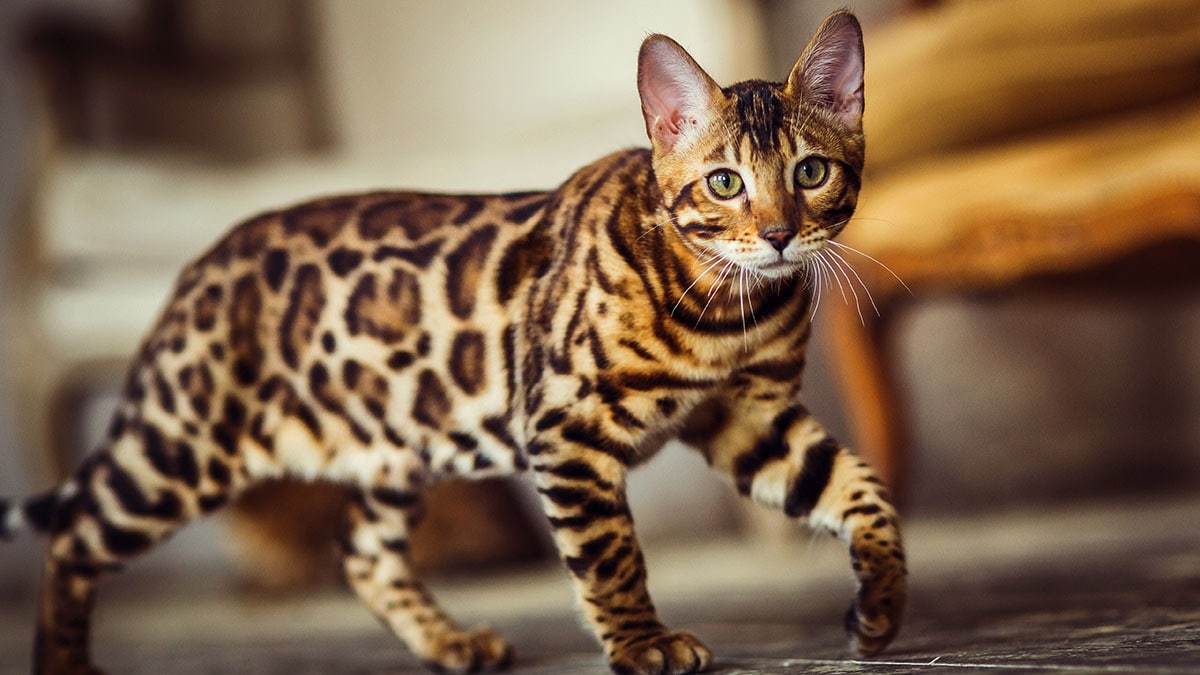
Cats have spots and stripes all over their body on their fur. Do you ever wonder how it gets there? Researchers have found a specific gene that all domestic and wild big cat species develop spots and stripes. The gene that was responsible for this is the DKK4 gene which is found to be active in thick skin as opposed to thinner skin. It was found to be known for fur with a blur of colors which is a mutation from the DKK4 gene. The all-white and all-black cats have patterns underneath their fur. However, the pigment lacks in white cats as opposed to other solid-colored cats because the pattern is overridden by instructions to produce one color. The WNTs protein is also essential because it works closely with DKK4 to form a prepattern that is 2 to 3 millimeters long. The color differences that control the coat color variation are also similar to the gene that's responsible in cheetahs and thicker, more prominent fur patterns. Other than the WNTs protein and DDK gene, there are more unknown genes that are behind why some cats have spots and why some cats have stripes. 

Saturday, April 15, 2017

The Rise of the Black Squirrel

Image result for black squirrel
http://www.telegraph.co.uk/news/earth/wildlife/4298608/Origins-of-British-Black-squirrel-discovered.html


The black squirrel coat is not simply a fashion statement, it is a genetic mutation. This is not a life threatening change, and is caused by a deletion of a specific gene which codes for the white and orange striping which gives the squirrels its grey coloring. The gene is found in the white blood cells and has been linked to higher aggression levels in other species. The hormone allows the black color to be switched off and the striping to come through, but it is never turned off in these squirrels. Mating can occur naturally with no harmful effects to the offspring. The "black gene" is a mutation acting as a recessive gene therefore no mutation will display unless both parents have the mutated genes. The occurrence is on the rise, in the United Kingdom. The first black squirrel was spotted in 1912, and today there has been over 6,100 spotting and a total grey squirrel population of 2 million.

This is a very interesting fact and a unique mutation. It leads me to believe that this may actually be a beneficial mutation for the squirrel, since the numbers continue to grow. Who knows some day we may be viewing the grey squirrel as the one with the mutation!

Friday, November 22, 2013

Young, Wild, and Free: Fountain of Youth Gene


Why do animals recover faster at younger ages—compared to older and mature animals? This phenomenon has boggled the minds of genetic scientists for decades; however, recent studies from Harvard Medical School and Boston’s Children Hospital have shown a possible connection to this phenomenon. Scientists have discovered that the gene Lin28a—which are activated during embryonic stages, but is staggered as the animal matures. To test these effects, the research teams shaved fur from their mice and activated these genes in one, while leaving the latter as the control. The results showed that their mice, with the activation of Lin28a, fur grew back significantly faster than the other. The scientists concluded that the gene Lin28a activates production of metabolic enzymes—which in turn increases regeneration rate, and efficiency. This breakthrough in genetics could lead to many medical possibilities. For example, patients could use this enhancement after surgery to increase healing. Also, this gene could also have the keys to understanding genetic aging in cells. 


This new discovery of the gene Lin28a, allows for many advance in genetics. Imagine the regrowth of loss hair, tissues, and maybe even muscles. I think this gene could revolutionized the world in terms of healing and regeneration.

http://www.independent.co.uk/news/science/fountain-of-youth-scientists-discover-why-wounds-heal-quicker-for-young-people-8927387.html

http://www.nature.com/news/fountain-of-youth-gene-unleashes-healing-power-1.14128