Showing posts with label bumblebees. Show all posts

Thursday, April 4, 2024

Genetic Study Unveils Critical Conservation Needs for Endangered Rusty-Patched Bumblebee


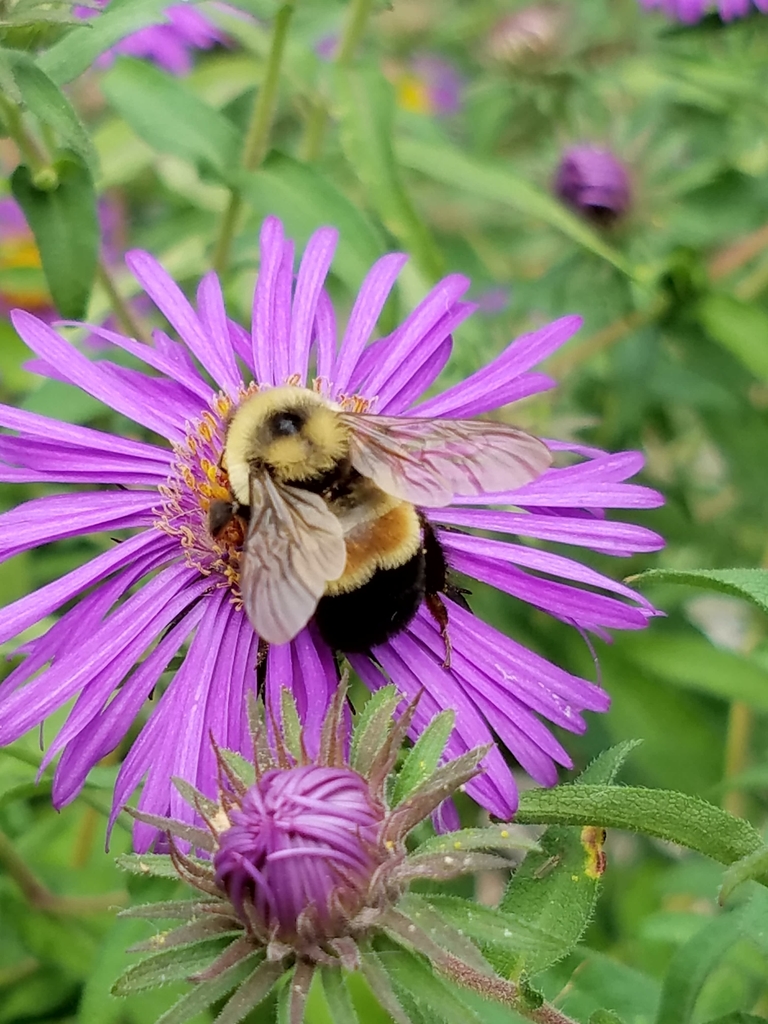
Researchers, led by Colorado State University, conducted the first range-wide genetic study of the endangered rusty-patched bumblebee, published in the Journal of Insect Science. This species, the first bee in the U.S. to be listed as endangered in 2017, has experienced a rapid decline since the late 1990s due to pesticides, pathogens, habitat loss, and climate change. The study revealed that even in areas where these bees are still found, populations are small and suffer from high rates of inbreeding, which poses a serious threat to their long-term survival. Inbreeding results in diploid males, which lack genetic diversity and are a sign of a population's impending collapse.

The research identified three genetically distinct populations of the rusty-patched bumblebee across the upper Midwest, central Midwest, and Appalachians. This differentiation is crucial for conservation efforts, indicating that recovery strategies need to be tailored to each population's genetic makeup to ensure their survival upon reintroduction into the wild.

What stands out for me is the severity of the challenges these bees face, not just from external threats like habitat loss and pesticides, but also from internal threats like genetic inbreeding. The latter is particularly concerning because it indicates a diminishing capacity for the species to adapt and survive in the long term. 

Sunday, April 7, 2019

How Genetics Could Help Solve the World's Bee Crisis

One of the biggest ecological crises in recent years has been the steep decline in population of bees and other pollinators. However, a recent research project carried out by Queen Mary University of London suggests that the key to solving this pollinating problem is rooted in genetics. The group of scientists behind the project analyzed the biomolecular effects of certain pesticides on the DNA and gene expression of bumblebees. After exposing the bumblebees to a common pesticide containing clothianidin, they observed drastic genetic changes that varied among the different classes of bees. The worker bees saw a change in activity level for 55 different genes, while the queen bee saw a change in 17 genes. They believe that many of these genes are more active with exposure to the pesticide in an attempt to detoxify the bee of the deadly poison. While this information is helpful in regards to the study of pesticides, it is also interesting to the general biologist, as this shows that worker bees and the queen bee have genes that are wired differently and are affected differently by the same pesticide. The team from Queen Mary University implores that we reevaluate our pesticide regulations, as their study shows disastrous effects on one specific pollinator treated with one specific pesticide. This does not even account for the countless other types of legal pesticides and the other 200,000 different pollinating insects and how they may interact with each other as well.


While the decline of the bees has received a decent amount of media coverage, I still believe that people do not grasp how truly crucial these insects are to our survival. Losing bees would mean much more than just no more honey, as without bees to pollinate plants, we would eventually run out of plants/food and pretty much all life on earth would die. That is why research like the experiment performed at Queen Mary University is so important. The ability to find exactly how a pesticide can affect the bee on a biomolecular level can provide us with enough information to decide whether or not a pesticide should be legal to use. The pesticide used in the study is an entirely legal pesticide, yet it drastically changed the gene expression of the bumblebees in a wide range of genes. This change in gene expression may affect the bumblebees ability to forage for food or reproduce. So why the pesticide itself may not directly poison and kill the bees, it is still responsible for their deaths by inhibiting their ability to survive. I think that the Environmental Protection Agency must order studies on the mechanisms and side effects of all the pesticides it currently allows to determine which ones are actually safe to use. While this is unlikely to occur, it is necessary to save the bees and keep them pollinating.

Monday, July 9, 2018

Bumblebees Thrive in the City but Struggle on the Farm

As many may know, bumblebees are beneficial to the pollination of flowers and crops. Curiously enough, more bumblebees have been noticed around populated cities rather than vast agricultural fields. The reason for this is that city parks and gardens provide a wide variety of flowers throughout the seasons whereas agricultural fields only offer one type of flower for a short period of time. In a study performed by Ash Samuelson, a graduate student at Royal Holloway University, she transferred more than a hundred colonies of wild queen bees into London’s cities, suburbs and farms. The results concluded that the city bees thrived more than the country bees. It is possible that agricultural fields are not as advantageous because farms offer fewer flowers and potentially have more pesticides.


Samuelson’s research suggests that by planting more wildflowers around crops could increase pollination and foraging opportunities. It is a natural way that could replace other crop enrichment methods. I find this research helpful for farmers who are looking to enhancing their crop population, however, I think the downside to planting more flowers is the possibility of welcoming more animals that may eat the crops.
Article link
Related article