Showing posts with label SARS-CoV-2. Show all posts

Wednesday, April 13, 2022

New COVID-19 nasal spray outperforms current antibody treatments in mice


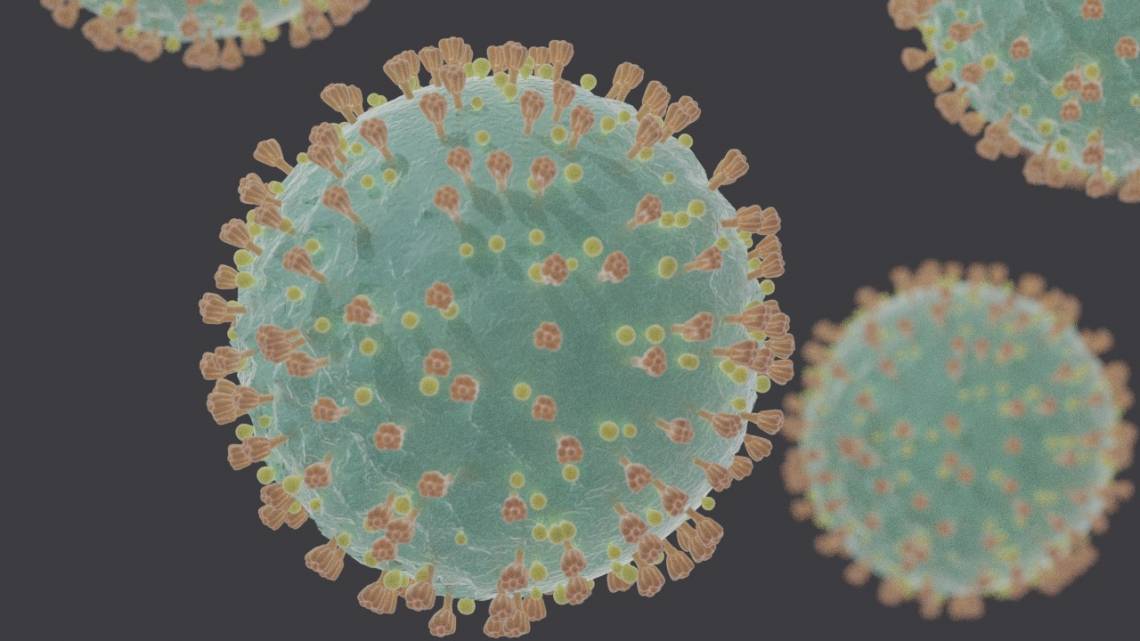
     Current antibody treatments block SARS-CoV-2 by binding to one of three binding sites on the spike protein. A new protein-based antiviral binds to all three sites on the spike protein, making it more effective than current treatments. The new treatment is also low-cost, easy to manufacture, does not require complicated supply chains with extreme refrigeration and potentially could be self-administered. 

    In this study, researchers at Northwestern University, University of Washington and Washington University at St. Louis developed a new protein-based antiviral nasal spray, which is being advanced toward Phase 1 human clinical trials to treat COVID-19 cases. 

    The spray works by interfering with the virus's ability to enter cells. When the researchers administered the treatment to mice as a nasal spray, they found that the best results of the experiment reduced symptoms of infection, and some even prevented the infection altogether. This could be the start of effective treatment for COVID-19, and possibly aid to end the pandemic.

Related Article

Sunday, December 12, 2021

COVID-19 Vaccines with a Bit of Viral Polymerase May Work Longer


COVID-19 Vaccines with a Bit of Viral Polymerase May Work Longer


Vaccines made using RNA polymerase, a viral protein that the coronaviruses use to make copies of itself, may be more reliable than spike protein vaccines. This is because the spike protein is able to change its shape through different mutations of SARS-CoV-2 strains. This makes it difficult for maintain antibody resistance in response to COVID-19 vaccines. Researchers were able to find T-cells that target the RNA polymerase that is in other coronaviruses as well as SAR-CoV-2. The isolation pf T-cell receptors and the overexpression of allogenic cells allows for T-cell reactivity profiling. In order to activate the immune system's T-cells is to add a fragment of second viral protein to vaccines, that is less prone to mutations than the spike protein.           

Monday, October 19, 2020

Researchers Point out Mutations in SARS-CoV-2's Evolution


    SARS-CoV-2

  Researchers at Duke University have been looking into how SARS-CoV-2 mutated from animals and crossed over to humans. They discovered that approximately "30,000 letter mutations" lead to its evolution and they have been working to see how these mutations allow the virus to be so highly infectious in humans.

     Earlier research into SARS-CoV-2's evolution discussed its "spike" like projection that allows it to adhere to cells easily. However, this current research has pointed to mutations that ultimately changed the way the virus condenses its RNA as well as other genetic differences in this virus. This article specifically talks about the changes in two sections of the SARS-CoV-2 genome: "Nsp14 and Nsp16". These two regions underwent mutations that gave this virus a "biological edge without altering the proteins they encode"(Berrio et al. 1). This is important to understanding how this virus forms and replicates in cells since these two regions are involved early in the infection process. 

    While it's still unknown as to why or how these mutations occurred, every piece of understanding the way this virus forms can lead us closer to a cure/treatment(Berrio et al. 1). The understanding that these two regions are important in the beginning stages of infection with this virus can be pivotal when creating a treatment or vaccination. Every piece of information that science can gain in understanding how this virus works and how it mutates are steps towards better treatments and vaccines. 

useful links: Article #1Article #2