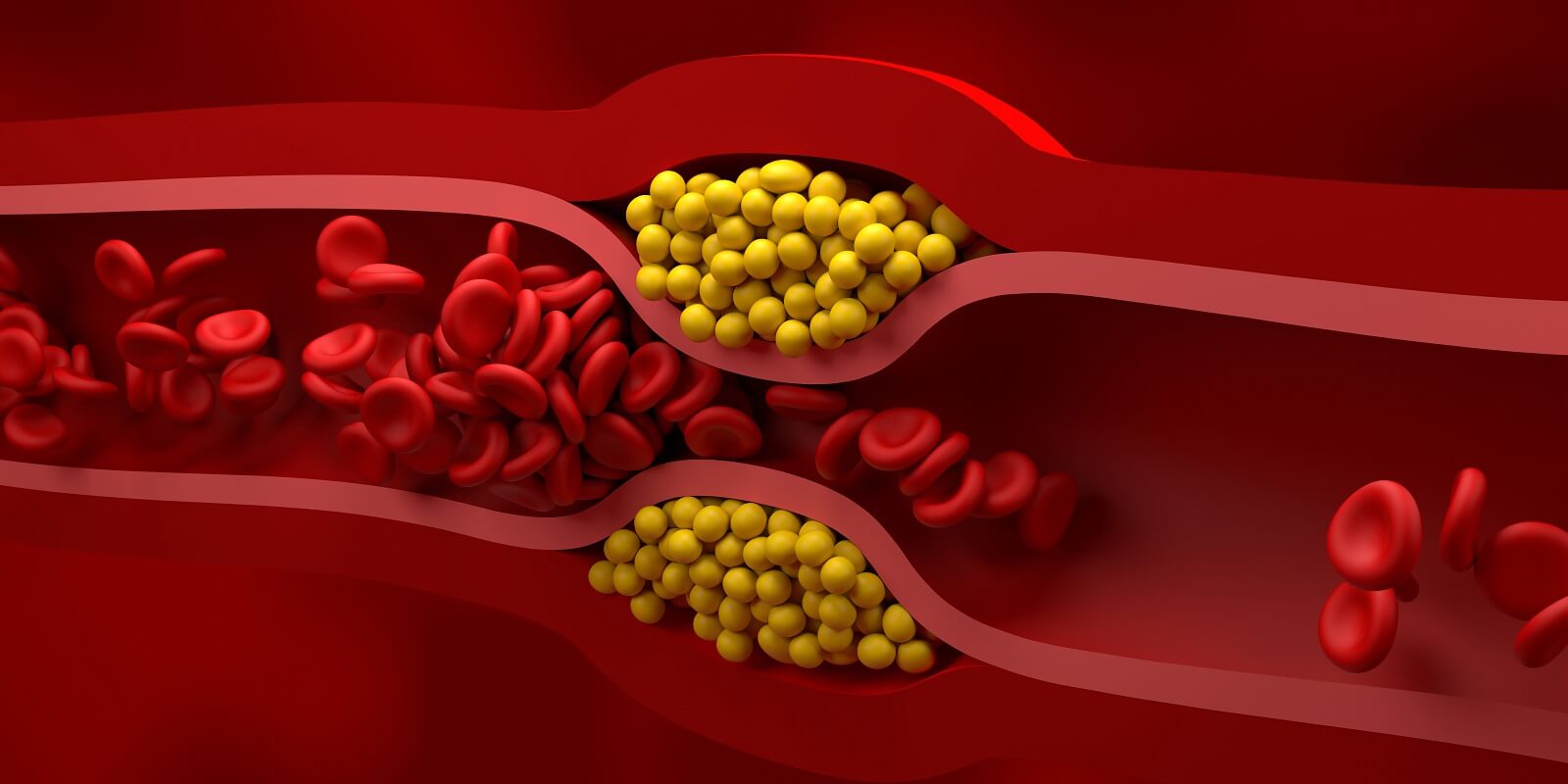
Showing posts with label LDL. Show all posts

Sunday, December 7, 2025

A New Approach to Cholesterol Management Through Gene Editing


The recent Cleveland Clinic CRISPR trial represents a revolutionary approach to a pervasive health challenge that affects over a quarter of American adults. LDL cholesterol, while essential for bodily functions such as cell membrane construction and hormone production, becomes dangerous when present in excessive amounts. As explained in Cleveland Clinic's health education materials, elevated LDL levels contributw to artherosclerotic plaque accumulation in arterial walls, raising the risk of heart attacks, strokes, and peripheral artery disease. Traditional management strategies have relied on daily medications like statins or lifestyle modifications including dietary changes and increased physical activity, yet adherence remains problematic. Approximately half of patients discontinue cholesterol-lowering medications within a year. This compliance gap emphasises the need for more durable therapeutic solutions. 

The November 2024 trial results offer a glimpse into what such a solution might look like. By using CRISPR-Cas9 technology to permanently disable the ANGPTL3 gene in liver cells, researchers achieved dramatic reductions in both LDL cholesterol and triglycerides with a single intravenous infusion. The therapy, called CTX310, essentially mimics a naturally occurring genetic variant found in some individuals who exhibit lower lifetime cardiovascular risk without adverse health consequences. Within two weeks of treatment, participants experienced approximately 50% reductions in harmful lipid levels that persisted for at least 60 days, with no serious safety concerns emerging during the initial follow-up period. This represents a paradigm shift from managing cholesterol through repeated interventions to potentially correcting the underlying genetic mechanism in a one-time procedure. 

The convergence of gene-editing technology with our understanding of lipid metabolism demonstrates how modern genetics is transforming preventive cardiology. Rather than battling patient non-adherence or the cumulative burden of lifelong medication courses, CRISPR based therapies could fundamentally alter the trajectory of cardiovascular disease for millions of people with treatment resistant lipid disorders. While the technology remains in early development, requiring extensive long term safety monitoring over 15 years, the initial results suggest that permanently rewriting problematic genetic instructions may become a viable strategy for conditions previously manages only through sustained behavioral and pharmaceutical interventions. This approach exemplifies precision medicine at its most literal, editing the genetic code itself to prevent disease rather than treating its symptoms. 

Sources: 

“Cleveland Clinic First-in-Human Trial of CRISPR Gene-Editing Therapy Shown to Safely Lower Cholesterol and Triglycerides.” Cleveland Clinic, Cleveland Clinic, 8 Nov. 2025, newsroom.clevelandclinic.org/2025/11/08/cleveland-clinic-first-in-human-trial-of-crispr-gene-editing-therapy-shown-to-safely-lower-cholesterol-and-triglycerides.

“What’s so Bad about LDL?” Cleveland Clinic, 26 Nov. 2025, my.clevelandclinic.org/health/articles/24391-ldl-cholesterol.

Saturday, November 9, 2024

New Gene Editing Treatment Cuts Dangerous Cholesterol in a small study


A small group of patients  with severe heart diseases after trying all the available cholesterol-lowering medications statin volunteered in experimental study that use gene editing to lower cholesterol. The results published from the Verve Therapeutics of Boston at the AHA(American Heart Association) proved that the treatment reduce cholesterol levels and it appears to be safe without side effects. The study was conducted by Dr. Sekar Kathiresan. The trial involved 10 patients on the average age of 54. The patients received a single infusion of microscopic lipid nano particles that contains molecules to edit and block the gene PCSK9 which is responsible of cholesterol synthesis in particular the LDL cholesterol. The lipid spheres were injected through the blood stream to reach the liver. Once into the liver cells the spheres would open up and release two molecules. One of the molecules had instruction for the DNA to create a gene editing tool, the other one is a messenger to bring the editing gene tool to the appropriate gene. The gene editing tool works like a pencil and an eraser. The eraser delete the base of the targeted gene while the pencil writes a new one that will  turn off PCSK9. Patients that received the treatments dropped the level of LDL by 39 55%.

The end goal of this study and of this treatment was and it is to find a way to administer a single cholesterol-lowering treatment that can change the outcome of hearth diseases. Heart diseases are the most common diagnosed diseases and are the leading cause of death in America, by causing nearly 800,000 deaths every year. Most of those are related to cholesterol and LDL type. The connection between LDL and the gene was discovered at first by  French researchers, that found a mutation of the gene PCSK9 , was leading to high level of LDL cholesterols. The mutated gene founded in the French study was then looked at more accurately and it was discovered that there were people with a different mutation of the same gene that could have lower LDL cholesterol and protect from the disease. In fact, people with either one or both PCSK9 gene disabled had very low LDL levels. Different pharmaceutical company started then work on a treatment that could reproduce the same effect. The first  treatments created was made of ripetitive injections of antibodies that blocked the gene.  This new genetic editing technique is a great breakthrough regarding hearth disease because recreate the effect of the mutation find in certain people. 

In my opinion if this gene editing technique could  be administered on larger scale it could make the difference  between preventing and curing hearth diseases. The question at the moment is on the safety of this genetic treatment and on its long lasting effects. If those two aspects of the treatment could be controlled heart disease could become way more easy to fight. 

 3D angiogram scan of a heart with atherosclerosis 


Monday, October 26, 2020

Your Genes Can Control Your Cholesterol Levels

Low-density lipoprotein - Wikipedia
Genetic mutations can effect the production or function of lipoproteins, which transport and store cholesterol. This mutation is called FH, which occurs when there is a mutation in one of your chromosomes for the LDL receptor , which plays an important role in balancing cholesterol levels. Homozygous FH occurs when both parents pass down the gene to the offspring and it leads to very high levels of LDL (low density lipoprotein), which leads to increased cholesterol levels in the blood, blocked arteries, and cholesterol skin deposits. This also occurs early in life, even during childhood, and it is difficult to treat. Treatment can include filtering to blood to remove the LDL particles, known as LDL apheresis. Heterozygous FH is when only one parent passes down the mutated gene and it still leads to elevated LDL levels, high cholesterol, and cholesterol deposits under their skin or on their Achille's tendon, but it does not occur early in life like Homozygous FH. Heterozygous FH is usually detected after the patient's first coronary event such as a heart attack, but it is easier to treat than Homozygous FH and treatment usually consists of oral medication. If one parent is heterozygous and the other parent does not have the mutation at all, all of their children will have a 50% chance of getting the mutation. Meanwhile if One parent is homozygous and the other does not have the mutation, all of their children will have a 100% chance of getting the mutation. Therefore, this mutation is a dominant trait because you only need one allele to express it. 


Saturday, April 11, 2015

Shorter Stature May Pose Higher Risk of Heart Disease


A recent paper published in the The New England Journal of Medicine reports that shorter stature actually increases the risk of heart disease by a significant amount. For every extra 2.5 inches in height, the risk for heart disease decreases 13.5%. The idea of the linkage between heart disease and height has been around since 1951 via Dr. Paul Dudley White., but few experts have ever taken the correlation seriously. Many had believed that height was just the marker for some other underlying problem that was really a precursor to heart disease. But this study examined the genetic makeup of over 200,000 people in order to look for the link between any of the 180 genetic variants for height and heart disease. The only solid link the researchers found was that these variants were linked to slightly higher levels of LDL (bad cholesterol). They propose that the rest of the linkage must lie in poorly understood mechanisms that could affect blood vessel and bone development. Many believe that the only way to find out more about these linkages is to let nature take its course and see which genetic variants for height help or hinder chances of heart disease.

I found this very interesting not only because they found this link, but because i would ha expected it to be the opposite. I feel like its a common misconception that tall people would have heart problems, mainly because there is more of them to pump blood through and thus more to go wrong. I think the expansion of the human genome project greatly increased these researchers ability to find this linkage, and i think its exciting to think of all the possible discoveries to come in the near future.

Primary article - NYTimes
Secondary article - ScienceDaily

Thursday, April 9, 2015

Doctors Joke is Actually a Reality

The article, “Shorter Stature May Pose Higher Risk of Heart Disease”, was published in The New York Times. The article talked about how shorter people have an increased risk of heart disease. Doctors have always said that as a joke, but recently they found out that it is actually true. After analyzing genetic data they found that for every extra 2.5 inches brings a 13.5 % decrease in risk of heart disease. There is a 30% increased risk for a person that is five feet compared to a person who is five feet six inches. This risk is strictly with height, not with the other factors, such as smoking, weight, exercise, cholesterol, or diet.

There are 180 genetic variants of height and they hope to find which of those affect the risk of heart disease. They found some genetic variants that were more likely to cause heart disease, but they did not know what they controlled, obesity, diabetes, etc. What they did find was that one variant had higher LDL levels. Although they have data, some people are not completely buying it and are saying that the correlation is not strong and it could be caused by something else.

The reason why this article caught my eye was because, I, myself am short, measuring in at 5 feet 2 inches. After reading the article, they did make valid points, and with the data shows that I have a predisposition for heart disease, just from my height. Which in a way is a good thing to know, because it can make me get checked for it more regularly and make sure I keep up my diet and exercising habits. There is still more to be found about the height being a factor in heart disease, but so far I find it very interesting and will definitely be keeping up with it.