Showing posts with label Ciliopathies. Show all posts

Tuesday, December 4, 2018

Cilia in Neurons Linked to Obesity

       
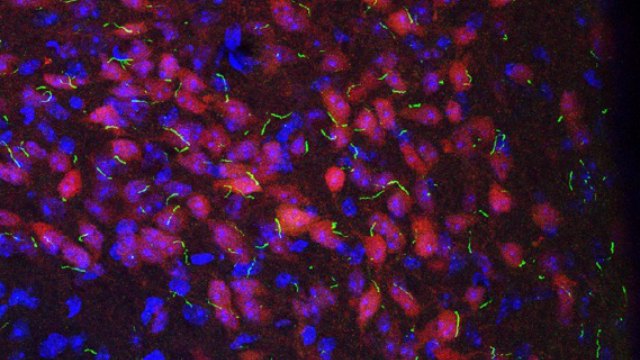
        The article Primary Cilia in Neurons Linked to Obesity discusses a link between two gene variants and an increased risk of obesity and diabetes. On January 8 of this year, Nature Genetics reported that the proteins that are localized to cilia of neurons in the hypothalamus(a region of the forebrain that controls hunger and other homeostatic systems) control food intake in mice. Nature Genetics also published two human genetic studies tying variants of a neuronal ciliary gene, adenylyl cyclase 3, to an increase risk of developing obesity and diabetes. This research contributes significant information about the importance of cilia in the brain. The mouse experiment contributed a consensus that cilia in the brain are important for feeding behaviors and energy homeostasis. All 3 of the experiments show that cilia function can have important affects on the general population and not only in the instance of ciliopathies(uncommon diseases caused by mutations to the genes that affect primary cilia). A geneticist at the University of California, Christian Vaisse, states it was recently found that obesity in ciliopathies was linked to the function of primary cilia in neurons. Removal of primary cilia from all the neuron cause the adult mice to become obese.
       A mutation to the gene that codes for MC4R(melanocortin 4 receptor) is GPCR(G-protein coupled receptor) which is involved in regulating food intake is one of the lead genetic mutations that cause severe obesity. Vaisse and his colleagues also found that the MC4R has a very large amount of primary cilia in neurons in the hypothalamus except for the two mutation of the gene which prevent accumulation. These studies give us good insight on the importance and roles of primary cilia in the brain. Vaisse and his colleagues plan to continue studying genes that predispose humans to obesity and their cilia. The plan on using this information to eventually to formulate a medication that acts of primary cilia signaling in MC4R neurons and may help people with defects of this pathways. I think this is very useful information in the field and I am interested to see where the research is taken next.

Friday, November 18, 2016

Blinding Disease Has Similar Causation Gene in Humans and Canines


The cilia of mammals is the sensory organelle of our cells. Diseases that affect the cilia are called ciliopathies. A ciliopathy that causes both severe kidney disease and Leber congenital amaurosis, which is a blinding disease, is Senior-Løken Syndrome. The University of Pennsylvania researchers identified a dog with a similar blinding condition as Senior-Løken Syndrome. When the disease course was studied between human and canines, there were many similarities as well. The same gene was involved for both the human and the canine: NPHP5. An important observation from the dogs diagnosed with Senior-Løken Syndrome and humans diagnosed with the same ciliopathy is that despite functional vision during the day, the photoreceptor cells that function during daylight were still present. The cone cells were still preserved, but the rod photoreceptors were deteriorated. These cone cells, in both humans and canines, stayed preserved until very late in the course of the disease. NPHP5 was studied in the mutant canines and it was found that 33 other genes were affected by this mutation, some of which caused two other forms of retinal degeneration. However, unlike in humans where it can cause severe kidney disease when NPHP5 is the causation gene, the kidney structure and function was unaffected. This discovery is leading to the research of gene therapy for the mutant NPHP5 in canines, which will eventually lead to the advancement in gene therapy for humans with Senior-Løken Syndrome.


Finding connections between canine and human diseases is a reminder that we are all linked. I think that finding the causation gene NPHP5 and being able to test gene therapy in canines on that gene proves that animal models are a key role in furthering treatment and therapy of diseases. This is beneficial to the animals and to humans. Animal research is important, although sometimes an unpleasant topic to speak of, when we talk about furthering medical breakthroughs. Thinking of dogs as an animal model is hard for people because of their domestication as our household pets. However, humans and their pets are living longer, happier, and healthier lives due to the strives that animal models provide the biomedical field. This article interested me because the connection between animals and humans never fails to seize to amaze me on just how intertwined we are.

Source: