Showing posts with label Cerebral Palsy. Show all posts

Tuesday, December 9, 2025

Genetics of Cerebral Palsy


    This study reviews the substantial evidence that genetic mutations are a significant cause of cerebral palsy (CP), a condition traditionally attributed to birth injuries or environmental factors. Through the analysis of large cohort studies using whole exome sequencing and copy number variant (CNV) analysis, the authors identify a core group of 18 genes and 5 recurrent CNVs with strong evidence for causing CP. These genes often disrupt early brain development, cell signaling, and neuronal connectivity, and can overlap with genes known for other neurodevelopmental disorders. The authors propose new criteria for classifying a gene as CP-associated, from initial discovery to clinical application, and argue that the identification of a genetic cause does not invalidate a CP diagnosis if the clinical criteria of a stable, non-progressive motor disorder are met. The review concludes that understanding the genetic architecture of CP refines our neurobiological understanding and opens doors for future mechanism-based research and personalized interventions.

    This research represents a shift in our understanding of cerebral palsy, arguing that it should be viewed as a neurogenetic disorder in a significant subset of patients. The most impactful part of this study is the proposal of diagnostic criteria for CP-associated genes, which brings much-needed rigor to a rapidly evolving field and helps distinguish true causes. It is fascinating to see how these genetic pathways involving cell adhesion, cytoskeletal dynamics, and membrane trafficking converge on the fundamental biology of brain wiring. This genetic lens might explain why individuals with similar environmental risks (like preterm birth) have vastly different outcomes. Further, I enjoy the authors' nuanced stance that a genetic finding complements rather than contradicts a CP diagnosis, which is crucial for ensuring patients retain access to essential services. Ultimately, this study transforms CP from a purely descriptive, symptom-based diagnosis into a group of disorders with discoverable molecular roots, which is the essential first step toward developing targeted, biological therapies.


References: 

1. Lewis, S. A., Shetty, S., Wilson, B. A., Huang, A. J., Jin, S. C., Smithers-Sheedy, H., Fahey, M. C., & Kruer, M. C. (2021). Insights From Genetic Studies of Cerebral Palsy. Frontiers in Neurology, 11, 625428. https://doi.org/10.3389/fneur.2020.625428 

2. Fliesler, N. (2022, January 26). Cerebral palsy can have genetic origins. Boston Children’s Answers. https://answers.childrenshospital.org/cerebral-palsy-genetic/



Monday, April 1, 2024

Gene Sequencing Discovered the Genetic Causes of Cerebral Palsy

Source: https://medicalxpress.com/news/2024-03-genetic-cerebral-palsy-uncovered-genome.html

Additional Link https://www.mayoclinic.org/diseases-conditions/cerebral-palsy/symptoms-causes/syc-20353999#:~:text=Overview,palsy%20may%20have%20exaggerated%20reflexes.

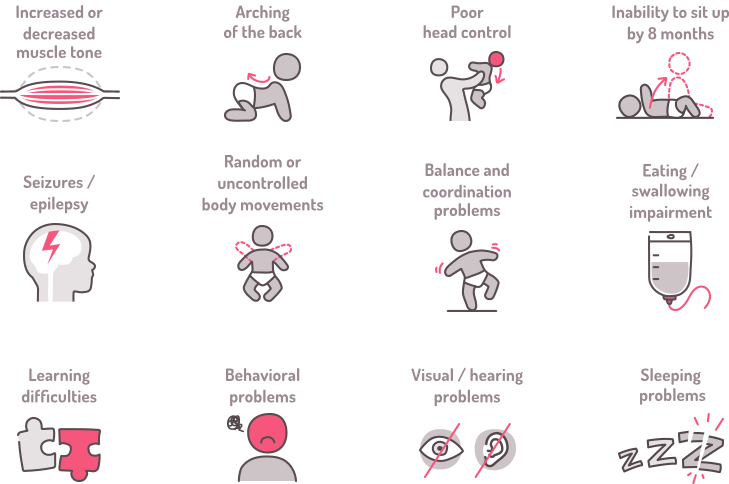
Cerebral Palsy is a genetic condition that affects development of motor skills in children that occurs on the developing brain, often before birth. Symptoms of this condition can appear during infancy or early childhood. Although treatments such as surgeries; braces, physical, occupational, and speech therapy can help, there is no cure for this treatment and before now, the genetic contributors of this treatment were unknown. However, the 2024 article, “Genetic causes of cerebral palsy uncovered through whole-genome sequencing,” created by The Hospital for Sick Children, stated that A Canadian-led study has identified genes which may be partially responsible for the development of cerebral palsy. 

The scientists from The Hospital for Sick Children (SickKids), the Research Institute of the McGill University Health Centre (RI-MUHC) and Holland Bloorv
iew Kids Rehabilitation Hospital conducted a study in order to research the in depth genetic causes of the condition. The scientists conducted genome sequencing in 327 children with Cerebral Palsy as well as their biological parents and compared them to three clinical cohorts and two pediatric control cohorts in order to determine whether genetic variants may be involved. According to the article, their findings showcased, “More than one in ten children (11.3 percent) had a genetic variant or likely genetic variant for their CP, and 17.7 percent of children had variants of uncertain significance that may be linked with CP after further research. Many of the variants also overlapped with other neurodevelopment conditions, including autism spectrum disorder (ASD) ” (The Hospital for Sick Children, 2024). This study identified that the causes of Cerebral Palsy are more diverse than originally thought as many of the variants are overlapped with other conditions. This new information can allow specialists, like those at The Hospital for Sick Children, to alter their treatment plans in order to provide the best care for each individual patient. 

I thought this was a great article! Not only was this research able to provide more personalized care for people with Cerebral Palsy, but it also opened up the door for more research to be done in the future to hopefully find a cure for this condition. 


Tuesday, February 17, 2015

An Increase of Cerebral Palsy Cases have been Linked to Genetic Mutations

For a very long period of time, it was believed that cerebral palsy was in no way shape or form linked to genetics due to the fact that as little as 1% of cases were likely caused by genetic mutations. However, new research conducted by the Australian Collaborative Cerebral Palsy Research Group has indicted that at least 14% of cerebral palsy cases are linked to a genetic mutation--one of the biggest discoveries into cerebral palsy in 20 years. Cerebral palsy is a congenital disorder marked by impaired muscle cooordination, and other disabilities caused by damage to the brain before or after birth. Typically, 70% of the brain damage that causes cerebral palsy takes place prior to birth (mostly in the second and third pregnancy trimesters).


Although it is still not relatively known what causes the brain damage--before it was believed that the damage was caused by the child experiencing a lack of oxygen before or after birth--this new discovery may open doors to find the source of the condition and help provide better treatments to children who have the disorder, as well. Being that now 14% of cases are due to genetic mutations, cerebral palsy in origin is at least partly genetic. For that reason, changes will be administered in the approach to diagnosis, treatment, and management of the condition. Additionally, the research group has gathered a unique DNA and clinical data cerebral palsy biobank which will be used to conduct further research on the matter.

It will be very interesting to see what further research may discover about the potential causes of cerebral palsy. Being that it took 20 years to make this ground-breaking discovery, it is very uncertain how long it would take to make another.

Original Article: click here.
Related Article: click here.

Thursday, April 18, 2013

Turning Skin Cells into Functioning Brain Cells

The following is an amazing discovery described in the ScienceDaily. Researchers at the Case Western Reserve School of Medicine have actually found a way to turn skin cells into functioning brain cells. This is help many patients whose brain cells get destroyed with conditions such as multiple sclerosis, cerebral palsy, and other myelin disorders. The technique involves coverting fibroblasts, which are present in most organs and skin, into oligodendrocytes, which are responsible for myelinating the neurons of the brain by manipulating proteins. They call is cellular reprogramming. The initial study used mouse cells, and their next step is to see how safe it is for humans. This finding a real breakthrough and can be used to treat a variety of genetic myelin disorders. There is not much other information on the study because it has only been done on mice. They get closer and close to making it safe for humans everyday.


[caption id="attachment_8004" align="aligncenter" width="448" caption="Neurons in the Brain "]Neurons in the Brain [/caption]


I think this is an astounding discovery that deserves great merit. It would help so many patients if and when it is available as a plausible treatment for myelin degeneration. When further studies are done in the field I would love to read about it, and I hope for the best.


Thursday, April 12, 2012

A Shrinking Brain

A little boy named Jason Egan from Australia has a condition that is possibly a new mutation never before recorded in history. Since he was about two years old, he was diagnosed with Cerebral Palsy because of his tense muscles, and his speech- but when he was 6 years old everything changed. Jason had learned sign language to communicate, and could even say a few words, but he seemed to start rapidly deteriorating. He could no longer sign, speak, or even feel pain. Doctors began testing him for every neurological condition under the sun, and one scan showed that his brain was actually shrinking.

[caption id="" align="alignleft" width="208" caption="Jason Egan, with His Father"][/caption]

The news of the child's shrinking brain baffled doctors, and since this discovery he has negatively tested for every known neurological disorder that there is. It is thought that Jason has a unique mutation that has caused his brain to shrink, most notably the Cerebellum, the part of the brain that controls movement. The good news, however, is that Jason's brain has stopped shrinking as a recent brain scan showed. The overall size of his brain has not changed and doctors indicate that this is a good sign, and he may be able to live a life similar to that of a person with cerebral palsy. While this situation is a depressing one, it opens new doors in the fields of genetics and neurological dis0rders.