Showing posts with label Ancient Genomes. Show all posts

Monday, December 10, 2018

The Plague in Ancient Neolithic Farming Communities

The large population decrease of European Neolithic farming communities had always been a mystery up until a group of researchers discovered a strain of plague found in a the genetic material of a woman in a rural farming area of 5000 years ago.  Another person buried near her also had traces of the strain of plague.  Based on the fact that this plague had reached Northern Europe earlier than the Eurasian migrants (how people originally believed it reached the area), scientists now believe that it developed in the communities by poor sanitation, too many people and animals.  Trade routes allowed for the disease to spread amongst Europe.  Once the Neolithic communities were wiped out, it allowed for the Eurasian migrants to spread out amongst Europe and this changed the genetic makeup of the continent.  After these discoveries, scientists recreated the genome of the ancient plague to dive deeper into how diseases can spread, and how they can disappear or stay prominent.
https://www.cnn.com/2018/12/08/health/ancient-plague-study-scli-intl/index.html
https://www.cell.com/cell/fulltext/S0092-8674(18)31464-8?_returnURL=https%3A%2F%2Flinkinghub.elsevier.com%2Fretrieve%2Fpii%2FS0092867418314648%3Fshowall%3Dtrue

Saturday, July 29, 2017

Decedents of Biblical Canaanites Identified by Genome Sequencing

According to National Geographic, a genome sequenced from 3,700 year-old remains from large clay jars shows that 90% of modern Lebanese genetic ancestry derives from Canaanites. Canaan was the land that occupies modern day Lebanon, Jordan, Israel, and Syria and was home to the "large, fierce, and wicked" Canaanites that are portrayed as the arch-enemies of the original Israelites.  According to the results of the genomic sequencing, the Canaanite ancestry is a mix of the indigenous peoples of the region from approximately 10,000 years ago and migrants from the east about 6,000 years ago. An additional Eurasian genetic mix occurred somewhere between 1800 and 200 B.C. During this period was the collapse of the Bronze Age and the  start of the Iron Age, the era when scholars believe that the Bible was written.  Obtaining ancient DNA is extremely difficult, especially due to the heat and humidity of the region. Ancient DNA (aDNA) collection is quickly increasing in popularity due to its historical and archaeological significance. However, because of it age and environment, nucleic acids can become degraded, enzymatic inhibitors become present, , and the risk of contamination of a dig site make extraction increasingly difficult.  But with new collection techniques and increased interest, Sanger Institute co-author Chris Tyler Smith declares that "this is only the tip of the iceberg. We're looking forward to more samples from different places and different time periods." Researchers were surprised to find the amount of genetic continuity between the ancient Canaanites and modern Lebanese due to the history of wars, conquests, invasions, and migrations of the area. With new sites and aDNA being studied, the genetic maps of the past can better tell how peoples lived, worked, and mixed and help get a better and more accurate understanding of history.

Monday, February 15, 2016

DNA Study of First Ancient African Genome Flawed, Researchers Report

From the New York Times

435831_620.jpg
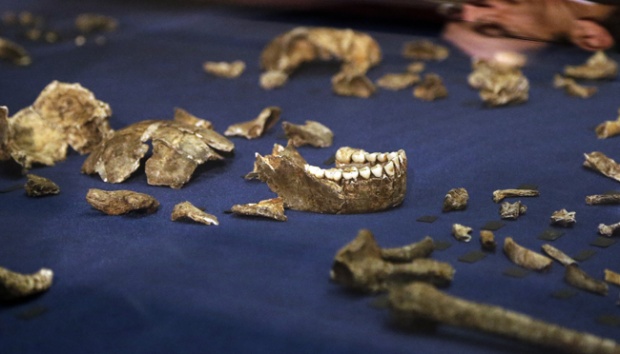
The 4500 year old bone from which the DNA fragments were taken. 


The article revolved around a study conducted by Cambridge University, which you can read more about here and here, and the mistake they made in drawing conclusions from their data. They sequenced the genome of an ancient man from DNA fragments extracted from ~4,500 year old bones, found in a cave in Mota, Ethiopia. The article written in the New York Times was about how peer review of this research, post publishment, found error in their methods. Researchers from Harvard were hoping to use the ancient genome, sequenced by the researchers at Cambridge, to aid their study of ancient human population. The conclusions they derived about the man, given the genome sequenced, were very different from what the Cambridge researcher had found. The main reason their conclusions were not the same was human error. The Cambridge researchers had used a software that took the fragments of DNA and compared them to a DNA template to figure out where they should be, but the program wasn’t set up right and ignored significant parts of the genome that led to inaccurate conclusions about the history of ancient african human populations.

The greatest implication of this article was the need for ancient genetics to share and review one another's work as to avoid human error in the future. I think that collaboration is very important for scientific progress, and this story is one of many excellent examples of why collaboration is so important.

If you want to know more about how DNA is taken from ancient bones, you can read about it here.