Showing posts with label AAV. Show all posts

Sunday, September 15, 2024

Development of an Adeno-Associated Virus (AAV) Capable of Crossing the Blood-Brain Barrier

For many diseases and disorders, gene therapy using adeno-associated viruses (AAVs) has been relatively successful in transporting specific genes across the body. However, with the blood-brain barrier being highly selective of what enters the brain, it will often reject AAVs from entering. When AAVs are denied entry to the brain patients do not receive the proper gene therapy needed to treat their disease. This is why a team of researchers from MIT and Harvard University set out to engineer a new AAV that could cross the blood-brain barrier with ease. 

To do this the team of researchers developed a variety of new AAVs to specifically find one that would bind to the transferrin protein receptor (TfR1), which is found in high quantities on the blood-brain barrier and is responsible for bringing iron into the brain.


While testing their newly developed TfR1-bound AAV on mice, the researchers found AAVs crossing the blood-brain barrier at levels 6-12 times higher than AAVs that are not TfR1-bound. Another significant observation was that the AAV's increased entry methods were only found for the central nervous system. Finally, the researchers found that when trying to deliver GBA1 into the brains of mice the TfR1-bound AAVs delivered 30 times more copies of GBA1.

The development of TfR1-bound AAVs is extremely significant for the increased effectiveness of AAV gene therapy. Personally, I think this breakthrough should be closely monitored to ensure that using TfR1-bound AAVs does not cause harm in the long run by potentially creating competition for iron attempting to cross the blood-brain barrier. This is important to monitor since a deficiency of iron can lead to many motor and cognitive impairments.

https://www.nimh.nih.gov/news/science-news/2024/new-gene-delivery-method-paves-the-way-for-advanced-brain-therapies

https://registries.ncats.nih.gov/glossary/adeno-associated-virus-gene-therapy/

Sunday, February 24, 2019

Gene Therapy Reverses Congential Deafness in Mice

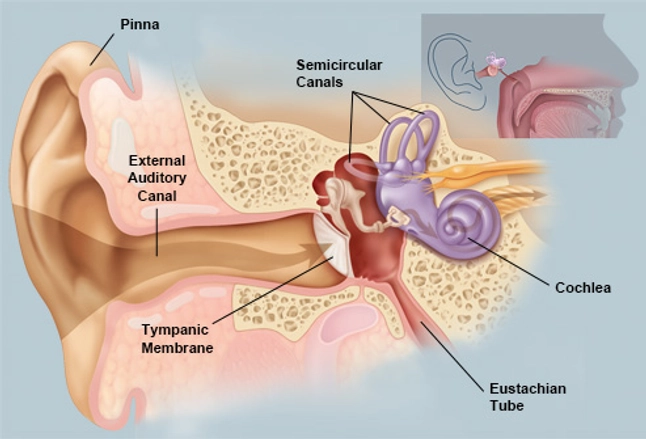
Scientists from the Institut Pasteur, Inserm, CNRS, and many other universities have collaborated to restore hearing in adult mice of DFNB9 deafness. Someone who has DFNB9 deafness are deficient in the gene coding for otoferlin, which is a protein that transmits sound information. The scientists restored the auditory synapase threshold, which receives the sound information, to a near-normal level. DFNB9 deafness is the same for humans and mice, that is why mice are used as models to test the efficiency of gene therapy.  Scientists came up with a Adeno-associated virus (AAV) approach, known as the dual AAV strategy becuase it uses two different recombinant vecotrs. An intracochlear injection of the vector pair was injected in adult mice to reconstruct the otoferlin coding region, resulting to a long-term restoration of otoferlin. With these findings, scientists can help individuals with DFNB9 deafness, to restore their hearing and also discover other types of deafness and hopefully be able to cure the other types of deafness.
 Image result for ear
I found this article to be interesting because a small percentage of individuals suffer with DFNB9 deafness since the prenatal stages, so they are born with it. It is interesting how scientists were able to use mice as a model for DFNB9 deafness since humans and mice express the mutation the same way. The scientists were able to restore deafness in the mice models for log-term and hopefully, it will restore hearing for humans long-term as well. Also, with these findings, scientists can also discover other types of deafnesses associated with humans and mice and hopefully find a cure for those other types of deafnesses.