Showing posts with label "RNA Sequencing". Show all posts

Wednesday, October 12, 2022

One Step Closer to Diagnosing Endometriosis


Co-directors of the Research OutSmarts Endometriosis (ROSE) Clinical Study, Drs. Peter Gregersen and Christine Metz, have been hard at work studying the cellular and genetic makeup of menstrual blood, or menstrual effluent (ME), and its potential to diagnose individuals who may have Endometriosis.

    This condition occurs when tissues similar to the uterine lining begin to grow outside of the uterus creating lesions and even enveloping the fallopian tubes and ovaries. It affects 1 in every 10 females at reproductive age leaving them in often immense pain, infertility, and other medical complications. At this point in time, the only method for a definitive diagnosis is through invasive laparoscopic surgery.

    This research being conducted is comparing both cellular and genetic differences between endometriosis patients and healthy controls to identify biomarkers that could be used for future approaches for diagnoses and even potential treatments. Single-cell-RNA-sequencing (scRNA-Seq) is being used to compare the endometrial tissue in collected ME from their participants in the study.

    Millions of women suffer from this condition and these new understandings of endometriosis allows them to identify it earlier and enables them to get the medical attention they need. I look forward to seeing the rest of their results as they begin their new clinical trial comparing ME from women who have symptoms but have no diagnosis.  

Saturday, March 16, 2019

4 New DNA Letters Double Life's Alphabet


In an article from Scientific American, scientists have doubled the number of DNA bases into an eight-language that stores and transcribes information just as the natural four key bases- A, T, C and G. In a recent study, researchers revealed that the new synthetic bases can bind to each other and the double helices can hold its structure. The new synthetic pairs of bases are S and B, and P and Z. These new additional pairs share similar properties and sizes of the natural four bases but differs in terms of bonding patterns. The research demonstrated that the synthetic bases bound to their complementary partners and were able to keep up the structure of the double helices stable regardless of what orders the synthetic pairs were in. The letters of the synthetic DNA pair up as they form hydrogen bonds like the natural letters. In addition, the synthetic P and Z better binds to cancer cells than the natural four bases.

The synthetic DNA codes for a certain aptamer and can be transcribed to a RNA and can store information. According to the study, there has to be more research done before reaching a true eight-letter synthetic genetic system because it is still questionable if the synthetic DNA can be replicated by polymerases which is responsible for making DNA during cell division inside organisms.

I find this study very amusing because it demonstrated a huge breakthrough in genetics and created more diversity in the DNA bases. Using the new eight-letter language, scientists will be able to create more RNA from DNA sequences that can be used in medical diagnostics and genetic storage.

Friday, February 1, 2019

Using Artificial Intelligence for Error Correction in Single Cell Analyses

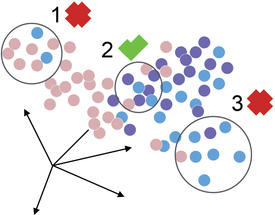
Modern Technology has immensely advanced the medical field in various ways. A recent article on "Science Daily," discusses a technology that can sequence individual cells and identify which genes are being expressed in each cell. This technology has been used in the past and is known to be quite error prone. Recent discoveries have allowed researchers to create a new algorithm that is able to locate, correct, and predict such errors. It can also determine if the absence of a gene is either technical or biological. The visionary projection called the Human Cell Atlas, is trying to create a reference database for personalized medicine. In other words, the goal of the project is to use single-cell RNA sequencing to distinguish healthy versus diseased cells. This new technology has the ability to show which genes are turned on or off in each cell. The major breakthrough of this technology is that researchers are now able to get exact data for every single cell. Before this technology, researchers were only able to get an average due to a required large amount of RNA for data analysis. One issue with this new technology however, is that it is intensely sensitive. Researchers call this the "batch effect" where there are fluctuations between measurements. For example, if the temperature of the device changes the slightest bit, it can alter the results. All in all, this technology is a great advancement and step towards discovery and success.
 Image result for Using artificial intelligence for error correction in single cell analyses
After reading this article, I was strongly interested in learning more about the new technology. As someone who is planning on going to medical school, it really was captivating learning about all the new technological advancements. These discoveries can really create some major breakthroughs in the medical field which is truly amazing.