Showing posts with label "Embyro". Show all posts

Wednesday, November 22, 2023

Scientists Grow Humanized Kidneys In Pig Embryos

Scientists Grow Humanized Kidneys In Pig Embryos


The article discussed how human cells were grown in pig embryos to form viable organs. The primary use was to be able to supply organs to those who are waiting on the transplant list. More than 100,000 people one waiting on the transplant list for an organ. According to the Mayo Clinic,  kidney transplant provides better quality of life, lower risk of death, fewer dietary restrictions, and lower cost of treatment compared to dialysis. The article explained how the human kidney has more than 70 cell types and scientists would have to replicate it. The kidney grown in the pig embryo was made out of 50-60% of human cells. Although the scientists haven't reached their goal of making a full human kidney they believe that they have made some progress. I found this article interesting because I wasn't aware that creating human kidneys in pig embryos was possible. The purpose of this experiment was to provide kidneys to those who needed them, which would end up saving their lives. 


Monday, November 13, 2023

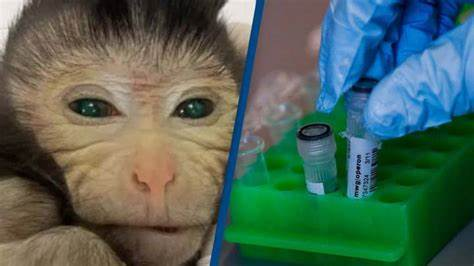
First live birth of a chimeric monkey using embryonic stem cell lines


A team of researchers in China has achieved a significant scientific milestone by reporting the live birth of a monkey containing a high proportion of cells derived from a monkey stem cell line. This "chimeric" monkey is composed of cells originating from two genetically different embryos of the same monkey species. While this recurrence had previously been demonstrated in rodents like rats and mice, it had not been achieved in other species. The study has extensive implications such as understanding pluripotency in primates, potential applications in genetic engineering, and species conservation. This research raises the prospect of developing more precise monkey models for the investigation of neurological disorders and other areas of biomedical research.

The research involved cynomolgus monkeys which are commonly used in biomedical studies. The team established nine stem cell lines from cells obtained from 7-day-old blastocyst embryos and enhanced their ability to transform into different types of cells. They injected a specific subset of these stem cells into early monkey morula embryos, resulting in 12 pregnancies and six live births. One live-born monkey and one miscarried fetus were significantly chimeric, with cells derived from the stem cells present throughout various tissues. Those tissues were the brain, heart, kidney, liver, and gastrointestinal tract. The contribution of the stem cells to different tissue types ranged from 21% to 92%, with an average of 67% across 26 different types of tissue. The researchers plan to further investigate the techniques underlying the survival of the embryos in host animals. The aim is to enhance the efficiency of chimera generation in the future. 


Links -
First live birth of a chimeric monkey using embryonic stem cell lines | ScienceDaily
First live chimeric monkey is technical feat, ethics concern (fiercebiotech.com)


Tuesday, July 31, 2018

There's a Genetic Explanation for Why Warmer Nests Turn Turtles Female

It has been suggested that warmer nests turn turtles into females rather than sex chromosomes. A temperature-responsive gene has been found which sets turtle embryos to be either male or female. Since the 1960's it has been in question how temperature can switch sex for turtles and other reptiles. Previous studies showed genes behaving different in opposite sexes but nobody understood exactly which gene controlled sex. A group of Chinese researchers Led by Chutian Ge developed a way to lessen the activity of certain genes by injecting viruses of artificial RNA into eggs. This technique was used in red-eared sliders, resulting in a sex reversal; what should have yielded males, turned out as females. The specific gene being studied is the Kdm6b gene. Scientists found that this gene behaves differently as temperature rises but does not behave the same way in all tissues. So it is suggested that the gene doesn't directly sense temperature, but, receives messages from another gene which reacts to temperature, directing the Kdm6b gene's behavior. A study found that the gene influenced bearded dragons' sexual fate.

I find this study interesting because before owning a bearded dragon, I did a lot of research about this reptile so I could fully understand their needs. They did mention that they can sometimes go through sex reversal which I thought was interesting. While now also owning two turtles, I knew I had to read this article. I would like to find out what other species have a similar gene that can cause a similar event to occur.

Original Article
Related Article