Tuesday, April 30, 2024

A new peptide may hold potential as an Alzheimer’s treatment


Researchers treated mice with a peptide that blocks an enzyme that is typically overactive in the brains of Alzheimer's patients. They found that the treatment dramatically reduced both neurodegeneration and DNA damage in the brain. Additionally, the mice showed an improvement in cognitive abilities. 

The peptide works by targeting a mutated protein called P25 that disrupts and exacerbates typical enzyme functions, causing the neurofibrillary tangles that are characteristic of Alzheimer's disease. In testing, mice treated with the peptide showed a decrease in enzyme activity while not impeding its normal function, which led to a reduction in DNA damage, neural inflammation, and neuron loss.

This is incredibly important research. Alzheimer's research is of particular interest to me as it runs in my family, so to see such promising results from these trials is incredible. Even though the patients can't be cured, having them be mentally present for as long as possible is so important. If a treatment can slow that cognitive decline, or even improve their symptoms like the results show in this study, then it is invaluable.

Article: A new peptide may hold potential as an Alzheimer’s treatment

Additional Information: New breakthroughs on Alzheimer’s

Study Details a Common Bacterial Defense Against Viral Infection

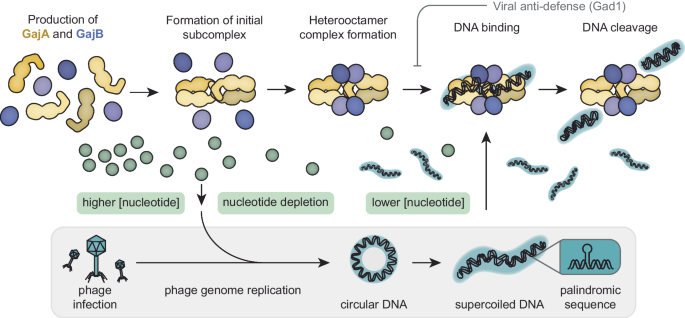
Complex of 2 proteins enhances blockage of phage replication One protein seems to be able to repel a phage, but when it connects to another protein, the resultant complex is very good at cutting the phage's DNA to prevent it from replicating, according to research findings. According to experts, the discoveries advance our knowledge of the evolutionary processes used by bacteria and may eventually find use in biomedicine. The biological structures of GajA, GajB, and the so-called supramolecular complex GajAB—which is formed when the two bind to form a cluster made up of four molecules from each protein—were ascertained by researchers using cryo-electron microscopy. The large size and elongated configuration of the complex made it difficult to get the full picture of GajB's functional contributions when bound to GajA, Shen said, leaving the team to make some assumptions about protein roles that have yet to be confirmed. Citation: Yang, XY., Shen, Z., Xie, J. et al. Molecular basis of Gabija anti-phage supramolecular assemblies. Nat Struct Mol Biol (2024). https://doi.org/10.1038/s41594-024-01283-w

Sunday, April 28, 2024

Unlocking Avian Secrets: The Power of DNA Barcoding in Bird Identification

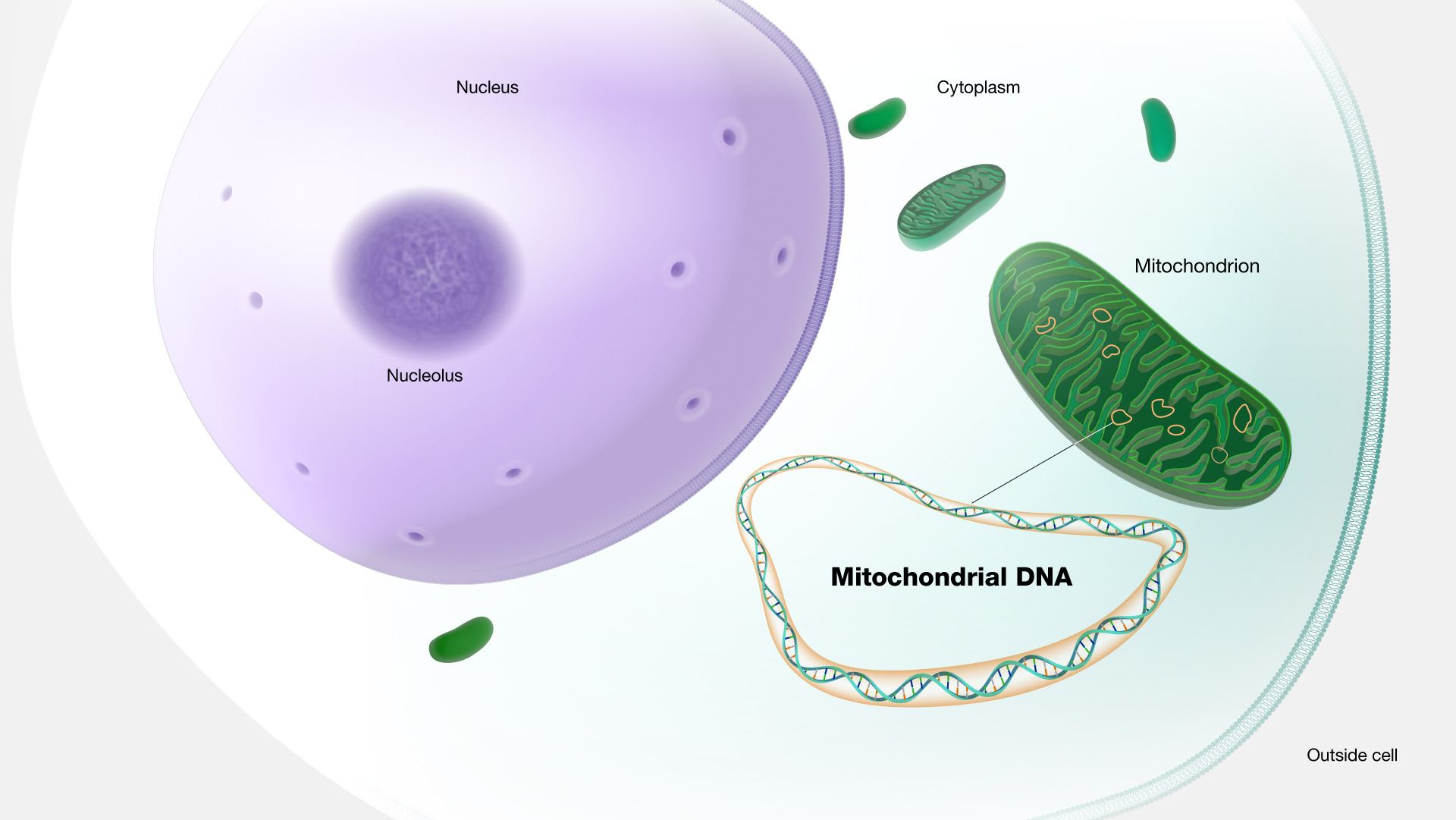
    The study “Comprehensive DNA barcode coverage of North American birds” investigates the effectiveness of mitochondrial DNA (mtDNA) as a tool for species identification through DNA barcoding. The research involved analyzing mtDNA from 643 North American bird species using tissue samples from museum collections and feathers. DNA extraction was performed with specific tissue extraction kits, and polymerase chain reactions (PCR) were conducted using primary primers BirdR1 and BirdF1. In cases of unsuccessful amplification, alternative primers like FalcoFA and BirdR2 were employed. The amplified DNA was then visualized on agarose gel and sequenced bidirectionally at facilities including the University of Guelph and the Smithsonian. 


    The results demonstrated a high success rate, with distinct barcode clusters found in 94% of the species, supporting the strong discriminative power of DNA barcoding. Notably, approximately 2% of the species showed significant genetic divergence within what are recognized as single species, suggesting the presence of cryptic species. However, about 6% of the species had overlapping barcode clusters with closely related species, often due to hybridization or recent divergence, which illustrates some limitations of DNA barcoding in distinguishing very closely related species.

    I find the article particularly compelling as it explores the potential of mitochondrial DNA for species identification through DNA barcoding. This study not only bolsters hope for a definitive methodology in species identification but also provides a wealth of data that could be invaluable for other scientists. This detailed information about the various bird species and their unique barcodes could be instrumental for researchers and enthusiasts alike in identifying species independently. This breakthrough is exciting and I am eager to see how it will advance the field of biodiversity research.

Saturday, April 27, 2024

Genetic Risk Factors for Anxiety

This article identifies 2 major indicators of an individual developing anxiety: genetic predisposition and the HPA axis in the brain. The HPA axis consists of the hypothalamus, anterior pituitary, and adrenal gland. Together these structures form the negative feedback-loop that is our stress response system

Hypothalamic-Pituitary-Adrenal (HPA) Axis: Structure, How It Works, Function
1. an external stressor triggers the response system
2.  the hypothalamus is stimulated and produces CRH (corticotropin-releasing hormone)
3.  CRH stimulates the pitutary gland leading to the release of ACTH (adrenocorticotropic hormone)
4. ACTH then diffuses through tissue making tis way to the adrenal gland
5. the adrenal gland releases cortisol, "the stress hormone"
6. cortisol triggers a response throughout the body and begins a negative feedback response
7. the hypothalamus diminishes the stress response

This study focuses on the HPA axis as a subject of interest. The researchers found that the NR3C1 and OXTR genes (currently understood to influence stress response) have alleles that are connected to self-assessed anxiety. It is possible that the identified alleles in these genes lead to disruptions in the feedback process mentioned above. I understand this to mean the the process begins normally but the hypothalamus either does receive to can respond to "stop" signal. It was also suggested that these gene may have varying effects between genders.

I agree with the authors that these finding are very important. Understanding the mechanisms of anxiety on a genetic level can influence patient care. It is also possible that this information can be used to identify people who are more susceptible to developing axiety and potentially implement preventative care.

Friday, April 26, 2024

CRISPRs, Gene Doping and Sports

 In the world of sporting events, it is a fact that the use of performance enhancing drugs, while they display the true extent of our performance capabilities, creates a very unfair playing field for athletes who do everything naturally. Regardless, some countries force their athletes to use performance enhancing drugs, with some being specifically engineered for coming up with negative drug tests. With that said, what the future holds for such a controversial topic is up in the air, and will stay there as the ability to influence genomic sequences becomes a reality. At the moment, researchers are looking into enhancing our ability to produce proteins such as insulin-like growth factor-1 (IGF-1), erythropoietin (EPO), insulin (INS) and growth hormone (HGH), for clinical applications (not athletics). While there haven’t been any athletes caught using gene therapy to improve their performance, researchers have developed the technology to detect whether or not an athlete has undergone gene therapy. They accomplished this by creating a test that can detect the presence of the Cas9 proteins used for the insertion of the altered DNA sequence. At the same time, when the technology is perfected and can be done with relative ease, and all athletes are capable of performing these therapies, would it be considered a level playing field at the highest levels? Or, perhaps a better alternative to this would be to create competitions separate from those competing naturally in order to display the full potential of athletic performance, by choice of the athletes of course. 


In my opinion, while I believe that the integrity of all sports should be preserved as well as possible, an enhanced athletes competition for specific sports would be fascinating to watch. For those who are on social media, and are exposed to content involving sporting events, you may see certain individuals who are displaying incredible feats of strength or power, all while being fully transparent about their drug usage. Including gene editing would certainly make quite a sight. At the same time, I also foresee some negative outcomes of the increased ease of access and popularity of gene therapy, like the prospect of countries using the treatment to enhance the capabilities of their soldiers. 

Gene Therapy Brings Hope to Children with Congenital Deafness


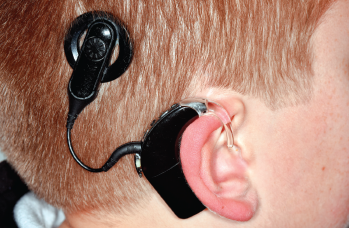
    In a recent article written in U.S. News and World Report, Dennis Thompson describes a recent medical trial conducted on 6 children with congenital deafness in China. In this trial researchers hollowed out a virus and loaded it with the gene that produces otoferlin then injected it into the inner ear. Otoferlin is a protein responsible for transmitting sound signals from the inner ear to the brain. 5 of the 6 patients. This bolsters the results of a similar study done at the Children's Hospital of Philadelphia.

    This gene therapy has no major side effects. However, although this treatment is effective for children with congenital deafness caused by otoferlin mutation, it is not effective at treating congenital deafness caused by other factors.

    I think that this article is important because it describes the possibility to cure children of a life changing condition with little to no side effects. I would've like to know more about the feasibility of this treatment as a widespread technique as well as the costs involved.

Epigenetic Factors in Drosophila are Capable of Causing Cancer Without Any Somatic Mutation.


You would not be wrong to believe that cancer can be generated from mutations in genes, but it might not be the only way. 
Researchers have identified another mechanism via epigenetic factors that can kickstart the growth of a cancerous tumor, no somatic mutations involved.

Using Drosophila flies, researchers looked for a mutation-free way that cancer cells may be able to generate. They found that the Polycomb group (PcG) protien was responsible for the formation and occurrence of different variety of tumorogenesis. PcG plays a role in regulating transcription, silencing genes at times and activating them at others. When this process becomes dysregulsted, neoplastic cells can form and unfortunately like most forms of cancer, will not stop after the dystegulating protein is fixed. As you might expect, thus leaves a lot of concern and question to how we look at cancer. The polycomb group protein is found in humans and functions the same. There are also other epigenetic factors identified that can lead to tumor growth. 

I enjoyed this article as now after working with Drosophila for a semester, I now am reading about what we can imply from this little fly to diseases that affect us the same.  


https://www.nature.com/articles/s41586-024-07328-w

https://www.sciencedaily.com/releases/2024/04/240424111523.htm

Octopuses and Cephalopods Can Edit Their RNA


New research by Joshua Rosenthal and Eli Eisenberg identified that octopuses and other cephalopods adjust to environmental differences like temperatures by editing their RNA. Previous research has found that cells have the capacity to swap one member of the four letter genetic code, Adenosine, for a substitute molecule, Inosine. This protein altering is called A-to-I and it was found in octopuses. Researchers used the California two-spot octopus and acclimated them to their natural range of temperatures in the cold and warmer tanks. When examining their RNA they found increases at 13,285 sites in the cold tanks where the one letter change alters the protein. In the warmer tanks they found 550 sites. With the help of other collaborators at the University of Michigan and Texas Tech University, they were able to identify proteins that were altered when the processes of RNA editing occurred. One of the proteins was kinesin-1, which changes the rate at which this molecule travels. This then alters the responsiveness of a protein called synaptotagmin that allows for communication between neurons. 


Mutation Helps Those at Higher Risk of Dementia avoid Alzheimer's


    In a recent article written by Dennis Thompson in the U.S. News and World Report, he describes a genetic mutation that helps to protect people from Alzheimer's even if they carry the gene that puts them at a higher risk of the disease known as APOE4.

    The mutation of the gene, called P3S-Humanin, enables cells to produce a more powerful version of humanin, a protein that it important to cellular function. Humanin produced by this mutation also was more effective in clearing amyloid beta, a signature of Alzheimer's, from lab mice with the APOE4 gene. the P3S-Humanin mutation is found in Ashkenazi Jews.

    Humanin is important because it has been shown to protect brain health as well as reduce inflammation and stress. Furthermore, the study conducted testing on nearly 500 centenarians. This testing included brain function tests. In these tests those centenarians who possessed both the P3S-Humanin and APOE4 genes outperformed those with just the APOE4 gene. This demonstrated the powerful impact humanin can have on brain function.

    In my opinion this article is importance because it demonstrates ways to treat Alzheimer's which is especially importance considering it is a genetic disease with no known cure. This research has the ability to profoundly impact those at higher risk for the disease as well as their families by providing an extended period of cognitive function to those afflicted by the disease.

Redrawing The Tree of Life

In the article called “Huge Genetic Study Redraws The Tree of Life for Flowering Plants”, research has found that the origins of flowering and fruit-bearing plants are most likely all interconnected to each other. Molecular probes were designed to detect 353 genes that are also found in angiosperms. Charles Darwin considered the abundance of angiosperms an “abominable mystery” because it was not quite clear how they emerged. However, new technology has found over 9,500 species of flowering plants to have come from a great angiosperm bloom 140 million years ago. This gives scientists a better understanding of the tree of life

In my opinion, having a better understanding of the tree of life can be very environmentally beneficial. This can help us improve conservation efforts, especially for plant species that might be going extinct. We can also find ways to sustainably farm fruit-bearing plants when we understand their relation to the tree of life and how they flourish. We can also use these plants for pharmaceutical research and medical practices as well.