Showing posts with label stemcells. Show all posts

Friday, April 16, 2021

Stem Cells Transported by Viruses


New research has begun to surface in the face of stem cells. Stem cells are now being tested to treat genetic diseases at the source rather that in a dish. Stem cells are essentially blank cells that have not yet being given a "job" to do. This practice however with not be easy as the stem cells will need to be kept alive during extraction, editing and re-entry into the body. There have been tests that use a virus called adenoid-associated virus (AAV) to transport these cells to the source. Luckily, these viruses are not disease causing.

This research has been found to be 60% effective and it's only the beginning. Stem cells have the potential to save many lives and regenerate functions in the human body that have since diminished. If this research continues to progress positively, then we can possibly see major breakthroughs in various spinal and muscle injuries.


https://www.ncbi.nlm.nih.gov/pmc/articles/PMC6496804/

https://news.harvard.edu/gazette/story/2019/06/breakthrough-harvard-research-shows-stem-cell-genes-can-be-edited-in-living-systems/


Wednesday, September 27, 2017

New advancements in stem cell research


      A recent article published on ScienceDaily discusses a new method of using stem cells to regenerate tissues. There has been a vast amount of attention on human induced pluripotent stem cells (hiPSCs) over the past decade because they have the potential to develop into any other cell type. This idea of using stem cells to essentially "regrow" new types of cells has been contemplated for many years. In order to convert stem cell to another desired cell, a specific molecule must bind to a specific DNA sequence and prevent the SOX2 protein from being expressed. In stem cells, the SOX2 protein binds to the DNA sequence and prevents the cell from converting into other cell types. Until now, researchers Junichi Taniguchi and Ganesh Pandian Namasivayam created a synthetic molecule that could allow hiPSCs to convert to mesoderm. Mesoderm is a cell type that could be provoked into converting into heart tissue muscle. Researcher created a synthetic molecule, PIP-S2, that was successful at binding to the specific DNA sequence responsible for converting hiPSCs into mesoderm. PIP-S2 prevents the SOX2 protein from binding to that DNA sequence, which in result, made it possible for hiPSCs to convert into mesoderm without being restricted by the SOX2 protein. After, researchers added a signaling inhibitor molecule which allowed for the heart cell to form. I believe the implications of this research could potentially break grounds in the medical field. However, there is still much more research to be done to figure out how these findings could be used for creating other types of cells. I believe that we are just at the beginning of changing medicine as we know it.


Tuesday, April 15, 2014

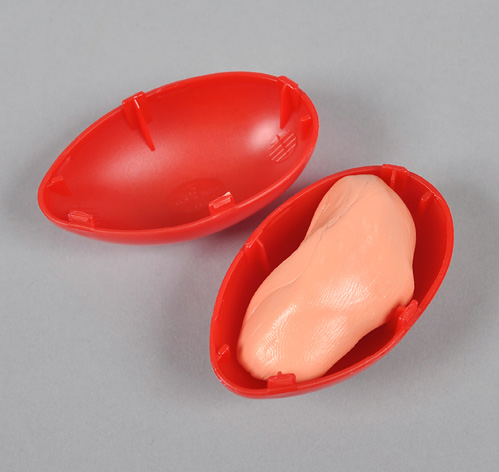
Main Ingredient in Silly Putty Could Promote Stem Cell Growth

A team at University of Michigan, under the direction of Jianping Fu and his team, have been studying the growth of stem cells on different surfaces.  According to this article publshed in Science Daily, It was found in their study that the stem cells are depending on physical signals to initiate differentiation.  Polydimethylsiloxane, the main ingredient in Silly Putty, was used to create small carpets in which the team of scientists grew the stem cells on.  The stem cells had a large amount of differentiation when long fibers of polydimethylsiloxane were used.  The longer fibers made a softer "carpet" for the cells to grow on.  According to Fu this research will change a lot in the medical field.  Scientists will now be able to target when cells begin to differentiate and also produce more vital stem cells.  Many paralyzing diseases such as ALS cause damage to nerve cells in those who are affected.  This research could improve treatment for such diseases by creating a more efficient and reliable way to create more nerve cells in the patient's body.   Overall the research will open many new doors into studying embryonic/stem cells as well as new treatments for awful paralyzing diseases.  


I believe that this research is monumental in the medical world.  Stem cells, which are similar to embryonic cells, are lost as our bodies age.  These cells are extremely vital because they are not yet specified to have just one function.  Stem cells can then differentiate into cells need around the body such as muscle, nerve, etc.  Being able to regenerate those specific cells would be very useful in the medical field especially with diseases such as ASL.  ALS deriates and paralyzes the body, new research into repairing or creating new, pure differentiated cells, will ultimately save lives and further the research into curing such illnesses.