Showing posts with label plasmodium. Show all posts

Wednesday, November 8, 2017

Could this Be Malaria’s Achilles Heel?


Researchers at the Instituto de Medicina Molecular have discovered that the Plasmodium parasite, which is the cause of malaria, defends itself by replicating inside its host’s liver cells. Replicating inside the host’s liver allows the parasite to infect red blood cells and cause potentially deadly symptoms. Symptoms of malaria in humans include fever, chills, and a flu-like illness (cdc.gov).
Portuguese researchers have recently discovered that the Plasmodium parasite is resistant to autophagy, a cellular defense mechanism. However, the resistance to autophagy all hinges on the presence of UIS3, a protein which binds to another protein, LC3. When UIS3 is bound to LC3, a shield protects the Plasmodium parasite from autophagy, leaving the parasite free to replicate inside the liver of its host. However, parasites that lack the UIS3 protein do not have this protective shield, and can be eliminated by the host. Therefore, the UIS3 protein could potentially become a target for protection against the malaria parasite.

I think that this development in genetics could help so many people in the future. If a malaria vaccination or cure that renders the UIS3 protein inoperable could be developed, many lives will be saved. According to the CDC, 429,000 people died of malaria in 2015 alone. It would be amazing to see a combatant for malaria come out of this genetic discovery, especially now that drug resistance is becoming an issue.
Thursday, November 17, 2011

New Class of Antimalarial Compounds Discovered

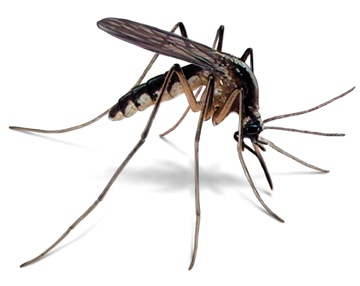
According to this article, Elizabeth Winzeler and other colleagues of the Genomics Institute of the Novartis Research Foundation (GNF) and The Scripps Research Institute have discovered a class of compounds that are effective in combating malaria.  These classes of compound are better able to target the blood and liver stages of malaria in mice; the liver stage, in particular, has been an ineffective target for anitmalarial drugs because of their negative side effects.  The malarial parasite, Plasmodium, which is carried by mosquitoes, infects humans by travelling to the liver first and then subsequently moving into the blood.  Winzeler and her team screened for compounds that showed effectiveness in treating both liver and blood stage infection; they found that a chemical called imidazolopiperazine was most effective for both.  Another attractive feature of the imidazolopiperazine class is that it is chemically unrelated to any existing antimalarial drug; this means that there are few opportunities for resistance.  The imaging of mice treated with this compound proves it is effective in both the liver and blood stages.  In addition to this, the genomes of resistant strain parasites (bred in the lab) were sequenced for the identification of the mutated gene; this information will help to better understand the parasite and lead to the development of new drugs.  In my opinion, the best part of this research is that, an effort to promote new drug discoveries, the team has made their data available online.