Showing posts with label laboratory mice. Show all posts

Friday, April 3, 2015

Alzheimer's Mice Treated with Cancer Drug


Alzheimer's disease is a progressive degenerative disease that destroys memory and the ability to control connections between the brain cells. The Yale School of Medicine researchers reported that memory and connections between brain cells were restored in mice with Alzheimer's disease when given an experimental cancer drug.

The drug, AZ005030, was not found to be effective in treating tumors. However, it was found to block damage triggered by the formation of amyloid-beta plaques, which is a prominent problem in Alzheimer's. When the experimental mice were given AZ005030, their memory was restored. The drug blocked the activation of the enzyme FYN, which leads to the loss of synaptic connections between brain cells. Therefore, the connections between the brain cells in the mice were restored.

I think this article is very interesting because it demonstrates how one drug can have alternate uses in different diseases. Although this particular drug was not effective in cancer, it was found to be effective in Alzheimer's.

My Article
Related Article

Friday, March 6, 2015

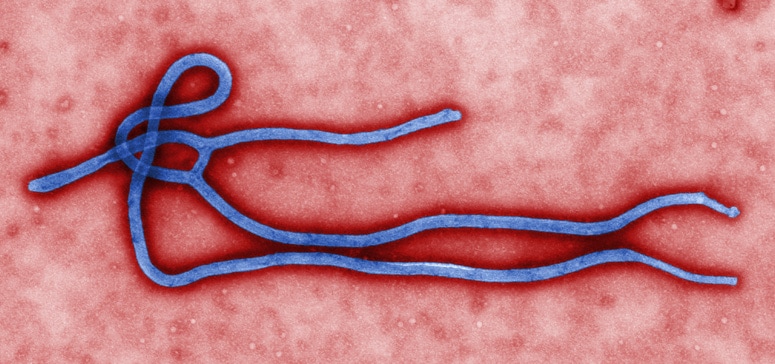
Possible Cure for Ebola


     Recently there has been a huge outbreak of the Ebola virus. More than 9,400 people worlwide have died because of this disease. All signs are showing that the disease will not be stopping and possibly spreading to West Africa.
   A group of scientics at Texas Biomed have studied ebola for over 10 years with 5 of those being focused on possible therapy options. Through much research they were able to find that two pore channels (TPCs) must be triggered in an infected cell for the virus to be able to function inside of that cell. With this finding they also were able to find that certain medications would be potential cures for the virus.


    One of the possible cures is medication that is currently used for patients with high blood pressure. The drug is able to turn TPCs on and off. Tetrandrine which is a Chinese herb, was tested on mice and actually proved to stop the Ebola virus from multiplying and protected them from the virus. No side effects seems to come from using this drug on Ebola infected mice. This finding is promising in that potential cures for Ebola can be found soon enough and save thousands of lives.
     I found this article interesting in that the Ebola epidemic has been all over the news recently and a potential cure can save so many lives. Ebola is a terrible virus that causes a hemorrhage fever. If the Chinese herb showed a positive outcome on the lab mice hopefully scientists can make it possible to use on humans. Of course more research would have to be done to see if an even more harmful mutation occurs from the drug, but there is still hope in that it will be successful.

Original Article 

Sunday, November 2, 2014

Genes Could be Influential For Surviving From Ebola

When some people are exposed to Ebola, some resist the disease, others suffer moderate to severe illness and recover, and some who are most vulnerable succumb to bleeding, organ failure, and shock. There is not necessarily a change to the Ebola virus itself but how a person’s body attempts to fight the infection which determines the severity of the disease. On October 30, 2014 Angela Rasmussen and Michael Katze described strains of laboratory mice bred to test the role of an individual’s genetic makeup in the course of Ebola disease. This study was hindered by the lack of a mouse model that replicates the main characteristics of human Ebola hemorrhagic fever. Angela Rasmussen and Michael Katze originally obtained this genetically diverse group of inbred laboratory mice to study locations on mouse genomes associated with influenza severity.

These scientists infected mice with the same species of Ebola virus causing the 2014 West Africa outbreak. Initially, conventional laboratory mice that were previously infected with this virus died and didn’t develop symptoms of Ebola hemorrhagic fever. The present study, all the mice lost weight in the first few days after infection. Nineteen percent of the mice were unfazed; they survived and fully regained the weight they lost within two weeks. They didn’t experience gross pathological evidence of disease while their livers looked normal. Eleven percent of the mice were partially resistant and less than half of them died. Seventy percent of the mice had greater than 50 percent mortality while 19 percent had liver inflammation without classic symptoms of Ebola and 34 percent had blood that took too long to clot which is a hallmark of fatal Ebola hemorrhagic fever in humans.  The mice with Ebola hemorrhagic fever also had internal bleeding, swollen spleens, and changes in liver color and texture. The scientist correlated disease outcomes and variations in mortality rates to specific genetic lines of mice.
The data suggested that genetic factors play a significant role in disease outcome. When the virus infection frenzies the genes involved in promoting blood vessel inflammation and cell death, serious or fatal disease followed. On the other hand, survivors experienced more activity in genes that order blood vessel repair and the production of infection-fighting white blood cells. Rasmussen and Katze also noted that certain specialized types of cells in the liver could also have limited virus reproduction and put a damper on systemic inflammation and blood clotting problems in resistant mice. Vulnerable mice had widespread liver infection, which may have explained why they had more virus in their bodies and poorly regulated blood clotting. Rasmussen and Katze also noticed that soleens in the resistant and vulnerable mice took alternate routes to try to ward off infection.

This mouse model has the potential to be promptly implemented to find genetic markers, conduct meticulous studies on how symptoms originated and take hold, and evaluate drugs that have broad spectrum anti-viral activities against all Zaire Ebola viruses, including the one responsible for the current West African epidemic.

Although this is a new study and innovating, we don’t truly know if a person’s genes are what influence life or death due to this virus. I guess one way to further study if genes do have a role in survival is to test on humans but who would actually put themselves in harms ways.
Article: http://www.sciencedaily.com/releases/2014/10/141030142206.htm

Sunday, April 6, 2014

New "Obesity Gene" Found

Researchers from the University of Chicago have said that they have found a gene that is associated to obesity. They have said that they think that the gene IRX3 controls body mass and regulates body composition. Although the research showed an association between the gene and obesity, it did not prove a cause-and-effect link. The IRX3 gene was first found though the analysis if 150 samples of DNA from people of European descent. To verify the role of IRX3 in obesity, the researchers created mice without the gene and found that they weighed about 30 percent less than normal mice. Most of the weight difference were due to the lack of body fat of these altered mice. These new rats were completely resistant to high-fat diet-induced obesity. The only problem with this research is that animal studies cannot often be replicated in humans. Previous studies have said that mutations of the gene FTO has a significant role in determining the risk of obesity in people. But this new study shows that this obesity mutation in FTO interacts with the IRX3 gene and alone the FTO mutation has only a minor effect on obesity risk.
          It is interesting that certain genes increases the risk in obesity in people. But the final deciding factor whether someone will be obese or not is that person. It is up to the individual to determine whether they will either exercise and eat healthy, or be lazy and eat McDonald's every day.

Tuesday, October 30, 2012

The Diet of Pregnant Mice Changes the Expression of Genes in Offspring

The Food and Drug Administration (FDA) discourages women who are pregnant from consuming alcohol and smoking due to a detrimental impact on the health of her child.  Further research is being published that may also discourage the consumption of certain types of foods  A recent article published in September shows that a mother’s nutrition may have an effect on her child’s genes.  Scientists at the University of North Carolina have been exploring this idea by feeding female laboratory mice different diets and examining the changes in their offspring’s DNA.

This type of research falls under the category of epigenetics.  Epigenetics involves altering the function of a gene without changing the sequence of DNA.  In this study, female mice were split into two groups before gestation.  One group of mice was fed a control diet, and the other was fed a diet lacking alpha-linolenic acid (ALA).  ALA is an Omega-3 fatty acid that is commonly found in seeds such as walnuts and pecans.  Both groups of females were mated with male mice that were fed the control diet.  The pups that were born from the divided groups of mothers were also divided in half.  One group of pups were fed a flaxseed oil supplement with high amounts of ALA, and the other group was fed a normal diet.  The scientists then analyzed the polyunsaturated fatty acid (PUFA) content of the offspring’s blood and liver.  The mice that were given the flaxseed supplement showed an increase in the DNA methylation (controls gene expression) of the Fads2 gene.  This gene is responsible for controlling the PUFA present in metabolism.  However, it was also found that the level of DNA methylation was also tied to the mother’s DNA methylation which was controlled by her diet.

[caption id="" align="aligncenter" width="400" caption="Flaxseeds contain a high amount of ALA."][/caption]

The results of this study show that the diet of a female mouse can control the epigenetics of her offspring.  Further studies should be completed to see if these results are applicable to humans.  It may be found that a mother’s diet can have an advantageous or disadvantageous effect on her offspring.  If true, mothers should eat the best possible diet to insure the health of their offspring.