Showing posts with label genetic diseases. Show all posts

Sunday, July 9, 2023

Pangenome: The New Genetically Diverse Human Genome

The previous human genome reference was released over 20 years ago. The new human genome, called "pangenome," takes into account several genetic references from a much more diverse set of individuals than the previous, of which includes only a few dozen individuals yet the base of the DNA was of one man from Buffalo. Compared to the new human genome reference it lacks the variability of the humans at large. Pangenome has filled in the missing pieces of the last reference, 120 million to be exact and captures the 47 individual's genetic sequences, which includes those of African American and South American descent to name of few. To better understand the complexity of the new reference the New York Times article, Scientists Unveil a More Diverse Human Genome, by Elie Dolgin, emphasizes the genetic diversity of the reference by comparing it a corn maze. Each color in the picture references a possible route and include yellow for duplication, pink as inversion, deletion being green and blue, and insertion is light blue.

Having a diverse representation of not only the human genome, but how diseases may present itself differently among people is necessary in order to provide the best care possible to patients. This article reminded me of how often skin conditions appear in light versus in darker skin and how these conditions are largely represented by white skin in textbooks. For genomes to come from a wide range of individuals regarding ethnicities and locations, then come together to form a overall human genomic reference would provide a more accurate representation of human's genetic makeup with capability of better addressing genetic diseases. 

Monday, December 2, 2019

Designer Babies

Genetically modifying embryos to have certain desired traits is far from being done. The ability to select different traits is much more difficult than targeting genetic diseases. This is because genetic diseases can be caused by a single mutation, while selecting certain traits is influenced by multiple genes. Shai Carmi said how it is much more accepted to alter a baby if it is for a disease versus an outward identity. Also traits can be very unpredictable, even if altered.

In my opinion, I do not think genetically modifying embryos should be allowed with the purpose of a "designer baby." I think it is acceptable to modify in the interest of the health and well being of a child, but to completely change their characteristics should not be okay. If somebody wants to change the way they are, it should be decided by them, not their parents. Also all life should be accepted the way it is, parents should be happy with the way their baby looks without genetically modifying them. I hope this is never something that is available to the public when it does become successful.


https://www.usnews.com/news/health-news/articles/2019-11-21/designer-babies-a-long-way-off

Related Article:
https://embryo.asu.edu/pages/ethics-designer-babies

Tuesday, February 26, 2019

Fruit fly wing research reshapes understanding of how organs form

Scientists at Rutgers University discovered that when they would manipulate cells in order for them to divide differently the fruit flies wing shape remained the same. This finding could potentially change how we understand organ formation. It is possible with further research we will have the ability to diagnose and treat human genetic diseases that affect organ development even before the disease becomes evident. It was previously believed that the shape of fruit flies wings were from how the cell was organized while dividing, however, that is not the case. Studies will continue in hopes to pinpoint where exactly organ shape is controlled.
developing fruit fly wing the colors are marked clones and the shape of the clones
It's interesting to see how much the common fruit fly has assisted in human genetics, their small size and convenience has led to groundbreaking findings. The fact that we can use these insects to observe how human organs form and how we can manipulate the cells to avoid genetic diseases.

Saturday, April 7, 2018

Discovery in Golgi helps genetic diseases


Researchers of School of Biosciences and University of Alberta discovered a rare organelle called a Golgi in the microbial amoeba, Naegleria gruberi. The Golgi appears in most cells as flattened membranes. The Gogli works as a part of a membrane-trafficking system, in which it is central to modify and transport proteins to the cellular destination. The Golgi apparatus functions to produce material, distributes and packages material, then sends of packages to other locations of the cell.

Researchers found that Golgi appears as an unstacked, tubular membrane structure. This is the first direct evidence for Golgi to appear tubular in the microbial amoeba, Naegleria gruberi. This discovery is very important for it can prevent genetic diseases, such as Alzheimer’s, Parkinson’s and other autoimmune diseases. When the Golgi bodies malfunction in cells, it cases such genetic diseases.

Having this new discovery can help prevent many cases pertaining to genetic diseases. Although more research may be necessary to stop the Golgi from disrupting the cell and function normally. This discovery of the Golgi can impact many lives as well as make a scientific difference in the cellular world.

For additional information, refer to the original article.

To learn more about the Golgi apparatus, click on the link1 link2 attached. 

Tuesday, March 21, 2017

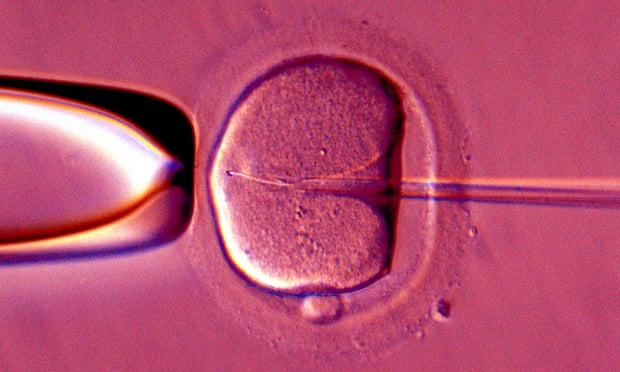
First License for Three-Person Baby Granted in UK


Image: Guardian article, photograph by Alamy

Yes, you read that correctly. A three-person baby (AKA, a baby that has DNA from three people) isn't something new. In fact, a girl named Alana Saarinen is one of the first people to have DNA from three parents (mother, father, and mitochondrial DNA from female donor). Her parents used a fertility treatment called cytoplasmic transfer to have her in the 1990s. However, creating babies using IVF is a new method being used today. Doctors in Newcastle, UK were granted licenses to perform IVF three-parent treatments. What doctors and families hope with three DNA is to essentially eliminate the possibility that their child will be affected by devastating genetic diseases caused by defected mitochondrial DNA in the mother. 
The idea of having children with DNA from three people has been shrouded in controversy since its inception, but it is an interesting topic. It will be exciting to see how successful the treatments are with regards to diseases in children after birth. 

Friday, April 29, 2016

Why Are Some Patients Resistant to Genetic Diseases?


Some diseases, such as Huntington’s, sickle cell, and cystic fibrosis, are controlled by a single gene. These are called Mendelian diseases. This means that if a patient has a certain mutation on that one specific gene, that person will have the disease. However, in a recent study, researchers found a handful of people, who although they had the mutation, did not display any signs of the disease. This lead to the belief that understanding what makes these people different could help lead researchers to better treat, or even prevent, these Mendelian diseases.

In a new study, researchers analyzed 874 genes collected from over 400,000 people (all supplied by 23AndMe). Of the 874 genes, researchers focused on the 584 Mendelian conditions that set in during a patient's childhood, and compared that data to information about the patient's health.  Out of the 400,000 people analyzed, researchers discovered 13 individuals whom although had the mutation that would indicate a Mendelian disorder, they did not show any signs of the disease. However, researchers are still looking for what these 13 people have in common.
In my opinion, the most interesting/exciting thing about this article is how researchers were able to utilize the genetic information complied by 23AndMe. This is just one of many articles I have read that mentioned they utilized 23AndMe. However, one big limitation to using 23AndMe, at least in this type of study, is that researchers cannot contact any of these individuals family members, so that prevents them from being able to compile an entire genome. 

http://www.popsci.com/scientists-detect-patients-resistant-to-penetrant-genetic-diseases
http://www.nature.com/nbt/journal/vaop/ncurrent/full/nbt.3514.html

Wednesday, November 19, 2014

Activating a Single Gene Could Extend Life Span


Full Article

The UCLA conducted an experiment on 100,000 fruit flies. The scientists activated the gene AMPK and extended the life span of the flies by 1/3. The fruit flies with the activated gene lived for about eight weeks, while their normal life span is about six weeks. The gene activates a process called autophagy which allows cells to get rid of "junk DNA" that accumulates as we age and causes damage to the cells. In humans the AMPK gene is inactive and if activated the average life span for a human could come to be as high as 101 years as opposed to the current average of 78. The gene can be activated in different parts of the body and may serve as a treatment for diseases such as Alzheimer's, cancer, diabetes, and stroke. There are still many years to go before this process will be ready for human treatments but the prospects are promising.

I found this article to be particularly interesting because of our labs in the beginning of this semester with our own fruit flies. As we know fruit flies are an ideal test subject because their genome is completely sequenced, it's easy to go through many generations in a short period of time, and there are no ethics issues with using fruit flies in the lab. It's also interesting that we share certain genes with fruit flies and that tests done on them can make progress in the medical field. I'm looking forward to seeing the progress this and other studies like them make in the coming years.

Tuesday, February 18, 2014

99 Lives?!


Besides having nine lives, cats surprisingly have some of the same diseases as humans according to recent article Feline Genetics. William Murphy, who is a professor in the Department of Veterinary Integrative Biosciences, says that studying and researching genetic diseases in cats will give a better perspective of some human diseases as well. That is why he recently started to contribute to the "99 Lives Cat Whole Genome Sequencing Initiative" project where they pounce on the genetic sequences of 99 cats to get more information on the genetics of feline diseases. What they do is take blood samples from different breeds of cats and sequences their genomes. Cat genomes are like maps which can lead to specific genes in multiple breeds, and in turn will show the genetic source of physical traits and health problems.
What the project's goal is to improve on the necessary resources to treat genetics diseases in cats and study their complex traits that may help us humans in the future, according to former UC Davis professor Leslie Lyons. Their first cat to have its genome sequenced is an Abyssinian cat (shown above) named Cinnamon and now all other cats' sequences are being compared to her genome to tidy up the project's information. But just from Cinnamon and her high quality sequence, researchers will now be able to view how cats differentiate on a genetic level and they will also be able to see mutations. Murphy even states that since some of the same diseases in cats are also conveyed in humans, it would be beneficial to study them because it will better our understanding in human diseases as well. But of course, all this research and sequencing are a heavy penny so the "99 Lives" project hopes that other research institutes and universities will put their paws out to help the cause in the future.
- - - - - - - - - -
My opinion? I love cats, even though I am slightly allergic, so this article really interested me. I also learned something new, because I had no idea that some health problems in cats were also found in humans. I wish I owned my own researching center so I can help out the "99 Lives" project, because they really have something that could help lots of lives in the future; felines AND humans. 

Link to related article featuring Cinnamon by the Genome Researchhttp://genome.cshlp.org/site/press/CatGenomeSequence.xhtml

Saturday, October 27, 2012

Scientist Deepen Genetic Understanding of Multiple Sclerosis


Scientist have discovered 30 percent of our likelihood of developing Multiple Sclerosis (MS). This is explained by 475,806 genetic variants in our genome. Genome-wide Association Studies (GWAS) are looking for genetic links to this disease. Multiple Sclerosis (MS) is a inflammatory disease of the central nervous system, and the most common neurological disorder in young adults. Canada has one of the highest ratings for MS. Corey Watson at University Doctoral Graduate in Biology compared MS patients with non MS patients and found that 8 percent of our 30 percent genetic susceptibility to MS is linked to small DNA variations on chromosome 6.  MHC encodes proteins that facilitate communication between certain cells in the immune system. Reserachers at the Mount Sinai School of Medicine in New York,  are looking for additional causes of MS to be found in genes that have varients that are rare to find in the population. These varients are poorly represented by their genetic markers.

I think this is very unfortunate for young adults that have this disease. The inflammation occurs when the body's own immune cell attack the nervous system and researchers are having a hard time finding a cure because they do not know whether this is genetic or a virus that is causing this disease. All researchers have found is therapies to help slow down the disease but even then adults do not feel like their normal selves.  As of right now there is no known life expectancy and people with MS can still function at work. Hopefully soon researchers will be able to tell whether this disease is genetic or viral.

Friday, March 23, 2012

Advances in Genetic Diseases Using the Drosophilia

Drosophila Melanogaster has been used as great genetics research models because they allow us to have a better understanding of genetic diseases that little knowledge may be known about.  Through Drosophila research, we have found out how certain genetic diseases affect humans and ways to stop the disease all together or delay their current progression.  There are many human gentic diseases/disorders. In a Medical News Today article published on March 13, 2012, using the Drosophila Melanogaster as a model, researchers have made advancements in the genetic diseases A-T, Rett syndrome, and kidney stones.

A-T is a rare neurodevelopmental disorder that causes cell death in the brain, poor coordination, spidery blood vessels, susceptibility to leukemia and lymphomas, and results in a short life expectancy mostly. Andrew Petersen is a graduate student at University of Wisconsin-Madison who discussed his experiment at a genetics Conference.  Since A-T is lethal in the Drosophila, Peterson created a mutant A-T strand in the flies that allowed the flies to develop symptoms when the environmental temperature was above a certain level.  When the symptoms of A-T began to show,  the flies lost their ability to climb up the vials and eventually ended up dying.  Based on this experiment, Peterson said “We are one step closer to knowing how these diseases occur and possibly we can treat them.”

Another research experiment by Sarah Certel, Ph.D., at the University of Montana-Missoula is also in the works. Dr. Certel is studying the human gene MeCP2 that controls gene activity or expression that has been altered for the experiment in order to put the gene in the flies. Rett syndrome occurs when too little or too much of the protein is produced.  It is a sex-linked disease whose symptoms include seizures, cognitive impairment, and loss of mobility. The altered levels of the MeCP2 protein caused disturbances in the flies' sleep and aggression. For flies, sleep is determined by the lack of activity during day and night. With this information, researchers are trying to establish a connection between cellular changes and behaviors.

Last but not least, Julian Dow, Ph.D., at the University of Glasgow, United Kingdom is studying kidney stones in the flies. Rosy, a mutant fly, discovered a century ago, is linked to the human condition kidney stones. In Dr. Dow’s experiment, he showed the formation of kidney stones in a time –lapsed video inside the Malpighian tubule of a fly. Before this, kidney stones have never been seen forming inside the kidneys.  Along with his research team and Dr. Michael Romero, Dr. Dow is currently researching chemical compounds that will stop the kidney stones from forming. So far, they have found a way to block the gene that transports a compound called oxalate, causing kidney stone formation to be slower.

It is great to see how far research in genetic diseases has come over the many years. Using the Drosophila Melanogaster as a research model has proven to be extremely beneficial in identifying the mechanics of genetic diseases, and they provide results that scientists and researchers will be able to see relatively quickly. Since the research for all three of the experiments are ongoing there isn't a lot of details; however, it is nice to see that there have been more advancements with these diseases. This makes us one step closer to finding a cure or slowing down the progression of them.