Showing posts with label gene sequence. Show all posts

Tuesday, December 9, 2025

Mutation Order Shapes Tumour Development Risk Blog #7


Angelina Tadros

December 9, 2025

Dr. Barbato

Genetics Blog #7


Mutation Order Shapes Tumour Development Risk


This article is a summary of the research done by Lourenco et al. It investigates how the order of cancer driving mutations affects intestinal tumour development. Using mouse models, the researchers introduced mutations each in different sequences, either priming the intestinal cells first or applying random mutations through ENU (ENU stands for N-ethyl-N-nitrosourea, which is a strong chemical mutagen. It works by adding an ethyl group to DNA bases, which then causes random point mutations in the genome.) before inducing the driver mutations. They found that most cells with early cancer causing mutations were eliminated by the body, but the few that survived made it easier for later mutations to occur. Important genes like APC and β-catenin were more likely to start tumours if the tissue already had earlier priming mutations. Overall this study shows that mutations already present in tissue strongly influence how tumours grow and evolve.

Figure 1.

This graph from the article demonstrates how mice with certain mutations ( such as Apc^het and Kras^G12D) develop more tumours quicker with shorter survival times after ENU treatment, while others (like Arid1a^null and control) have fewer tumours and live longer.


This research shows that cancer doesn't just depend on having driver mutations, but also the order they happen in. Earlier mutations can change the tissue in a way that makes it easier for later mutations to trigger tumour development. The results reflect just how complex tumour development is and it suggests that stopping earlier mutations in some way could help prevent cancer. This study really interested me personally, knowing people whose lives have been affected by cancer, I have always wondered how there is no cure. Science is amazing and has moved so quickly in finding cures for other diseases. This can hopefully provide a major stepping block for more research in better preventative measures in the future.


Article + picture:https://www.nature.com/articles/d41586-025-03748-4

Other similar article: https://medicalxpress.com/news/2025-12-cancer-mutations-affects-chance-tumor.html#google_vignette

Other source: https://pubmed.ncbi.nlm.nih.gov/19614604/#:~:text=Abstract,and%20Dpp10%20(dipeptidylpeptidase%2010).

Monday, April 1, 2024

Gene Sequencing Discovered the Genetic Causes of Cerebral Palsy

Source: https://medicalxpress.com/news/2024-03-genetic-cerebral-palsy-uncovered-genome.html

Additional Link https://www.mayoclinic.org/diseases-conditions/cerebral-palsy/symptoms-causes/syc-20353999#:~:text=Overview,palsy%20may%20have%20exaggerated%20reflexes.

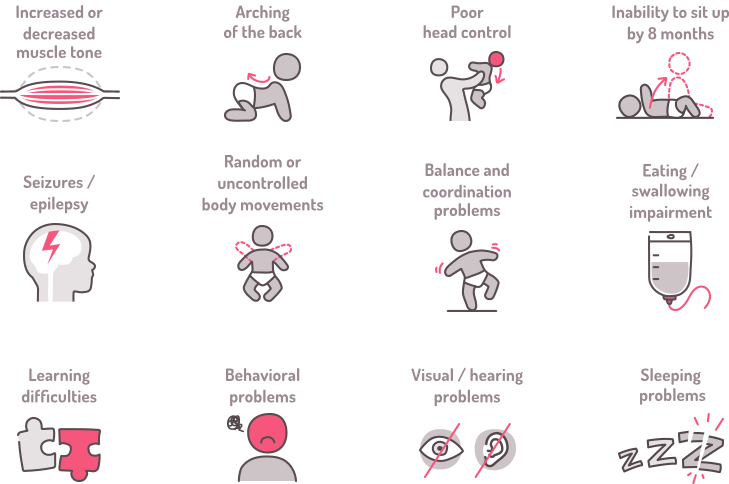
Cerebral Palsy is a genetic condition that affects development of motor skills in children that occurs on the developing brain, often before birth. Symptoms of this condition can appear during infancy or early childhood. Although treatments such as surgeries; braces, physical, occupational, and speech therapy can help, there is no cure for this treatment and before now, the genetic contributors of this treatment were unknown. However, the 2024 article, “Genetic causes of cerebral palsy uncovered through whole-genome sequencing,” created by The Hospital for Sick Children, stated that A Canadian-led study has identified genes which may be partially responsible for the development of cerebral palsy. 

The scientists from The Hospital for Sick Children (SickKids), the Research Institute of the McGill University Health Centre (RI-MUHC) and Holland Bloorv
iew Kids Rehabilitation Hospital conducted a study in order to research the in depth genetic causes of the condition. The scientists conducted genome sequencing in 327 children with Cerebral Palsy as well as their biological parents and compared them to three clinical cohorts and two pediatric control cohorts in order to determine whether genetic variants may be involved. According to the article, their findings showcased, “More than one in ten children (11.3 percent) had a genetic variant or likely genetic variant for their CP, and 17.7 percent of children had variants of uncertain significance that may be linked with CP after further research. Many of the variants also overlapped with other neurodevelopment conditions, including autism spectrum disorder (ASD) ” (The Hospital for Sick Children, 2024). This study identified that the causes of Cerebral Palsy are more diverse than originally thought as many of the variants are overlapped with other conditions. This new information can allow specialists, like those at The Hospital for Sick Children, to alter their treatment plans in order to provide the best care for each individual patient. 

I thought this was a great article! Not only was this research able to provide more personalized care for people with Cerebral Palsy, but it also opened up the door for more research to be done in the future to hopefully find a cure for this condition. 


Thursday, April 18, 2019

Protein structure

A article by Harvard Medical School explains how A scientist has used a form of artificial intelligence known as deep learning to predict the 3D structure of effectively any protein based on its amino acid sequence. This new approach for computationally determining protein structure achieves accuracy comparable to current state-of-the-art methods but at speeds upward of a million times faster.

Thursday, January 31, 2019

Blood Test can diagnose fetal genetic disorders early in pregnancy

According to an article published by the New Scientist, doctors have found a way to sequence small amounts of fetal DNA through the blood of the mother using a non-invasive prenatal test. This test allows us to look at 30 genes linked to dominant genetic diseases. Mutations in the sperm, egg or embryo can lead to these diseases and around 600 babies are born with these conditions. The test will be used for parents who have a family history of sickle cell anaemia, haemophilia, or cystic fibrosis. When the mother is given a positive result for the test she is given the opportunity for more invasive test and information on how to manage the pregnancy correctly.


It is interesting to see how we can possibly make life easier for families expecting children by being able to identify different diseases in the blood and possibly treat them before they become more serious. And even warn parents about the risks their children will have in the future and take precautions.

Thursday, October 23, 2014

Man's Genome from 45,000 Years Ago is Reconstructed


The genome of a man who lived 45,0000 years ago has now be reconstructed, from a fossil thighbone found in Siberia. Not only do the results give insight into the expansion of modern humans from Africa into Eurasia, but it is strong supportive evidence for the hypothesis that at one point, modern humans interbred with Neanderthals. This was accomplished by a team of scientists, led by geneticist Svante Pablo in Leipzig, Germany.


The team was able to do this by retrieving small parts of genes, reading the sequences and joining the fragments together to make larger pieces of the genome. They found that this man (who they deemed Ust’-Ishim man) was part of a lineage that eventually gave rise to all non-African humans, living after homo sapiens migrated from Africa, but before the species split between Europe and Asia.

The team was also able to reconstruct a Neanderthal’s genome from a single toe bone. Comparing a Neanderthal’s genome to that of Ust’-Ishim man, it was found that he had pieces of Neanderthal DNA in his genome, but with the significant difference that he had much longer pieces of Neanderthal DNA, compared to the much shorter fragments you would find in humans today. Thus showing that he was part of a lineage more closely related to Neanderthals.

From the findings, the scientists hypothesize that humans and Neanderthals interbred between 50,000 and 60,000 years ago, and that non-Africans descended from a group of people this man belonged to, who moved out of Africa, also around 60,000 years ago.

It’s very interesting to see the gaps in the history of our species slowly be reconstructed. Although we may never know everything, this is a great discovery. The hypothesis that we only just moved out of Africa, and were interbreeding with another species, just 60,000 years ago is astonishing; since that is not a long time ago in the great scheme of things, and much less than the hypothesis 100,000 years ago. I hope that more discoveries like this will not only reveal the past, but reveal how we slowly evolved into modern humans.

Tuesday, February 18, 2014

99 Lives?!


Besides having nine lives, cats surprisingly have some of the same diseases as humans according to recent article Feline Genetics. William Murphy, who is a professor in the Department of Veterinary Integrative Biosciences, says that studying and researching genetic diseases in cats will give a better perspective of some human diseases as well. That is why he recently started to contribute to the "99 Lives Cat Whole Genome Sequencing Initiative" project where they pounce on the genetic sequences of 99 cats to get more information on the genetics of feline diseases. What they do is take blood samples from different breeds of cats and sequences their genomes. Cat genomes are like maps which can lead to specific genes in multiple breeds, and in turn will show the genetic source of physical traits and health problems.
What the project's goal is to improve on the necessary resources to treat genetics diseases in cats and study their complex traits that may help us humans in the future, according to former UC Davis professor Leslie Lyons. Their first cat to have its genome sequenced is an Abyssinian cat (shown above) named Cinnamon and now all other cats' sequences are being compared to her genome to tidy up the project's information. But just from Cinnamon and her high quality sequence, researchers will now be able to view how cats differentiate on a genetic level and they will also be able to see mutations. Murphy even states that since some of the same diseases in cats are also conveyed in humans, it would be beneficial to study them because it will better our understanding in human diseases as well. But of course, all this research and sequencing are a heavy penny so the "99 Lives" project hopes that other research institutes and universities will put their paws out to help the cause in the future.
- - - - - - - - - -
My opinion? I love cats, even though I am slightly allergic, so this article really interested me. I also learned something new, because I had no idea that some health problems in cats were also found in humans. I wish I owned my own researching center so I can help out the "99 Lives" project, because they really have something that could help lots of lives in the future; felines AND humans. 

Link to related article featuring Cinnamon by the Genome Researchhttp://genome.cshlp.org/site/press/CatGenomeSequence.xhtml

Monday, February 20, 2012

Researchers Identify New Gene Mutations that Cause Heart Disorder

According to an article published recently in HHMI, Christine Seidman, a Howard Hughes Medical Institute (HHMI) investigator at Brigham and Women’s Hospital in Boston, and her team have done extensive research on at least forty separate genes responsible for dilated cardiomyopathy.  Dilated cardiomyopathy is a medical condition in which the heart becomes enlarged and weakened, thereby reducing its capacity to pump blood with enough vigor to deliver oxygen to the body effectively.  Debilitating symptoms include shortness of breathe and persistent fatigue.  Dilated cardiomyopathy tends to run in families, and so genetic causation is a likely explanation of its pathology.  The fact that dilated cardiomyopathy is influenced by at least forty known genes means it can be considered polygenic inheritance, or an additive effect of two or more genes on a single phenotype, perhaps even resulting in a gradation termed quantitative character.    Until recently, the genes suspected of contributing to dilated cardiomyopathy that have been sequenced have been relatively short, anywhere from the 675 amino acid residues of Lamin A/C to the 2,000 amino acid residues of the motor protein myosin.  Titin, a protein which helps assemble the sarcomere as the heart muscle grows and also plays a role in muscle contractions, on the other hand is a staggering 33,000 amino acid residues long.  As Dr. Seidman explains, "It wasn’t that we weren’t aware that titin caused disease—we were.  The problem was that the technology was not sufficiently robust to allow comprehensive analysis of that gene in a large collection of patients.”  As a result, genetic causation of dilated cardiomyopathy had remained not fully understood.

However, recent technological innovations which have made DNA sequencing fast and relatively inexpensive have allowed Dr. Seidman and her team to finally sequence the giant gene sequence of titin and record genetic mutations in the gene in patients who suffered from dilated cardiomyopathy.  The results were fruitful:  28 percent of the people who had dilated cardiomyopathy also had dramatic mutations in the DNA encoding titin, mutatations which resulted in non-functional protein products.  Among the forty known genes known to influence dilated cardiomyopathy, titin by far had the highest percent correlation between gene mutation and phenotypically observable disease state.

Dr. Seidman hopes that her team's findings demonstrating the strong correlation between titin mutation and dilated cardiomyopathy will result in a more proactive approach to preventive medicine and prophylactic treatments.  She also hopes that scientifically mapping the congenital causes of dilated cardiomyopathy might shed light on the pathophysiological mechanisms which enlarge and weaken the heart in afflicted patients in the first place, which would further lead scientists to curative medicines.

[caption id="attachment_3808" align="aligncenter" width="775" caption="Sliding filament model of muscle contraction. (Titin labeled at upper right)."][/caption]