Showing posts with label UV radiation. Show all posts

Wednesday, September 28, 2016

Red Heads Are Not Only Crazy But More Likely To Get Cancer As Well

It's a hot summer day at the beach and all you want to do is run into the cold ocean to cool off but there's always that one adult yelling at you to put sunscreen on before hand. We've all experienced that moment where we're thinking to our selves "I don't need sunscreen I won't be in the sun long anyway." Applying sunscreen is a hassle but for redheads this may actually save your life!

Skin cancer is the abnormal growth of skin cells- most often develops on skin exposed to the sun.
Skin cancer can be cause by the UV radiation from the sun coming in contact with your skin. Sunscreen acts as a protective layer between your skin and to some of the UV radiation the sun admits. It helps block the negative effects that UV radiation can cause on our skin cells. In a recent study it was shown that people with the red hair gene along with the pale skin and freckles gene are more likely to develop skin cancer due to a larger amount of genetic mutations. The red hair variation of the
MC1R gene had 42 percent more mutations than those without the red hair gene.
This difference in percentage between those with these genetic mutations and those with out would be equivalent to an extra 21 years of exposed sunlight. Redheads who also have pale skin and freckles have two copies of the MC1R gene whiles non redheads who are pale skinned and have freckles only have one copy. Those who only have one copy are also at an increased risk for developing skin cancer. 400 people's DNA, who have tumors, were sequenced and it was found that just having one copy of the MC1R gene increased the genetic mutations greatly. In the future more studies will be run to try and lessen the risk for developing cancer for these people with the copy of the MC1R gene. About 2 percent of the world are redheads meaning there are a lot of people at risk for developing skin melanoma, one of the most fatal types of cancer.
 

Thursday, May 5, 2016

Genetics and Perceived Age

Researchers from institutes in China, the Netherlands, and the UK are looking into whether genetics plays a role in looking young. This research may shed light on why some people age better than others and if there is a genetic component that is linked. At first researchers wanted to determine whether the genetic code was responsible for age spots and damage by sun exposure, but they have since turned their attention to perceived age. It is known that the MC1R gene is responsible for resisting some of the affects of UV exposure and these researchers wanted to find out whether this gene had something to do with UV protection. It has been postulated that some people have more protection from UV radiation and therefor appear to be younger than they actually are. Not only is MC1R linked with UV protection, but is also linked with red hair and pale skin. In the Netherlands, scientists compiled 2700 photos and had individuals analyze them and estimate how old the person in the photo was. Researchers found that people with both copies of a mutated MC1R gene appeared to be two years older than those with one or no copies of a mutated MC1R gene. The MC1R gene is also involved in red hair and pale skin as it codes for pigmentation of skin in humans. From the study, it was also found that people overestimated the age of women more so than men meaning that bias could be playing a role in the determination of age.

The MC1R gene may also make you look older because having the gene is thought to be responsible for affects in facial structure, more specifically, the height of the lips, creases in the corner of the mouth and others located below the nose. Companies like Unilever are interested in these results because they believe that if a gene that attributes to aging can be found, they want to try and make "anti aging" products that take advantage of the MRC1 gene, as it is also involved in "DNA repair in the skin." These results may be influenced from the fact that pale skin may make someone look younger, or this gene could actually allow for more UV protection. UV radiation from the sun does affects skin especially overtime and does attribute to changes in the skin. With better protection, some people may appear to be younger than they actually are. When researchers looked at mutations on the MC1R gene, they did not consider that the health of the individual could play a role in perceived age, and this could ultimately make the data less useful. I believe that the data gathered from this experiment along with the way in which it was carried out seems to be too subjective. Also the data does not seem to be substantial enough to conclusively say that the MC1R gene is in fact responsible for an increase in perceived age. 


Friday, April 10, 2015

Licorice Extract Instead of Sunscreen?


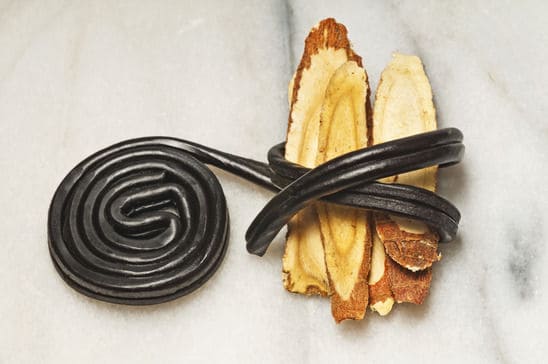
A new study from the January 2015 issue of Experimental Dermatology found that a licorice extract could protect the skin from harmful UV irradiation.  According to a researcher involved in a study from Germany, Gitta Neufang, Licochalcone A, a root extract of the plat Glycyrrhiza inflata, could protect the skin from damaging environmental stressor such and UV radiation and chemicals.  This works from within the skin by strengthening the skin’s own defense systems, and providing a protective shield from sun exposure, working better than sunscreen.   Neufang and his colleagues tested the effects of this extract by isolating human skin cells and exposing them to solar simulated light, imitating real sun exposure.  The results showed the treated cells with Licochalcone A detected slightly less harmful radicals, and were able to produce a higher amount of “self-protecting” antioxidant molecules.  It can be concluded that the skins own defense system can be stimulated by the application of licorice extract.  The extract could possibly provide better sun protection due to the offered physical and biological protectors.  With these results, the researchers hope to improve the effectiveness of sunscreens and decrease the harmful affects of sun exposure.

Original Article: http://www.sciencedaily.com/releases/2015/02/150218191909.htm


Additional: http://www.healthyanswers.com/skin-health/2015/03/natural-extract-gives-sunscreen-protection-to-your-skin/

Thursday, February 26, 2015

Sun Damages DNA in Skin Cells Long After Exposure


Each year, research on the sun's affect on our skin becomes more and more abundant. If you aren't wearing sunscreen by now or are still hitting the tanning beds, this new study may finally change your mind. Scientists have discovered that the sun's ultraviolet light can cause damage to DNA long after the physical effects of sun burn have stopped, and "certain damaging reactions that can lead to melanoma-causing mutations may take hours to evolve and mostly occur after you get out of the sun."

This study was led by Douglas E. Brash of Yale University, and included scientists from around the globe. They came to the conclusion that 'radical species' (superoxide and nitric oxide) that are generated from ultraviolet light, damage DNA even after irritation from being out in the sun ceases.
These radicals react and create peroxynitrite, which oxidizes and fragments melanin polymers (a pigment that protects mammals from harmful sun rays). They discovered this by using compounds found in melanin, to create lesions (or "dimers") in DNA, which in turn leads to mutations causing melanoma, a.k.a skin cancer.

The team of scientists found that at least half of the dimers you can be exposed to come in the dark, rather than daytime. While direct DNA damage happens almost instantly, the lesions can take hours to develop. This research gives a lot of information regarding melanoma. 

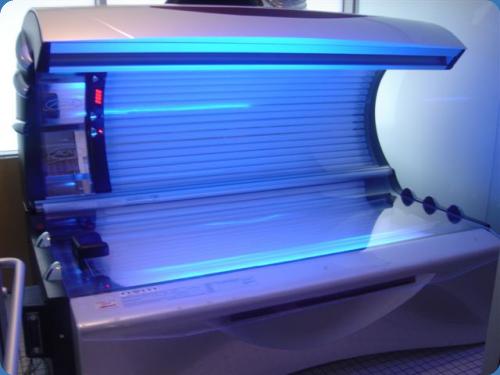
I thought this article was very interesting because too many people still think that even if you're in the shade you can't be affected by the sun's rays, or that it's unnecessary to wear sun screen. Also, tanning beds are a direct feed of UVA radiation; people go to great lengths to get a tan and will practically cook themselves alive in these beds, not to mention it's highly unsanitary. I, too, was once a naive beach-goer who didn't put on sunscreen due to the fact I do not burn. I have since learned that even if you do not get sun burn, it is still extremely important to protect yourself from the sun's harmful rays, or you run the risk of getting skin cancer. 

Wednesday, January 28, 2015

Your Addiction to Tanning May Be Genetic


                 As the winter air and cloudy skies begins to settle in, people are rushing to tanning salons to stop their 'summer glow' from fading. Anna Norto, from HealthDay, reports that scientists have begun to conduct research on a gene that is linked to tanning addiction. It is believed, that similar to drugs such as heroin and cocaine, exposure to UV light can be addictive. During their initial research, experimenters conducted UV-dependence experiments on mice and found that daily exposure to UV-lights increased the amount of beta-endorphins in the animals blood levels.  When comparing the saliva of people who exhibited tanning dependence, to those who did not exhibit these characteristics, researchers found a striking difference in the PTCHD2 gene. Because the initial sample size was small, researchers hope to conduct larger comparisons, and determine what may have caused these changes.
                Due to these initial findings, scientists are looking for potential therapies for those who are UV-dependent. One of the many side effects of tanning is Melanoma. Melanoma is the cancerous growth of skin cells due to unrepaired DNA that causes cells to rapidly reproduce and multiply. The main cause of this disease is consistent exposure to ultra violet radiation. With the rate of melanoma increasing at a rapid rate, researchers are looking for safer methods for those who need a daily dose of UV rays.
                While I read this article, several questions came into my mind.  What interested me was whether a person of a lighter skin tone was more likely to be UV- light dependent than a person of a darker skin tone. Although people who are darker, are less likely to tan, it is possible that they can feel the same euphoria when exposed to UV lights as someone who tans often. With cancer rates growing faster than ever due to environmental factors, if researchers can detect the likelihood of a person being dependent on ultra-violet light, then through determining potential therapies, melanoma rates around the world may decrease.