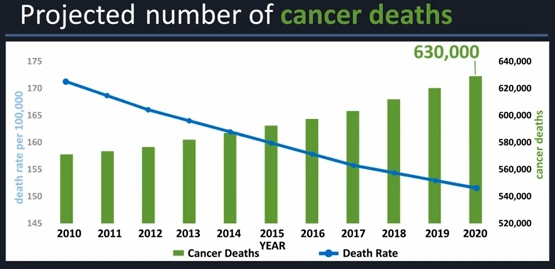
According to the National Cancer Institute, in 2018 over 600,000 people lost the fight against cancer. Those are staggering numbers that should stun us all. Although there are many worthy research projects, I personally feel finding preventative methods and cures for cancer should be at the top of the list. Cancer affects all ages, nationalities and genders, no one is immune. It is a horrible disease with sometimes a more painful treatment plan. I believe preventative medicines and effective treatments exist. It is our responsibility to adjust our focus and finances to ending this tragic statistic from continuing in the same direction.
Showing posts with label Purdue University. Show all posts
Saturday, April 27, 2019
New Cancer Treatment Discovered in Endangered Chinese Fir Trees
Science Daily has informed us of the new discovery which was made at Purdue University through the work of organic chemist, Mingji Dai and professor of medicinal chemistry Zhong-Yin Zhang. After the failed attempts to find within the tree a treatment for diabetes and obesity, Mingji and Zhong-Yin started exploring other potential uses. They uncovered that a synthetic analog of the tree’s molecule, named Compound 30, was a strong and effective inhibitor of SHP2. The complete findings were published in the Journal of the American Chemical Society. SHP2 plays a major role in many types of cancer. For this reason it is one of the main focuses with many new cancer fighting drugs. Compound 30 not only reacted with SHP2 but formed a strong covalent bond, making it more effective than most other cancer fighting drugs on the market. Unfortunately Compound 30 alone does not kill cancer directly but when paired with other existing drugs it can greatly enhance the results.
According to the National Cancer Institute, in 2018 over 600,000 people lost the fight against cancer. Those are staggering numbers that should stun us all. Although there are many worthy research projects, I personally feel finding preventative methods and cures for cancer should be at the top of the list. Cancer affects all ages, nationalities and genders, no one is immune. It is a horrible disease with sometimes a more painful treatment plan. I believe preventative medicines and effective treatments exist. It is our responsibility to adjust our focus and finances to ending this tragic statistic from continuing in the same direction.
Labels:
"cancer",
Cancer Treatment,
compound 30,
Purdue University,
Science Daily,
SHP2
Saturday, November 8, 2014
Plants Need Suncreen Too!
Plants are constantly exposed to the sun, no doubt they use
sunlight to process their food by photosynthesis, but at the same time they need protection form
the harmful UV radiations emitted by the sun too. A group of scientists had discovered
molecules that shielded the plants from the harmful radiations of the sun. And
then researchers from Purdue University reported the mechanism of these natural
plant sunscreens.
Timothy Zwier and colleagues from Purdue University noted
that plants are exposed to harsh UV rays on the daily basis. These radiations
can cause serious damage to the plants DNA, and hinder plant growth. But till
date these radiations have never been seen to affect the plant growth.
Biochemical tests showed that plants generate special molecules and send them
to the outer layer of their leaves to protect themselves. Researchers reported that these molecules are
called sinapate esters, and they block UV B-radiations and prevent it from
penetrating deep inside the leaves where it might the affect the regular
development of the plants.
![]() |
| Plants constantly being exposed to UV radiations |
Zwier's team investigated in detail as to what happens to the
sinapate esters under UV B-radiations exposure. The research team coaxed the
sinapate ester molecules to gas phase and exposed them to the UVB radiation in
the laboratory. They saw that the sinapate ester molecules soaked up the UVB radiation at every wavelength hence preventing it from penetrating deep into
the leaves. These findings eventually indicated that these molecules do indeed
act as the natural sunblock for the plants.
I think it would be great if these molecules could be somehow used
in the sunscreen used by humans, as a large number of individuals are being
exposed to the UV radiations constantly, which is eventually leading to
increasing number of skin cancers patients around the globe. But it is very
early to speculate its use for the human population.
Related Article: Health affects of UV radiations - http://www.who.int/uv/health/en/
Subscribe to:
Posts (Atom)

