
The origin of an important Jewish population, the Ashkenazim of Central and Eastern Europe has forever been a mystery. A new genetic analysis has been configured, pointing to European women as the female founders, and the Jewish community of the early Roman empire as a source of the Ashkenazi ancestors. In previous studies it was told that the women who founded the Ashkenazi Jewish community were from the Near East, but today's findings express otherwise. A study led by Martin B. Richards of the University of Huddersfield, England, composed a genetic analysis of maternal lineages. The team analyzed the Ashkenazi lineages by decoding the mitochondrial genomes of people from Europe and the Near East. Earlier DNA studies showed that Jewish communities had been founded by men whose Y chromosomes bore DNA patterns found in the Near East. But, unlike the males, when geneticists went to examine the females, their mitochondrial DNA has no common pattern. In the smaller communities it resembled that of the surrounding population, suggesting a migration pattern in which the men arrived single, possibly as traders, and took local wives who converted them to Judaism. But this idea has not been clear as to if this is true or not of the Ashkenazim.
A 2006 study reported that the four most common mitochondrial lineages among the Ashkenazis came from the Near East, implying that only four Jewish women made up the entire ancestry of about half of today's Ashkenazim. But at the time decoding DNA was expensive and those scientists only analyzed a short length of the DNA. However, in this
New York Times article Dr. Richards was able to draw up the Ashkenazi family tree with much finer resolution and more accuracy. His trees showed that the four major Ashkenazi lineages form clusters within descent lines established in Europe between 10,000 and 20,000 years ago. In conclusion, he determined that "at least 80 percent of Ashkenazi maternal ancestry comes from women indigenous to Europe, and 8 percent from the Near East, with the rest uncertain." Richards feels that the four major lineages became incorporated into the Ashkenazi community about 2,000 years ago because at that time a large Jewish community was flourishing in Rome and included many converts. A recent analysis of whole genomes of Jewish communities was noted that almost all overlap with non-Jewish populations. Overall, Richards sees this knowledge as a possible time and place at which the four European lineages could have possibly entered the Jewish community, becoming numerous later as the Ashkenazi population in northern Europe expanded from 25,000 in 1300 A.D., to over 85,000 million in the beginning of the 20th century.
I chose this article to read because I love learning about ancestry. This discovery caught my eye and I feel that new findings in ancestry offer many answers to many questions people may ask. We want to know where we come from and the more we know the more we can express to others.
(Article):
http://www.nytimes.com/2013/10/09/science/ashkenazi-origins-may-be-with-european-women-study-finds.html?_r=0
Second Link:
http://blog.23andme.com/23andme-customer-stories/ashkenazi-and-me-discovering-unknown-jewish-ancestry-with-23andme/
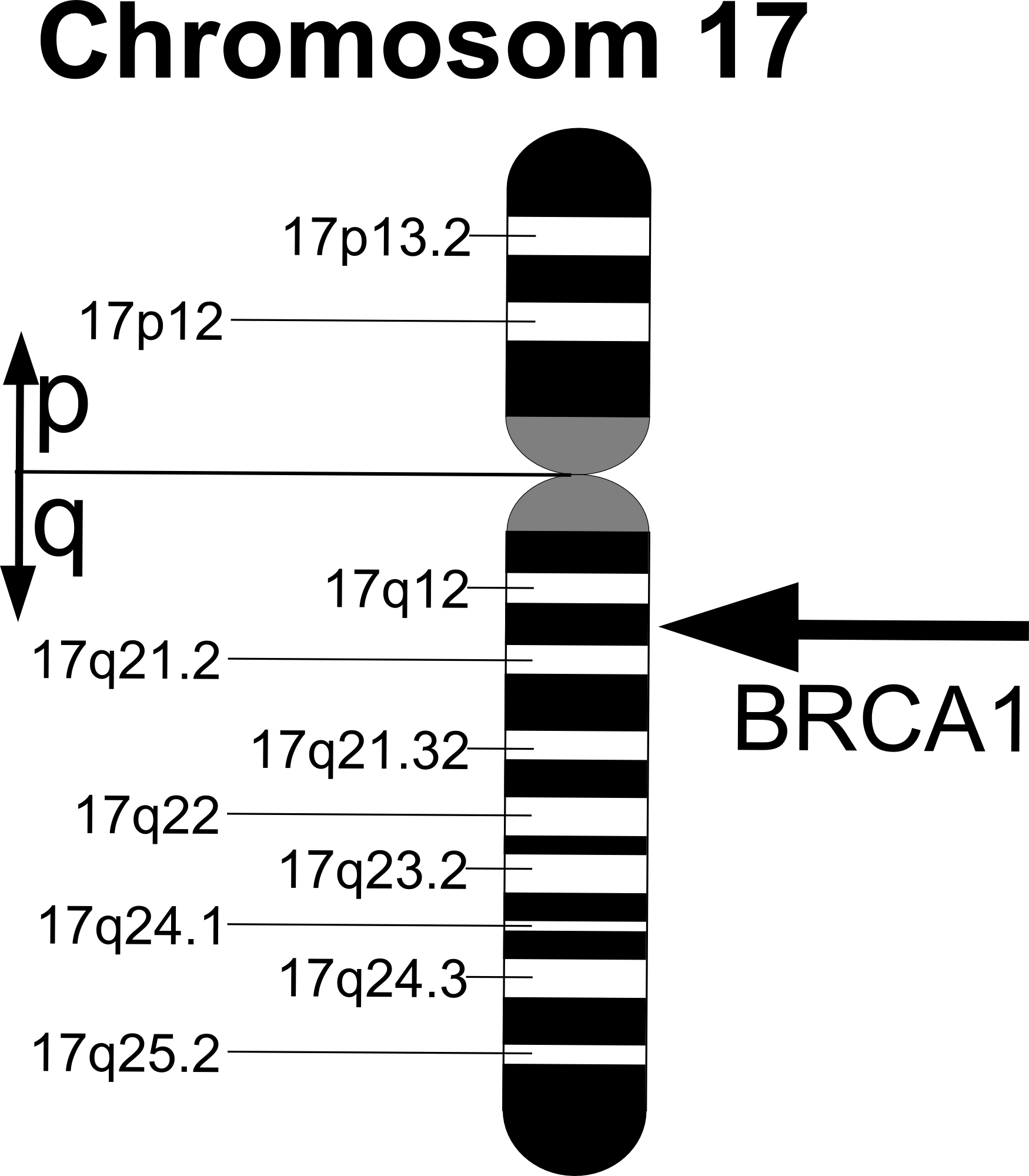 In a study done in 2012 of modern carriers' DNA, concluded that the mutation was present in other European populations for hundreds of years and entered the Ashkenazi gene pool in Poland 400 to 500 years ago. In the late medieval period, according to a study done in 2014, researchers claimed that the reason the gene came into the pool was because of the 350 people and the rapid expansion of the Jewish population.