Showing posts with label #x chromosome. Show all posts

Wednesday, October 25, 2023

How male mosquitoes compensate for having only one X chromosome
 How male mosquitoes compensate for having only one X chromosome

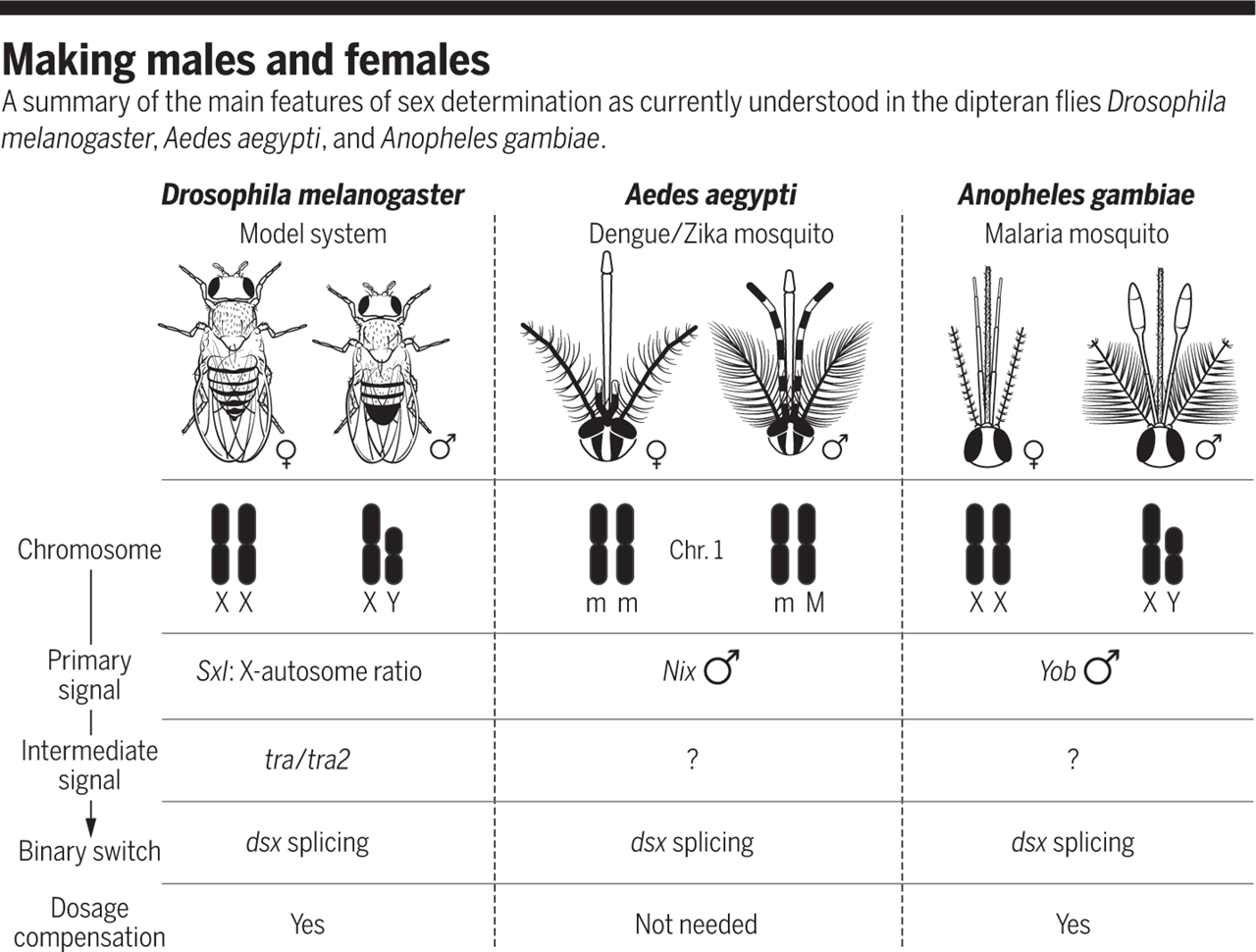
    Dr. Claudia Keller Valsecchi's research team at IMB in Mainz discovered the master regulator, SOA, responsible for balancing X chromosome gene expression in male mosquitoes. This understanding is crucial for equalizing gene expression between male and female mosquitoes, which might lead to new malaria prevention strategies. Only female mosquitoes spread malaria, making understanding the molecular differences between mosquito genders essential. The study found that SOA binds to X chromosome genes, increasing their expression in males, while females produce a non-functional version.

The groundbreaking research led by Dr. Claudia Keller Valsecchi's team at IMB in Mainz is truly commendable and shows how research on small organisms like mosquito genetics can be applied to humans. Discovering the role of the SOA protein in balancing X chromosome gene expression opens the door to a deeper understanding of mosquito biology. Targeting the molecular differences between mosquito sexes could revolutionize our approach to combating this deadly disease. In the second article, Omar Akbari and his team at the University of California are using CRISPR genetic engineering to combat mosquito-borne diseases. They've developed techniques that either block viral transmission in mosquitoes or cause mosquito lethality. A notable approach being explored is pgSIT, which makes the mosquitoes sterile, preventing the need for insecticides in population control.


Links: 

https://www.sciencedaily.com/releases/2023/10/231006104515.htm

https://www.the-scientist.com/news-opinion/combating-mosquito-borne-diseases-with-crispr-70607


Thursday, November 15, 2018

X vs. Y Chromosome

A new study suggests that men are actually right when they say that women are “too complex”.  With the latest study of X and Y chromosomes, scientists have learned that the Y chromosome have much less complexity than having a double X chromosome. In fact, women are able to express genes 15% better than males due to having a double X chromosome.  
However, it has also been seen that the X chromosome is actually shrinking over the course of millions of years.  The Y chromosome performs such little gene expression that is basically unused, staying small similar to a pinky finger remaining small.  It could be hypothesized that the Y chromosome could actually shrink to such a minute size that it will disappear altogether.  But, as another study points out, the amount of genes and the Y chromosome remains the same because the genes, which only hold 100 of the original genes that the chromosome began with, are key to the males’ survival.
Scientists argue that the Y chromosome doesn’t only result in maleness and being fertile, but also having gene expression that differs from women, allowing different responses to diseases.  This means that males could be more prone to symptoms or risks from diseases than females, or vice versa.  By understanding these differences and as our medical technology advances, I believe that medication and certain techniques could be developed in order to cure specific diseases for either males or females in particular.  This may even aid in curing X-linked inheritable diseases.

Links: