Showing posts with label "mosquitos". Show all posts

Wednesday, February 21, 2024

Gene-editing for Vector Born Illneses

In recent years due to climate change, there has been a distinct rise in vector born illnesses, more specifically mosquito-borne illnesses, such as malaria. Attempts to combat this issue mostly rely on the use of pesticides as a form of mosquito control. Luckily, a company named Oxitec have been developing gene-editing technology as a form of pest control. 
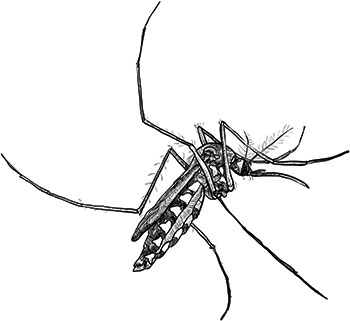
Aedes Aegypti has been the most significant mosquito when it comes to carrying diseases. This species of mosquito was chosen to be tested on in order to prevent the spread of disease. This is done by using gene-editing to produce male offspring that produce female progeny that do not survive to adulthood. This technology was used in Brazil and resulted in a 90% decrease in the Aedes Aegypti population. 

The thought is this, with less population there is a lower possibility of contracting a mosquito-borne disease. This technology could be very useful for the United States, mostly because cases here have also been on the rise. Concerns have been brought to attention about the specific ecological concerns with gene-editing in mosquitoes. Results from trials in the Florida Keys have shown the technology to be environmentally safe and protective. 

In my opinion, this technology could provide the United States with a way to control its population of mosquitoes that carry diseases. I think that gene-editing is a much better form of mosquito control than the use of pesticides. 


Saturday, November 18, 2023

CRISPR-based mosquito suppression system could reduce child mortality and aid economic development in Africa


chjpdmf zs sci pbwfnzxmvd vic l zs ymdizltazl zsntezotc mju otmtaw hz uuanbn

Malaria is a disease caused by mosquitos, specifically female Anopheles gambiae, who have a parasite. Symptoms include fever, chills, and other flu like symptoms. The infections mainly occur in children in sub-Saharan Africa and when left untreated can result in severe complications and death. Scientists have began developing ways to genetically edit the mosquitoes with the parasite causing the disease to spread. Scientists Andrea Smidler, James Pai, and Reema Apte created a technique called Ifegenia which stands for "inherited female elimination by genetically encoded nucleases to interrupt alleles". The technique uses CRISPR genetic editing technology to disrupt a gene known as femaleless (fle) that controls sexual development in A. gambiae mosquitoes. It specifically has a Cas9 nuclease, the CRISPR technology makes cuts and uses a guide RNA to insert the gene. The genetically modified mosquitoes separately express Cas9 and the fle-targeting guide RNA. The offspring of these genetically modified flies was males only, all of the femaled were killed. The male offspring inherit the Ifgenia gene however the genetic edit only affects females reproduction. This genetic editing is a great start to reducing Malaria in sub-Saharan populations when other preventions techniques such as vaccines.