Showing posts with label "heredity". Show all posts

Saturday, October 29, 2022

Genes that may help you survive the Black plague, but not your own immune system

An article by Science discusses research that suggests certain genes helpful in surviving the Black Plague centuries ago may be increasing the risk for modern autoimmune diseases. This research was led by Mihai Netea in Romania. Netea compared genomes of ethnic groups that survived the Black Plague and those that did not experience it. They were able to pinpoint genes on chromosome 4 that are critical to the immune system. These genes found in the survivors code for proteins with receptors that are very responsive to the Black Plague bacterium, Yersinia pestis. As a group, those who did not experience the Black Plague often lacked these genes. It was hypothesized that these contributed to an over active immune system that was vital in surviving a deadly pandemic. 

However, this immune system is not as helpful today. These receptors have started triggering immune responses to an individual's own body and leading to long term autoimmune disorders. Today, those who have the genes found in Black Plague survivors are often at a higher risk to develop Crohn's disease, rheumatoid arthritis, lupus, and other autoimmune diseases. This research demonstrates the fascinating effects that passing on genes can have over generations. It also brings up the idea that the traits which are positively selected for are very dependent on the time and environment in which they exist.

Monday, September 16, 2019

Genes that Are Harmless on Their Own Cause Disease When Combined


"Genes that Are Harmless on Their Own Cause Disease When Combined" Chia-yi Hou

This article of the idea that harmless genes, on their own, can cause disease when combined relates back to a family case study. In this case study, "different genetic mutations from two parents cause severe heart disease symptoms in the children." So where did this idea come from? Back in 2008, a pediatric cardiologist that goes by the name Deepak Srivastava had a newborn patient, Tatiana, that had to put on life support due to having acute heart failure. The baby's parents also had lost their first child 24 weeks into the pregnancy. This tragic event sparked suspicion in Srivastava that their must have been a genetic component to the disease.
Moving forward, in 2011, the research began using "whole-exome sequencing to search for genetic variants"(Hou 2019) in Tatiana and her parents. Research shows that the father had mutations in "MYH7 and MKL2", which are genes that are important for heart and muscle development. The mother, on the other hand, "had a variant of the NKX2-5 gene, which encodes a cardiac-specific protein involved in regulating embryo development"(Hou 2019). This mutation led to a single amino acid difference at the protein level. Results show, the father has signs of lower function within the heart, although the mother was unaffected by the mutation. Meanwhile, all three children acquired a failed left ventricle that will never work to it's potential, therefore, unable to pump blood effectively. All of this is due to all three genetic mutations that they have inherited. The National Human Genome Research Institute states, "Genetic disorders can be caused by monogenic disorder, by multifactorial inheritance disorder, or by a combination of gene mutations"(NHGRI 2019). So basically, a disease is simply a genetic disorder that is caused by some change away in the normal DNA sequence.

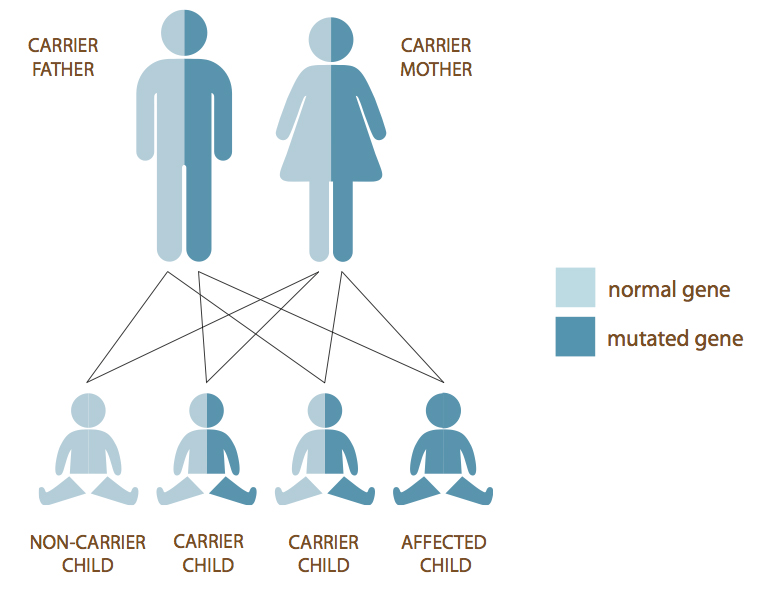
                                                              Image result for genes causing disease from parents

Furthermore, the children’s symptoms were results of the parents’ mutated genes. They used "CRISPR technology to recreate the same genetic mutations in mice and found that, although animals with just one of the mutations had normal phenotypes, mice with all three mutations had heart pathology similar to the children’s"(Hou 2019). This makes sense due to the tissue found in Tatiana showed "reduced adhesion to the cell-culture dish, along with lowered expression of adhesion-related genes and higher expression of genes associated with immature heart-cell stages"(Hou 2019).
Overall, this outcome of having a plethora of genes together that determine a specific phenotype is known as "oligogenic inheritance." Therefore, this study comes down to a very interesting theory that most diseases are a result of a combination of genes. In order to test different combinations of gene variants, Srivastava is working with collaborators to develop a CRISPR-based single-cell technology. In the future, this technology should be able to help them test hundreds of gene variants in thousands of different cells.

https://www.the-scientist.com/notebook/genes-that-are-harmless-on-their-own-cause-disease-when-combined-66328https://www.genome.gov/For-Patients-and-Families/Genetic-Disorders


https://www.genome.gov/For-Patients-and-Families/Genetic-Disorders

Saturday, October 27, 2018

What inspired Mendel?

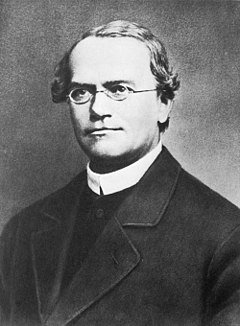
Everyone knows Gregor Mendel as the father of genetics, but what to we really know about the man himself? There are not many letters that he wrote himself available for reading, and only a few of his letters to Charles Darwin have survived. Mendel's "intentions in studying plants" has been a long anticipated question. In a recent article in GENETICS, by Peter J. van Dijk et. al, two newspapers have been newly found that uncover Mendel's hidden motivations.
The popular opinion is that Mendel was trying to figure out "the rules of inheritance" but others argue that he was simply trying to figure out if he could create a new species from hybridization.

Van Dijk found these "overlooked" articles, one published in 1861 emphasizing Mendel's desire to produce new and improved crops and flowers in the region. He was "surprised" by the results of his crosses that produced "plentiful fruit".
The second article, published four days later, slightly criticized Mendel saying that the extent of his work was "exaggerated" and to not give him so much credit. Mendel may have thought he was doing a great work of the people of his region, but others thought it was highly over-glorified and was not that big of a deal.
Both newspaper articles found stress the fact that new science in its time is not exactly what everyone wants to automatically believe: it takes time for an idea to become part of everyone's thinking and to accept it as truth.

I believe that Mendel was a great scientist and did a great work for the work of science, genetics, and heredity. It is understandable that at his time his work was misunderstood because the science he was addressing was an uncharted water and at the time some people did not know what to think about this new world being discovered until more people started to study it as well.
http://genestogenomes.org/what-inspired-mendel/
http://www.biologyreference.com/Ho-La/Hybridization-Plant.html
http://www.genetics.org/content/210/2/347

Thursday, July 19, 2018

The Study of Human Heredity Got Its Start in Insane Asylums


After King George III spiraled into insanity in 1789, the study of human heredity began. Research began at England's insane asylums. This was well before DNA was discovered so to study heredity, people kept records and performed statistical calculations. Family history in madness, disability, and crime were recorded for those in asylums. Physicians considered severe mental deficits as a disease and efforts to find relatives of the sick were put into place. The number of patients institutionalized increased and discouraged the "sick" from reproducing. Ludvig Dahl published family pedigrees of mental illness in 1859 using detailed census records. Dahl helped to lay the groundwork to launch the eugenics movement by 1900. After Mendel's work with peas, eugenicists’ hoped that people inherited mental illness the same way peas inherit smooth or wrinkled skin. This idea was rejected in 1920. German researchers began to collect data on family traits of asylum patients which was later expanded by the Nazi's. This is all discussed in a book called "Genetics in the Madhouse", by Theodore M. Porter. 

After coming across this article, I instantly became interested in reading this book. It's fascinating how far we have come from these times. After discovering DNA, it helped us understand genetics and heredity. The science behind genetics today is so much different from what they believed it was back then. It makes me wonder how much more we will learn in the future and if anything we believe today will be proven wrong in years to come. 

Link to original article
Link to related article

Monday, July 2, 2018


The Truth on Online Gene Testing.


A 29-year-old radiology resident at Baylor University Medical Center, Dr. Joshua Clayton sent in a sample of his saliva to 23andMe in hopes of learning more about his ancestry. 23andMe is one genetics testing company out of many where people can send in DNA samples and get quick results for a decent price. However, many physicians are arguing that is may be doing more harm than good. After Dr. Clayton’s results came back ordinary, he sent the same sample of DNA to a separate genetics testing company called Promethease which advertises to do a more in-depth analysis. The results of the analysis came back positive for Lynch syndrome, a genetic disorder that can lead to deadly cancers at an early age. Frightened by this, Dr. Clayton reached out to a company with expertise in medical diagnostics and found that the  results from Promethease were actually a false positive. Although he knew false positives were common in these genetic testings, many consumers do not understand how debatable their results may be. In a small study performed by Ambry Genetics, it was found that 40% of the results from these companies were erroneous. These testing companies do state that their results are not intended for medical purposes yet this can be very confusing when the consumer is expecting to have accurate results.


Personally, I do not see the harm in participating in these genetic testing activities, however, one should never rely solely on the validity of the results. If there is a chance a mutation is hereditary than one should be examined by a certified clinical laboratory. Possibly having a genetic disorder is worrisome enough so why take the chance of being misdiagnosed.

Related article

Friday, May 4, 2018

The Musicality of Genetics

When Bartolomeo Cristofori invented the first Piano in 1655, music would forever be changed. The complex hand-eye coordination and muscle memory needed to play the piano is unprecedented and takes years to master, let alone learn. It is thought that the ability to learn, play, and understand music was genetically inherited; that the musically inclined have a gene needed to play such classics such as Bach and Chopin.

Dexterity and music ability are not necessarily inherent. One study found that about 50% of a 224 sample were found to be musically inclined. They were given standard musical aptitude tests that were designed to identify musical pitch and tone. Such an ability may seem trivial, but genetically, it can be found in almost anyone ranging from complete amateurs to people who have a background in music. Several DNA sequences were actually identified from the study and were correlated with music ability. One such sequence involved the hairs within a human ear in which vibrations could ascertain different pitch and sounds. It is still not conclusive to say genetics and music are inherent, since I play multiple instruments, and my family family struggles to even understand what they hear, but some generalizations on nature rather than nurture can be made. 


Monday, April 16, 2018

Genes Behind Deadly Heart Condition Identified

    Pulmonary arterial hypertension has a mortality rate of 50% within five years and in some cases doctors could not determine the exact cause of it. Its most often seen in people with other heart or lung conditions however it can affect others and in about 20% of cases no obvious cause could be found. However in recent study with over 1,000 PAH patients with no known cause has revealed 5 genes to be the cause of the disease, four of which were previously thought to not affect it at all. It was found that the people with these gene mutations fail to produce proteins necessary to maintain the structure and function of body tissues.

   This is another example of how genetics can be used to improve current treatments and develop new ones for diseases that were previously hard to treat or even diagnose as previous information and methods just did not provide what was necessary. Genetic findings like this and other Genetic technologies like CRISPR could ultimately lead to an overhaul of how medicine works. We are coming ever closer to being able to correct heredity diseases before they ever even show and perhaps even "improve the genes" of children still in development like in the movie Gattaca. However it is still too early to see if this could actually become a reality or how the overall populace would react to such technologies.

Article - http://www.bbc.com/news/health-43727026
Journal - https://www.nature.com/articles/s41467-018-03672-4

Saturday, April 14, 2018

Gene Therapy Creates Replacement Skin to Save a Dying Boy

Specialists in Europe utilized quality treatment to develop sheets of solid skin that spared the life of a kid with a hereditary sickness that had devastated a large portion of his skin.


This was not the principal utilization of the treatment, which adds quality treatment to a procedure created to develop skin unites for consume casualties. In any case, it was by a long shot the most body surface at any point canvassed in a patient with a hereditary issue: nine square feet.

The kid's illness, junctional epidermolysis bullosa, causes to a great degree delicate skin that rankles and tears, and is inclined to contaminations and skin tumor. He had been required to kick the bucket however has recuperated. Two years after the treatment, he keeps on having sound skin and have an ordinary existence. A video gave by the restorative group demonstrates the kid, Hassan, playing soccer with his dad. As indicated by news reports, the family is initially from Syria.

Epidermolysis bullosa takes different structures, contingent upon the hereditary transformation included. Around 25,000 individuals in the United States have the condition, and 500,000 around the world. The seriousness changes, however a few patients spend a lot of their lives canvassed in gauzes and in extreme agony.

Brett Kopelan, who has a kid with the ailment and is official executive of a help and support gathering, Debra, said that the profoundly specific dressings his girl needs cost more than $500,000 a year.

Click Link 1 and Link 2 to read the amazing articles and how this boy's life was saved!

Sunday, November 26, 2017

What Do We Know About Genetic Links to Depression?

        
        Through studying genetics, researchers have found that nobody inherits depression from his or her parents and that there is no "depression gene" (as far as anyone knows.) There is; however, a clear genetic component of depression that is currently being studied extensively. 
        In a study of twins, it was found that if one twin has depression, the other is more likely to have it as well when compared to non-twin siblings. "We know there is a heritable quality of both unipolar and bipolar depression," says Dr. John H. Krystal, chair of the department of psychiatry at Yale University School of Medicine and chief of psychiatry at Yale-New Haven Hospital. The exact numbers are still unknown, but it is estimated that one-third to one-half of the reasons why somebody may develop the disease is due to genetics. Researchers were able to find 15 different aspects of the genome associated with depression. These genes are getting and will continue to get a lot of intensive study, thanks to the hard workers at 23andMe. Dr. Steven E. Hyman, director of the Stanley Center for Psychiatric Research at Broad Institute of MIT and Harvard and professor of stem cell and regenerative biology at Harvard University, believes it's unlikely there will be one single genetic marker for depression to be discovered. What we can begin looking at are different risk versions someone may have, making it a statistical matter. 
        One can have higher risks for depression, but there are other factors that must be taken into consideration since three are other factors that can also lead to depression (i.e. stress. nutrition, and exercise.) "I am more than hopeful that, with enough time and effort, genetics will yield a useful piece of the puzzle," Hyman says. Krystal agrees to his positive forecast and is optimistic about what we'll be able to achieve through studying genetics in the coming years. I agree with both, Hyman and Krystal and I am hopeful. Since different factors in the genome linked to depression have already been found, further studies can be done from here and hopefully lead to new breakthroughs in genetic research on a terrible disease, depression. 


https://health.usnews.com/health-care/patient-advice/articles/2017-10-03/what-do-we-know-about-genetic-links-to-depression
http://depressiongenetics.stanford.edu/mddandgenes.html