Showing posts with label "antibiotic resistance". Show all posts

Wednesday, April 22, 2026

Genetic Technologies Invented to Combat Antibody Resistance in Bacteria


https://today.ucsd.edu/story/next-generation-genetics-technology-developed-to-counter-the-rise-of-antibiotic-resistance 

https://aspe.hhs.gov/collaborations-committees-advisory-groups/carb

One of the most prominent problems in modern medicine is the growth of bacteria that are resistant to current medical drugs or antibodies.  However due to a new breakthrough this could become a problem of the  past.  Researchers at the University of San Diego have invented a new technology that will be utilized to fight the growing threat of antibiotic resistance.  This system is known as the pPro-MobV and it uses CRISPR technologies to inhibit certain genes.  Genes that give bacteria resistance to antibodies and can be passed down to future generations can be targeted and disabled.  This new development offers scientists a new way to eliminate the problems of antibody resistance in different viruses.  

Sunday, November 9, 2025

Ancient Viruses can be useful to modern day research

    Researchers at Penn state have discovered that some bacteria can carry ancient dormant viruses called cryptic prophases in their genomes. These dormant viral sequences can become a part of bacteria's defense system. They found that recombinase can modify bacterial DNA in response to viral threats only if a prophage is already embedded in the genome. This specific recombinase is known as PinQ. When a virus goes near the bacterial ell, PinQ triggers DNA inversion flipping a section of genetic code inside the chromosome. 

    In experiments with E. coli the proteins were overexpressed, and viruses could not land on the bacterial surface. After repeated exposure the virus evolved a new attachment mechanism and overcame the barrier. Researchers suggest that this kind of ancient viral defense could be helpful for antiviral strategies especially those showing antibiotics resistance.

    Benefits to this research helps understand how antivirus systems operate. This can lead to a better understanding of how to effectively cultivate bacteria used to ferment foods like cheese and yogurt. This could also help improve how bacterial infections are managed in health care settings. 


Sources:  Ancient viruses hidden inside bacteria could help defeat modern infections. (2025, November 25). ScienceDaily. https://www.sciencedaily.com/releases/2025/11/251102205009.htm

Putol, R. (2025, November 1). Ancient viruses inside bacteria may help fight infections. Earth.com. https://www.earth.com/news/ancient-viruses-inside-bacteria-may-help-fight-infections/

Sunday, October 19, 2025

Increasing Anti-Microbial Resistance Poses Threat to Globe


    Articles in the NY Times "W.H.O. Warns of Sharp Increase in Drug-Resistant Infections" and "The Global Threat of Antibiotic Resistance" reports of the spread of dangerous antimicrobial-resistant infections, which have been increasing by nearly 15 percent each year. This includes infections such as UTI’s, gonorrhea, E. coli, and other pathogenic bacteria that kill millions annually.  It’s estimated that more than 39 million people will die from antimicrobial-resistant pathogens in the next 25 years. While the increase in antimicrobial resistance is inevitable, it is being accelerated by improper, or excessive use of antimicrobials. Nearly 140 countries have joined the Center for Global Development’s antimicrobial resistance surveillance system and 100 of which contributed data. 

                  This presents an incredibly difficult challenge, especially for doctors who want to treat their patients but recognize that improper use could lead to a much larger crisis. I believe it is the responsibility of the prescriber to emphasize the importance of taking an entire course of antimicrobials, even if the patient feels better before finishing. However, patients also share responsibility by ensuring they aren’t skipping their last doses because they feel better leaving the last, strongest, pathogenic bacteria to survive, mutate, and spread resistance. Perhaps there should be stronger guidelines are even laws to prescribing antibiotics, like making a patient sign a form stating they’ll take the antimicrobials for the full length of time unless otherwise stated by the doctor. Education on this subject could also slow the increase of anti-microbial resistant infections, like teaching genetic resistance in high school science classes. Either way improper use needs to stop, or common infections could become a death sentence.

Sunday, February 11, 2024

A New Breakthrough in Bacterial Infection Control

    The battle against “war bugs'' or antibiotic resistant bacteria (ARB) has been claimed to be one of the biggest global health challenges of the 20th and 21st century. Though, in recent findings at the Icahn School of Medicine at Mount Sinai researchers found a way to make a natural defense mechanism fight and manage the previously seeming immortal bacterial infections. This natural defense mechanism is called cyclic oligonucleotide-based antiphage signaling system (CBASS). This defense mechanism is used by certain bacteria, like E.Coli, to protect themselves from viral attacks. The researchers used the CBASS-associated protein 5 (CAP 5) to understand how it could potentially be used to control bacterial infections. CAP 5 becomes activated by cyclic nucleotides to destroy the bacterias own DNA. In the past a multitude of other approaches have been tested including modifying existing antibiotics, creating new antibiotics, and also finding different ways of delivering these medications to the system. Though this potential solution to ARB still needs to be tested on more varieties of bacteria, it is a big stepping stone towards an answer of how to tame these bacteria. 

    This topic of antibiotic resistance is very intriguing to me for the fact that most people are severely undereducated in the way that antibiotic drugs work and how the bacteria they are fighting can become resistant. The importance of discovering a way to treat ARB is vital for the prevention of the spread of viruses in not only our country but across the globe, and the fact that these researchers from Mount Sinai have found a minimally invasive way of doing so by using naturally occurring mechanisms in the body is very intriguing. 


Sources: 


Thursday, May 5, 2022

Scientists Believe Drug-Resistant Bacteria First Evolved on Hedgehogs


The use of antibiotics in medicine to treat bacterial infections undoubtedly saved thousands, if not millions of lives since Alexander Fleming discovered penicillin in 1928. Unfortunately, due to bacteria’s ability to harbor multiple generations and multiply by the millions within days, these prokaryotes have evolved to resist antibiotics in a time-frame in which eukaryotes could only dream of. However, modern medicine might not be to blame for the acceleration of resistant bacteria.  

Beneath the spines of European hedgehogs – Erinaceus eropaeus and Erinaceus roumanicus - lies the infamous Staphylococcus aureus, the epidermal bacterium responsible for the menacing and potentially life-threatening Staph Infection. Along side the staphylococcus a natural antibiotic producing fungus resides on the skin, which may have created an environment that bolstered the staph’s resistance to modern antibiotics hundreds of years prior to their discovery. The fungus known as T. erinacei has lived symbiotically with the bacteria, producing penicillin to prevent being consumed by its neighboring prokaryotes.

    A study in which 276 hedgehogs residing from 10 different European countries and New Zealand were swabbed and found to contain 16 strains of mecC-MRAS – the antibiotic resistant staphylococcus – on their skin and noses. Through genome analysis and comparison of mutations throughout all 16 strains, scientists traced lineages dating back as far as the 1800’s, confirming the bacteria’s evolution prior to modern medicine.

Related article:

https://www.genengnews.com/drug-resistance/study-suggests-superbug-mrsa-evolved-in-hedgehogs-long-before-clinical-use-of-antibiotics/


Wednesday, November 6, 2019

How can bacteria can gain resistance to antibiotics


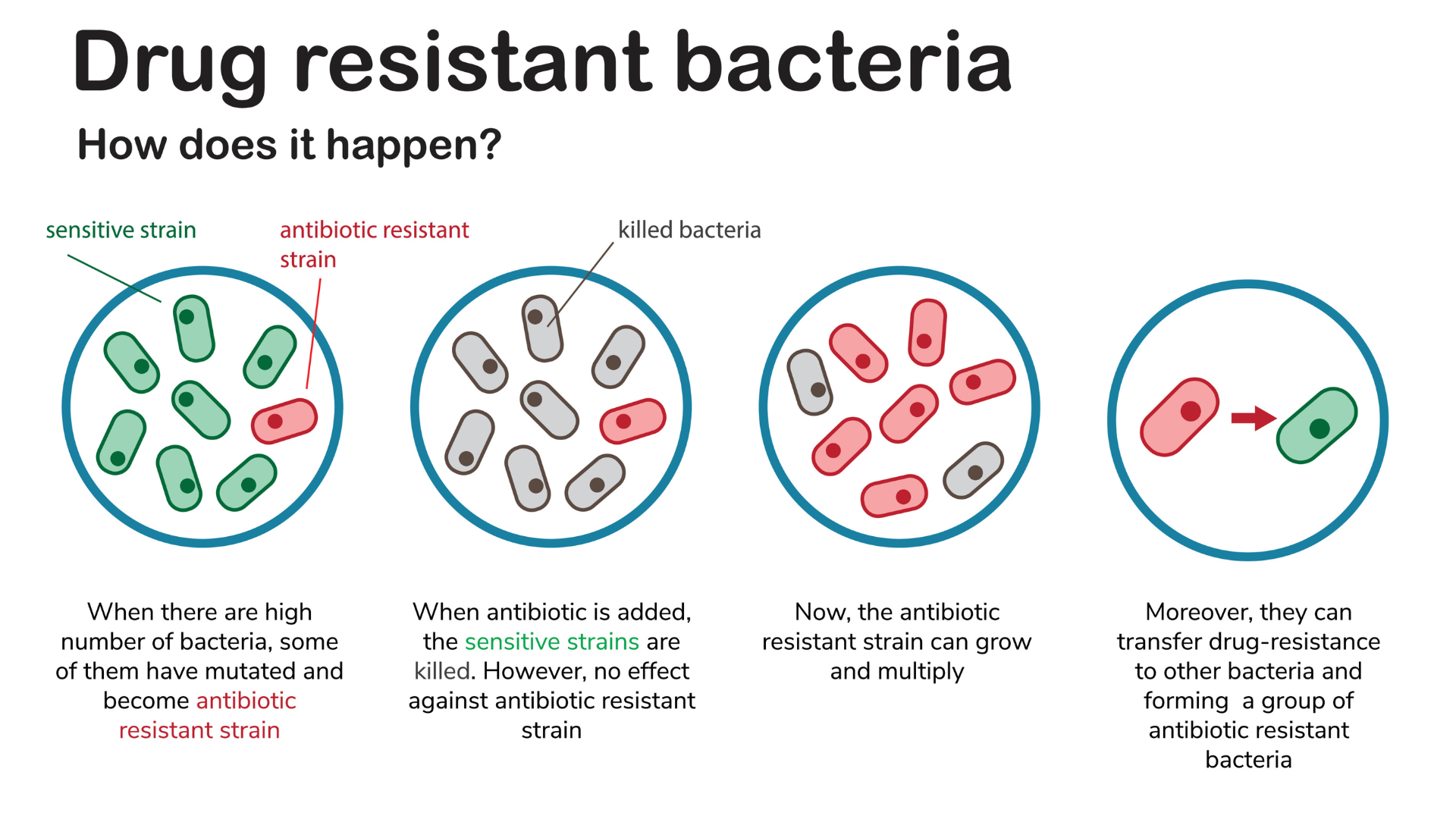
Studies showed that bacteria, such as E. coli have proteins present that helps pump out toxic chemicals within the bacterial cell. This allows the microbes to become resistant to antibiotics. AcrAB-TolC is the pump that bacterial cells have, while it does not get rid of antibiotics within the cell it moves enough of the antibiotics out of the cell in order to produce resistance proteins. To find out how bacteria pass antibiotic resistance on, researchers at University of Lyon used genetically engineered E.coli (making them fluorescent). Under the microscope it could be observed that the bacteria swaps plasmid passing on the characteristics of antibiotic resistance.


At times it is frightening to read about how fast bacteria and viruses grow, hence evolving quicker. While an antibiotics have been created, it is amazing to see how bacteria can find a way to become resistant. It is almost like a constant battle! 


Links:
https://www.sciencenews.org/article/bacteria-nearly-killed-antibiotics-recover-gain-resistance
https://science.sciencemag.org/content/364/6442/778

Monday, October 21, 2019

The First Direct Observation of 'Natural Transformation''


Many diseases that once killed people can now be treated effectively with antibiotics. However, some bacteria have become resistant to almost all of the easily available antibiotics. A new study published by researchers at Indiana University revealed a previously unknown role a protein plays in bacterial horizontal gene transfer.  A new imaging method invented at Indiana University leads to a discovery on how superbugs acquire antimicrobial resistance. Bacteria use thin hair-like surface appendages called pili for natural transformation. 

IU scientists have made the first direct observation of how horizontal gene transfer that bacteria use to rapidly acquire new traits from its surrounding environment, including antibiotic resistance. It was understood that two motors with two distinct proteins controlled the activity to power pilus. Proteins known as PilB constructed the pili, and PilT, which deconstructed it. They discovered a third motor, PilU, that worked independently and could power the pilus when PilT was inactive. This was an important discovery because the more we understand how bacteria share DNA, the more chances we have at treating antibiotic-resistant bacterial infections. This could help save nearly 1 million people affected by antibiotic-resistant bacteria each year.


References:

Fryling, K. D. (2019, October 21). DNA-reeling bacteria yield new insight on how superbugs acquire drug-resistance. Retrieved October 21, 2019, from https://www.eurekalert.org/pub_releases/2019-10/iu-dby102119.php.

Starr, M. (2018, June 15). For The First Time, Scientists Have Caught Bacteria "Fishing" For DNA From Their Dead Friends. Retrieved October 21, 2019, from https://www.sciencealert.com/cholera-bacteria-using-pili-to-harpoon-dna-horizontal-gene-transfer-antibiotic-resistance.


Monday, September 16, 2019

6,000 Antibiotic Resistant Genes Found in Human Gut Bacteria

The human gut inhabits more than a trillion microorganisms, with most of the residents being bacteria. Although most bacteria in our gut are beneficial to us, a recent study has identified more than 6,000 antibiotic resistant genes in the bacteria living within our gut. The study, conducted by the Institut National de la Recherche Agronomique (INRA) in collaboration with Willem van Schaik of the University Birmingham, developed a new method to identify resistant genes in the human gut. The researchers compared 3-D structures of known antibiotic resistant enzymes to proteins produced by gut bacteria. The same method was then applied to a catalogue of several million genes in the human gut and the genes were compared. Comparisons have shown that the antibiotic resistant genes in gut bacteria are extremely different compared to previously identified resistant genes in pathogenic bacteria.

The study highlights that there is an immense diversity in antibiotic resistant genes in the human gut environment. Although these genes have a harmless relationship with the human host (for now), the bacteria can pose a threat for those who are hospitalized or immunocompromised as they do not have the immune strength to combat bacteria resistant to antibiotics. Continuing use of antibiotics may also lead to resistant genes in gut bacteria being transferred to pathogenic bacteria, rendering the effectiveness of antibiotics dramatically. Although the transfer of resistant genes to pathogenic bacteria is rare, it is not impossible and continued overuse can potentially raise the chances of these pathogenic bacteria receiving the genes.


I believe this study is very interesting, especially since I am passionate about antibacterial and antibiotic resistance. The study has stated that the mechanisms of how gut bacteria receive antibiotic resistant genes are still unknown, but results give some insight on how genetics between resistant genes differ from gut bacteria to pathogenic ones. I hope in the future we can find a way to tackle antibiotic resistance, especially through thorough understanding of the genetics and evolutionary biology of bacterial specimens (both good and bad). 

Links:
https://www.birmingham.ac.uk/news/latest/2018/11/antibiotic-resistance-drugs-gut-bacteria.aspx
https://www.genengnews.com/news/the-human-gut-resistome-contains-over-6000-genes/
https://www.researchgate.net/publication/329192381_Prediction_of_the_intestinal_resistome_by_a_three-dimensional_structure-based_method

Monday, April 22, 2019

Breast cancer's drug resistance

A article by Beth Israel Deaconess Medical Center explains how researchers have discovered an unexpected relationship between levels of the amino acid leucine (found in beef, chicken, pork and fish and other foods) and the development of tamoxifen resistance in estrogen-receptor positive breast cancer. These findings reveal a potential new strategy for overcoming resistance to endocrine drugs in ER positive breast cancer patients.


Image result for cancer drugs

Not counting some kinds of skin cancer, breast cancer in the United States is—The most common cancer in women, no matter your race or ethnicity.The most common cause of death from cancer among Hispanic women.The second most common cause of death from cancer among white, black, Asian/Pacific Islander, and American Indian/Alaska Native women.