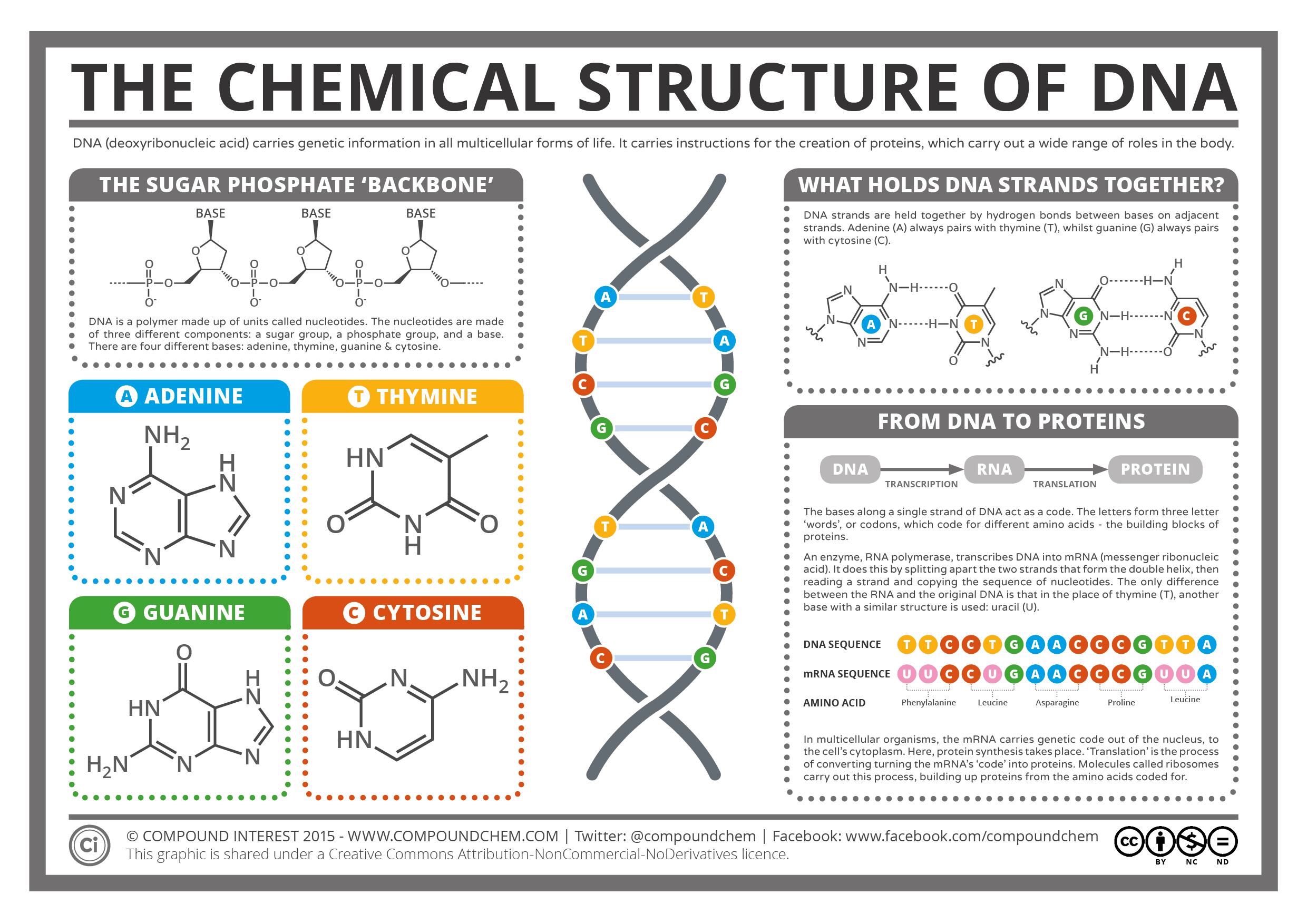
On October 7, 2015, the Nobel Prize in Chemistry was awarded in Stockholm, Sweden. The recipients of this award were Tomas Lindahl, Paul Modrich, and Aziz Sancar for there work in mapping out cell repair in DNA. During DNA replication, errors are prone to occur due to the shear number of nucleotide base pairs. DNA experiences these changes thousands of times daily and without DNA repair life would be impossible to sustain.
Each of these scientists worked individually to produce a mechanism for this process. Tomas Lindahl discovered the mechanism in which the cytosine-guanine base pair repairs itself. Lindahl discovered that, despite cytosine easily losing an amino group, during replication, the defect does not appear. He was then able to recreate this process and created a mechanism for base excision repair. Aziz Sancer studied the process which DNA are damaged by ultraviolet waves. While working with bacteria, which consisted of three different UV radiation sensitive mutations, he discovered the mechanism for the repair of these bacteria. He then developed the mechanism for the human equivalent. Paul Modrich also worked with bacteria. During his research he developed viruses which changed the base pairs of the bacteria, but despite this the bacteria repaired its DNA. Modrich was later able to recreate this base pair repair mechanism.
This research is crucial to the development of drugs to cure cancer. Skin cancer is created by alterations in DNA caused by UV radiation; by knowing the mechanism of how DNA repairs itself from UV damage, doctors may be able to create drugs or use techniques to repair the DNA to its healthy state. Other cancers which are created by similar means can also be combated in this fashion. These scientists are all deserving of this prestigious award for their work in furthering the understanding DNA. I also feel that this research can be crucial to genetic engineering. If medicine advances to the point where DNA can be fixed, then it should be possible to completely alter an embryo's DNA to prevent inherited diseases.
original article

No comments:
Post a Comment