Showing posts with label red hair. Show all posts

Friday, April 14, 2017

Only 2% of the World's Population has Natural Red Hair

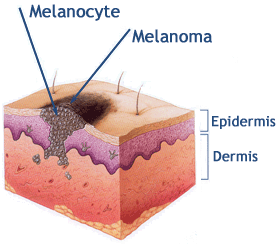
The red in redheads' hair is thought to put them at increased risk of the dangerous skin cancer melanoma.


In the article "Genetics: the Common Thread of Redheads, St. Patrick, Vampires and Culture" Ken Williams Jr., D.O., discusses how rare the gene mutation that causes red hair is. The gene, MC1R, is a recessive trait and is associated with fair skin and red, auburn and strawberry colored hair. The mutation of this gene blocks production of eumelanin which is responsible for dark brown and black pigments. Since this is blocked another type of melanin is increased, pheomelanin. This is responsible for red and blond pigments resulting in the fair skin, red hair and freckles. The mutated MC1R gene can be found all around the world but mainly in Scotland and Ireland. Since it is a rare occurrence it is estimated only 2% of the world's population is a true redhead. I found this interesting because 2% is not a high statistic and it is surprising how few people have the mutated gene around the world.


http://health.usnews.com/health-care/for-better/articles/2017-03-17/genetics-the-common-thread-of-redheads-st-patrick-vampires-and-culture

https://ghr.nlm.nih.gov/gene/MC1R

Friday, March 24, 2017

Red Hair, Vampires, Red-Headed Irish Leprechaun and Many More

It was historically known that in certain countries and cultures, people who had red-hair were considered to have a bad genetic trait. It was strongly associated with strong-willed, mischievous bullies. ''Gingerphobia'' was a termed that was coined to describe the fear of red-heads and ''gingerism'' is the bullying of or prejudice against redheads. In Egypt, it was known that people who had red hair were burned. People with this color hair have some interesting medical facts; they tend to be left-handed and less sensitive to absorption of Vitamin D. Red-hair is a recessive trait and is often associated with low concentration or the absence of melanin. It a secondary mutation of the melanocortin 1 receptor (MC1R) gene, found on the 16 chromosome. This mutation can be found around the world but it is most common in Scotland. 
This is connected to genetics since this is a genetic mutation. Having red hair is a rare and it was also historically badly seen as a bad trait just like previous or present day rare traits. 

http://health.usnews.com/health-care/for-better/articles/2017-03-17/genetics-the-common-thread-of-redheads-st-patrick-vampires-and-culture

Wednesday, November 26, 2014

Blue-Eyed People May Face Higher Melanoma Risk


      Melanoma is a form of skin cancer that when exposed to the sun for too long, can become a very deadly form of cancer. Those with blue eyes or red hair are unfortunately more prone to getting moles which is the precursor for melanoma. Neil Box an assistant professor at the University of Colorado, in Denver, said "if you modify the behaviors related to sun exposure in children, it will probably make a difference for their well-being in later life with respect to melanoma." During the years of 2004-2008 researchers followed 477 white children between the ages of 6-10 around, and gathered DNA samples and provided information on their sun exposure. They found that with an increase in sun exposure the number of freckles and moles increased each year as well. Children in this study with blue eyes had a tendency to develop more moles than the average child, whereas children with red hair had a tendency to develop larger moles than the average child. Since children with pre-developed moles have a higher risk of getting melanoma it is imperative that those with blue eyes, and those with red hair protect their skin throughout their whole life. In my opinion, melanoma is not something you want to be diagnosed with. I think it is important that everyone protects their skin, especially those with lighter skin, blue eyes, and red hair. 


Original Link: http://health.usnews.com/health-news/articles/2014/11/19/blue-eyed-people-may-face-higher-melanoma-risk
Related Link: http://www.cancer.gov/cancertopics/types/melanoma

Tuesday, November 26, 2013

The Genetics of Red Hair


I found it quite interesting to note that the rarest natural color of hair is red.  Scientists have determined that this is due to the mutations on a gene known as MCIR.  In the 1990’s, scientists focused their research on chromosome 16 and one of its genes, MC1R. 

The MC1R gene is located on the long (q) arm of chromosome 16 at position 24.3.
Cytogenetic Location:  16q24.3
Molecular Location on chromosome 16:  base pairs 89,984,286 to 89,987,384.


Scientists have determined that individuals with red hair have more amounts of phaeomelanin than eumelanin.  It appears that when there are two mutated versions  of the MC1R gene, the conversions are not as frequent and thus, there is a buildup of phaeomelanin in the pigment cells.  This results in red hair and fair skin, prone to freckles and an increased sensitivity to sun exposure.  Additional studies have suggested that variations in the MC1R gene may also increase the risk of developing melanoma in the absence of UV radiation-related skin damage.
Researchers from the University of Louisville suggest that redheads are more sensitive to pain, and require more anesthesia during surgery than individuals with blonde or dark hair.  This was contradicted by scientists from the University of Edinburgh and requires further research. 
A recent publication, this week,  by the managing director of the Scotland’s DNA project, Alistair Moffat,  leads us to believe that the gloomy climate in Scotland has resulted in the genetic adaptation of the population of Ireland to produce offspring with red hair.  This adaption allows the needed absorption of Vitamin D from the sun to maintain a healthy lifestyle.   Genetic adaption is quite fascinating and has been proven to be important in the survival of the human and animal species.


Friday, December 9, 2011

The Gene Behind a Freckle-faced Carrot Top

Many people believe that freckles come from increased sun exposure. Some believe that freckles are a trait you're born with. Both answers are correct. Well, mainly the second answer, but the first guess isn't too far off. When in direct sunlight, our skin is protected by a chemical called melanin. Melanin helps to increase  the pigment on the skin. Freckles are simply spots where melanin has built up. The build-up is caused by the clumping of melanocytes (they produce melanin) on the skin. People with an even spread of melanocytes, when exposed to UV light from the sun, will burn and tan nicely and evenly. Other people tan just a little bit more at those small clumps and it seems as though their freckles have grown and intensified. Thats the reason behind the common misconception of sun-caused spots. But what actually causes freckles?


Scientists have found the gene that regulates freckles and, not so coincidentally, it also controls the appearance of red hair. This gene is labeled MC1R. The MC1R gene is responsible for creating the MC1R protein that creates and protects the most common skin pigment, eumelanin. When the MC1R gene is broken, it overlooks the other pigment known as pheomelanin and the freckles and/or hair turn red. There are many variables to consider when trying to figure out why someone has red hair and no freckles or vice versa. The easiest and most likely answer is that there is actually another gene in collaboration with MC1R that helps make that decision.