Showing posts with label pollination. Show all posts

Wednesday, November 30, 2022

Genetics is Responsible For Shorter Honey Bee Lifespan

A study by researchers at the University of Maryland has shown that genetics is the likely factor responsible for shorter honey bee lifespans today compared to 50 years ago. The common belief was that environmental factors causing stress to the bees were responsible for their shorter lifespan but this study points towards genetics being the actual culprit. The study isolated bees from a colony just before they became adults so the bees could live in a controlled lab environment without environmental stressors. The researchers were experimenting with changes in the lab bees' diets when they found that no matter what the bees were fed they all had an average lifespan of 17.7 days, approximately half of the 34.3-day lifespan observed in bees in the 1970s. Mortality rates doubled over this time and since the lab conditions are free of environmental stressors, it is likely that genetics, rather than environmental factors are the cause of the shorter bee lifespan. The researchers have said that the shorter lifespan has been linked to less foraging time in the wild, lower honey production, and colony loss. The next step of the researchers is to increase the sample size by looking at more bees throughout the US and abroad. 


I think this article was informative and hope more work is done to identify the genes responsible for the shorter bee lifespan. Bees are very important to humans as 75% of the number of crops we grow are dependant on bees for pollination and one-third of global crop production relies on bees, and $200-600 billion of annual global food production depends on bees. This shows why bees are extremely valuable to humans and why studying them is important, and why we need to do more research on why bee lifespans are declining and what we can do to stop it. 

Sunday, April 25, 2021

Coevolution of Bat Pollinators and Flowers


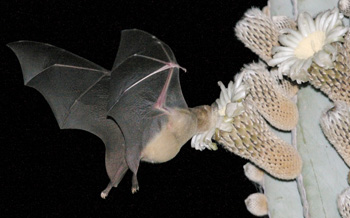
        When hearing the word pollinator, most people would associate bees, wasps, or hummingbirds flitting from flower to flower. Taking in nectar with long tongues and just getting a bit of that pollen on themselves to transfer to the next flower. For flowers that bloom in the night, a bat is just a much significant as a bee would be to a day blooming flower. On certain species of cacti in Baja California, the long-nosed bat or the pallid bat are their only hope for reproducing future generation of cacti. A UC Santa Cruz article draws comparisons on how much pollen got stuck in the bats' fur after every visit. The long-nosed bat is more specialized for the pollination while the pallid bat is more specialized for insect eating. In the American Naturalist journal article details that the pallid bat would pick up 13 times more pollen than the long-nosed bat. The reason for this could be due to the behavior of the bats when it comes to feeding on flowers.

    The long-nosed bat can hover in front of the flower and use its long tongue to gather the nectar. This lessens the physical contact with the stamens of the flowers and also the duration. Pallid bats on the other hand, had to wriggle into the flowers to  get access to the nectar. This would extend the time in contact with the stamens and more chances for the pollen to get on the fur. Also the long-nosed bats are migratory and pollination by them could vary year by year while the pallid bats are available to pollinate year round. 

    It is beautiful that some species of bat could branch out into other resources that are available. 

Sunday, April 21, 2019

Pollen Grain Mutations

In an article published by Science Daily, it introduces how scientists from Rutgers University and Montclair state teamed together and looked at pollen gene mutations in corn. At first, it states how the U.S is the worlds largest corn producer with 90 million acres in fiscal according to the U.S Department of Agriculture. Then it states that the Rutgers-led team that mutations in pollen are caused by mobile retrotransposons which are comparable to retroviruses in mammals. A scientist from Waksmin Institute of Microbiology states his findings saying, "we found that spontaneous mutations in corn genes arise relatively frequently in the pollen of some but not all lines," (Dooner)


Pollen grains are the male gametes (reproductive cells) and have an estimate of several mutations per gene per million pollen grains according to the study in the journal Proceedings of the National Academy of Sciences. However the female gametes on corn ears had no detachable mutations The next step in this study is to monitor whether retrotransposon-induced mutations cause genetic instability in corn lines that have been previously reported by breeders. This study may lead to more successful breeding of corn and other crop.

Photo credit: Integrated Pest Management - Mizzou

Monday, July 9, 2018

Bumblebees Thrive in the City but Struggle on the Farm

As many may know, bumblebees are beneficial to the pollination of flowers and crops. Curiously enough, more bumblebees have been noticed around populated cities rather than vast agricultural fields. The reason for this is that city parks and gardens provide a wide variety of flowers throughout the seasons whereas agricultural fields only offer one type of flower for a short period of time. In a study performed by Ash Samuelson, a graduate student at Royal Holloway University, she transferred more than a hundred colonies of wild queen bees into London’s cities, suburbs and farms. The results concluded that the city bees thrived more than the country bees. It is possible that agricultural fields are not as advantageous because farms offer fewer flowers and potentially have more pesticides.


Samuelson’s research suggests that by planting more wildflowers around crops could increase pollination and foraging opportunities. It is a natural way that could replace other crop enrichment methods. I find this research helpful for farmers who are looking to enhancing their crop population, however, I think the downside to planting more flowers is the possibility of welcoming more animals that may eat the crops.
Article link
Related article

Thursday, May 3, 2018

Preventing Honeybees from Becoming Queen


An article done by the New York Times reviews certain factors on how to stop honeybees from becoming queens. Researchers from PLOS Genetics found that certain molecules in the pollen of flowers and in honey will determine if females will be able to reproduce and live a longer life, or if they will become sterile and a worker bee. These conditions are directly linked to their diet, and not determined at birth like many would think. MicroRNA is contained within the small molecules of the plants which affect plant size and color. This microRNA, when transferred to a bee can affect genes and inhibit growth to the bee, making the bee sterile. In an experiment done by Nanjing University in China, researchers raised honeybees to better understand the microRNA effects to their growth. In larva raised on the microRNA contained diet, it was found that the bee population had smaller bodies and smaller ovaries than those raised on a diet not containing the microRNA. Researchers found that the TOR gene for growth is affected when the microRNA is ingested.

Scientists also studied the interdependence between the honeybees and the plants. Through honeybee pollination, certain flowers can become larger and more colorful thus attracting more bees creating a larger pollen spread. Researchers also suggest that further study of this interdependence can be applied to areas like therapeutic research for applications in cancer or obtain a better understanding on seasonal allergies and anaphylaxis.

This article in my opinion was very informative. The honeybee population is on a steady decline which should be a major concern for everyone. Without the honeybee population, many plants would not be pollinated. Therapeutic research through these interdependencies of plant and insect is also an interesting field to study.

Monday, April 17, 2017

Who doesn't like the warm weather, people with allergies

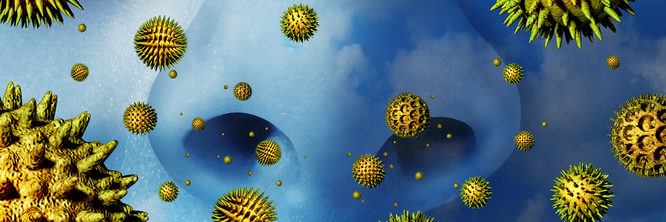
According to the U.S. Centers for Disease Control and Prevention, “20 million adults and 6.1 million children have been diagnosed with seasonal allergies”. Spring is just arriving and all the plants are blooming, but unexpectedly early this year. Multiple areas are releasing intel that trees and plants that usually blossom in late April already started the beginning processes in March. This abnormal flourish of nature has also heightened the allergies in the air causing millions to suffer the running nose, itchy eyes, sneezing and much other discomforts for longer. Researchers have affiliated the warmer spring has increased in allergens produced by plants, and this will create more irritation then normally. In the Spring time, trees and grass cause  the majority of allergens but in the Fall, it is ragweed. Furthermore scientist believe that this coming fall will reflect the intensity of the Spring, so if you are struggling right now prepare for the Fall as well.


Pollen, is extremely small proteins that enters into a person stimulates the immune system in which the person body believes those proteins are dangerous to the body. In return the immune cells produce histamines that create itchiness and swelling. One way to find out if you suffer from allergens is through a simple blood test. Using the genetic information found in the genome, the doctors can confirm that you have allergies and tell you exactly what you are allergic to. Following the knowledge obtained from the allergy testing one can use medication to help prevent and prepare for the high pollinated seasons. Researchers have been testing treating allergies withes bees pollen, the goal is to help the body identify the pollen amicably rather than as a for. With all testing there are risks, it is recommended if your allergies include closing/swelling of the throat do not try the bee pollen. 


I thought this article was very interesting because as a child I never grew up with allergies but as global warming has altered the seasons slightly making them harsher. The warmer the weather the more pollen. I believe because there is more allergens in the air more people are experiencing the sniffles and that finding out what you are allergic to can save someone's life. 


Wednesday, April 29, 2015

Helpful insects adicted to pesticides

Among all of the insects in the world, few are put to use for keeping the garden producing. The honey bee is one of many nature's pollinators and is wanted where crops need pollinating. But some crop fields are being visited more than others. Pesticides are used for ridding the field of small potential trouble-makers that may destroy thousands of dollars worth of crops. The insects that are exposed, but not killed by the pesticides seem to have a liking to these contaminated crops.
http://www.redorbit.com/news/science/1113378521/bees-are-addicted-to-pesticides-042515/

There is worry for these pollinators and the bees do not that the crops visited are contaminated for the bees can not taste neonicotinoids. It has been shown that honey bees are exposed to neonicotinoids and the colonies exposed have lower health than other colonies. A study is underway by scientist to steer these bees in another direction (Insect Pollinators Initiative). So, far there is no change of path from the pollinating bees.
This could be bad for any vegetation that needs/should be pollinated since the bees will visit uncontaminated area less. The exposed bees are also at a greater health risk and could lead to possible survival and population problems. Other insects have not been studied for this occurrence, yet.